


09 Dec What Is Christian Worship? Meaning, Music, and How to Start
Christian worship is your heartfelt response to God’s love and sovereignty, engaging both your spirit and biblical truth. It’s recognizing God’s attributes through praise, prayer, Scripture, and music—whether in personal devotion or corporate gatherings. Worship isn’t obligation but privilege, connecting you authentically with your Creator. From simple songs to elaborate liturgies, faithful believers throughout history have sought to honor God genuinely. As you begin this journey, you’ll discover deeper dimensions of encountering God’s transformative presence.
Key Takeaways
- Christian worship is recognizing God’s sovereignty, responding to His love, and reflecting His glory through heartfelt devotion and biblical truth.
- Authentic worship requires both spiritual engagement of the heart and alignment with God’s revealed character found in Scripture.
- Music serves as God’s design for expressing praise, prayer, and proclamation, connecting believers across cultures through biblically-inspired lyrics.
- Corporate worship amplifies individual devotion through collective gathering, while personal worship cultivates the intimate relationship fueling authentic participation.
- Start by studying Scripture’s worship examples, engaging both heart and mind, and participating regularly in both private devotion and community gatherings.
The Biblical Foundation of Christian Worship
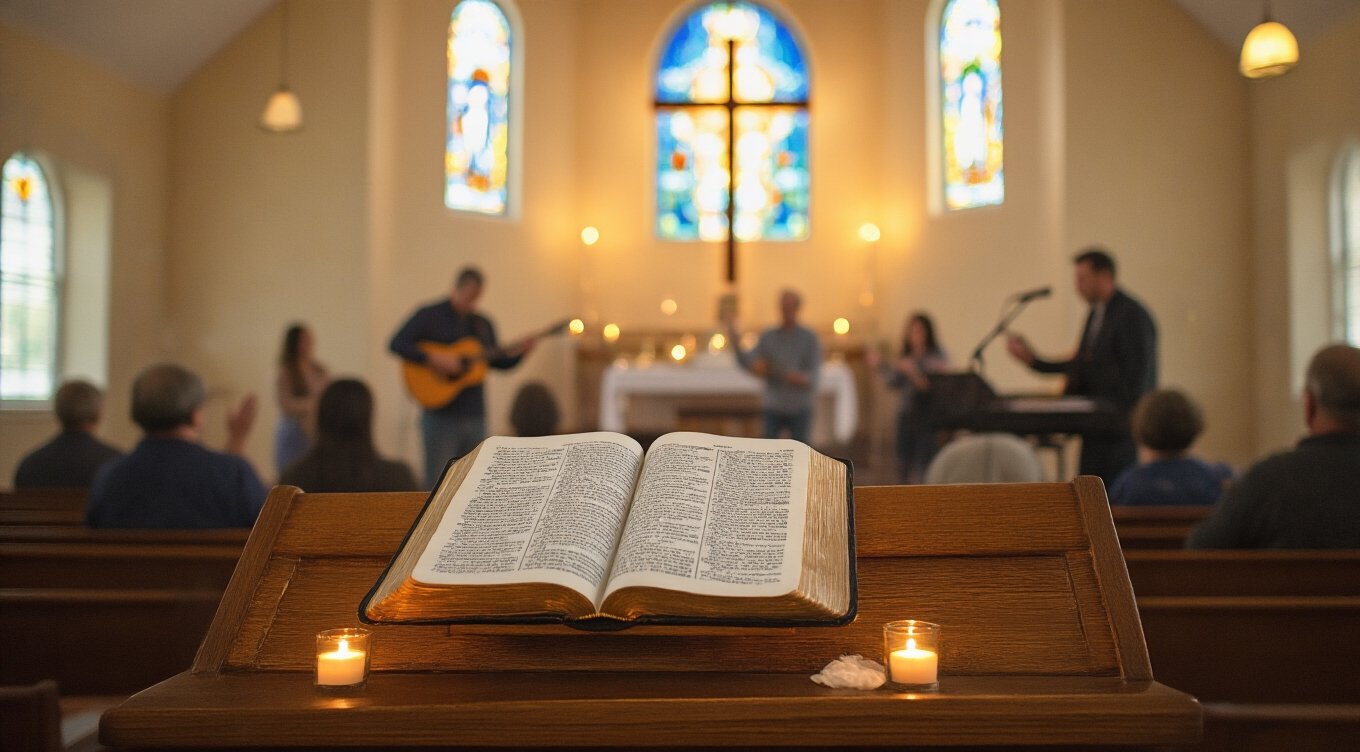
When you examine Scripture from Genesis to Revelation, you’ll discover that worship isn’t merely a human invention or religious tradition—it’s God’s original design for His relationship with humanity.
From Adam and Eve’s communion with God in Eden to the heavenly throne room scenes in Revelation, worship permeates every biblical narrative. The Psalms reveal worship as humanity’s natural response to encountering God’s character. David declares, “Come, let’s bow down in worship” (Psalm 95:6), demonstrating worship as both invitation and command.
Biblical principles establish worship’s foundation: recognizing God’s sovereignty, responding to His love, and reflecting His glory. When you worship, you’re acknowledging divine attributes—His holiness, mercy, power, and faithfulness. Jesus clarified worship’s essence, telling the Samaritan woman that true worshipers “worship the Father in the Spirit and in truth” (John 4:23).
Scripture consistently presents worship not as obligation but as privilege—your designed purpose and greatest joy.
Understanding Worship in Spirit and Truth
As Jesus spoke with the woman at the well, He revealed worship’s most essential quality—authenticity that flows from both spirit and truth.
When you worship “in spirit,” you’re engaging your heart, emotions, and innermost being with God. This requires spiritual sensitivity to His presence and genuine personal devotion that transcends mere ritual.
Worshiping “in truth” means aligning your worship with God’s revealed character and Word. You can’t separate authentic worship from biblical understanding. Truth provides the foundation, while spirit supplies the passion.
Together, spirit and truth create worship that honors God authentically. You’re not performing for others or following empty traditions. Instead, you’re responding to God’s holiness with your whole being, grounded in His truth. This balance prevents both emotionalism without substance and cold intellectualism without heart. When you worship in spirit and truth, you encounter God as He truly is while offering yourself genuinely.
Historical Development of Christian Worship Practices
The early church’s worship practices emerged from Jewish traditions while being transformed by Christ’s resurrection and the Holy Spirit’s presence. You can trace changing worship practices through centuries of church history, seeing how believers adapted their expressions while maintaining core biblical principles.
In the first three centuries, Christians gathered in homes for simple services including Scripture reading, prayer, communion, and singing. After Constantine’s conversion, worship moved into dedicated buildings with more formal liturgical structures.
Early Christian worship began in intimate home gatherings before evolving into the formal cathedral liturgies we recognize today.
The medieval period saw elaborate cathedrals and complex ceremonies, while the Reformation brought renewed emphasis on Scripture and congregational participation.
Throughout these historical liturgical traditions, faithful believers have sought to honor God authentically. Whether in Roman catacombs, Gothic cathedrals, or modern sanctuaries, the heart of worship remains constant: encountering the living God through Christ. You’re part of this continuing story, called to worship in ways that honor both biblical truth and your cultural context.
The Role of Music in Christian Worship
When you open your Bible, you’ll discover that music isn’t simply an addition to worship—it’s woven throughout Scripture as God’s design for expressing praise, prayer, and proclamation.
You’re called to participate in this rich tradition through various forms of worship songs, each serving unique purposes in your spiritual journey and corporate gatherings. Whether you’re leading others in musical worship or joining your voice with the congregation, you’re engaging in a practice that connects you with believers across centuries and cultures.
Biblical Foundation for Music
Music flows through Scripture like a golden thread, revealing God’s heart for worship that transcends mere ritual and touches the deepest places of human experience. From David’s psalms to Paul’s hymns, you’ll discover that biblical lyrics aren’t just poetic expressions—they’re divinely inspired blueprints for authentic worship. The Psalms alone contain over 150 songs that showcase every human emotion before God’s throne.
Musical inspiration permeates Scripture’s pages, revealing how God designed music to unite hearts, declare His glory, and strengthen faith communities. When you sing Scripture-based songs, you’re participating in a worship tradition that stretches from Moses’ victory song at the Red Sea to the heavenly chorus in Revelation. God’s Word provides both the foundation and fuel for meaningful musical worship.
Types of Worship Songs
Seven distinct categories of worship songs emerge from Scripture, each serving a unique purpose in drawing believers closer to God’s heart. You’ll find psalms expressing raw emotions and honest prayers, hymns declaring theological truths, and spiritual songs celebrating God’s goodness. Upbeat contemporary songs energize congregations with celebratory praise, while reflective traditional hymns invite deeper contemplation of God’s character.
Scripture includes songs of testimony sharing God’s faithfulness, laments processing grief and struggle, and prophetic songs declaring God’s promises. Each type serves your spiritual journey differently. When you’re rejoicing, celebratory music amplifies your joy. During trials, lament songs validate your pain while pointing toward hope. Testimony songs strengthen faith through shared experiences, while teaching songs ground you in biblical truth and doctrine.
Leading Musical Worship
Leading musical worship requires both spiritual sensitivity and practical skill, as you’re called to guide others into God’s presence through song. Your heart condition matters more than technical ability—spend time in prayer before leading, allowing the Holy Spirit to prepare your spirit for ministry.
Song selection should align with your congregation’s spiritual journey and God’s Word. Choose songs that encourage authentic worship rather than mere performance. Consider the flow between upbeat celebration and intimate reflection, creating space for the Spirit to move.
Worship leader preparation extends beyond rehearsing melodies. Study the lyrics you’ll sing, ensuring they’re biblically sound and meaningful. Practice humility, remembering you’re a facilitator, not the focus. Your genuine worship will inspire others to encounter God authentically through music.
Corporate Worship vs. Personal Worship
When you gather with fellow believers on Sunday morning, you’re participating in something fundamentally different from your private devotional time, yet both forms of worship spring from the same wellspring of devotion to Christ.
Corporate gatherings amplify your worship through the collective voice of God’s people. Hebrews 10:25 reminds you not to forsake assembling together, as corporate worship strengthens the entire body of Christ. When you sing, pray, and hear Scripture proclaimed alongside others, you experience the profound truth of Matthew 18:20: “Where two or three gather in my name, there am I with them.”
Your private devotions, however, cultivate the intimate relationship that fuels authentic corporate participation. Jesus modeled this balance, withdrawing for solitary prayer while actively engaging in community worship.
Both expressions are essential. Corporate worship builds unity and accountability, while personal worship deepens your individual relationship with God. Together, they create a complete worship life.
Essential Elements of a Worship Service
What transforms a gathering of believers into genuine worship that honors God and edifies the church? Several essential elements work together to create meaningful worship experiences that draw hearts toward heaven.
Scripture reading forms the foundation, as God’s Word illuminates truth and prepares hearts for encounter. Prayer opens channels of communication, inviting the Holy Spirit’s presence and guidance throughout your service. Music and singing unite voices in praise, fulfilling the biblical mandate to “sing psalms, hymns, and spiritual songs” (Ephesians 5:19).
The preaching of God’s Word serves as the centerpiece, providing spiritual nourishment and practical application. Communion reminds you of Christ’s sacrifice when observed.
Your order of service should flow naturally, creating space for both reverence and celebration. The worship environment—whether simple or elaborate—should minimize distractions while maximizing focus on God. When these elements combine with sincere hearts, ordinary gatherings become extraordinary encounters with the living God.
Beginning Your Personal Worship Journey
Although corporate worship provides vital community connection, your personal worship journey serves as the spiritual foundation that deepens your relationship with God throughout the week. Start by setting aside dedicated time daily for prayer, Bible reading, and personal reflection. You don’t need elaborate preparations—simply bring an open heart before God’s throne of grace.
Create a quiet space where you can focus without distractions. Begin with thanksgiving, acknowledging God’s faithfulness in your life. Read Scripture slowly, allowing His Word to speak directly to your circumstances. The Psalms offer excellent starting points for cultivating joy and authentic expression.
Don’t worry about perfect prayers or profound insights. God delights in your sincere heart more than eloquent words. As you consistently pursue Him privately, you’ll discover worship becoming a natural rhythm rather than a scheduled obligation. Your personal encounters with God will overflow into every aspect of your daily walk.
Common Challenges and How to Overcome Them in Worship
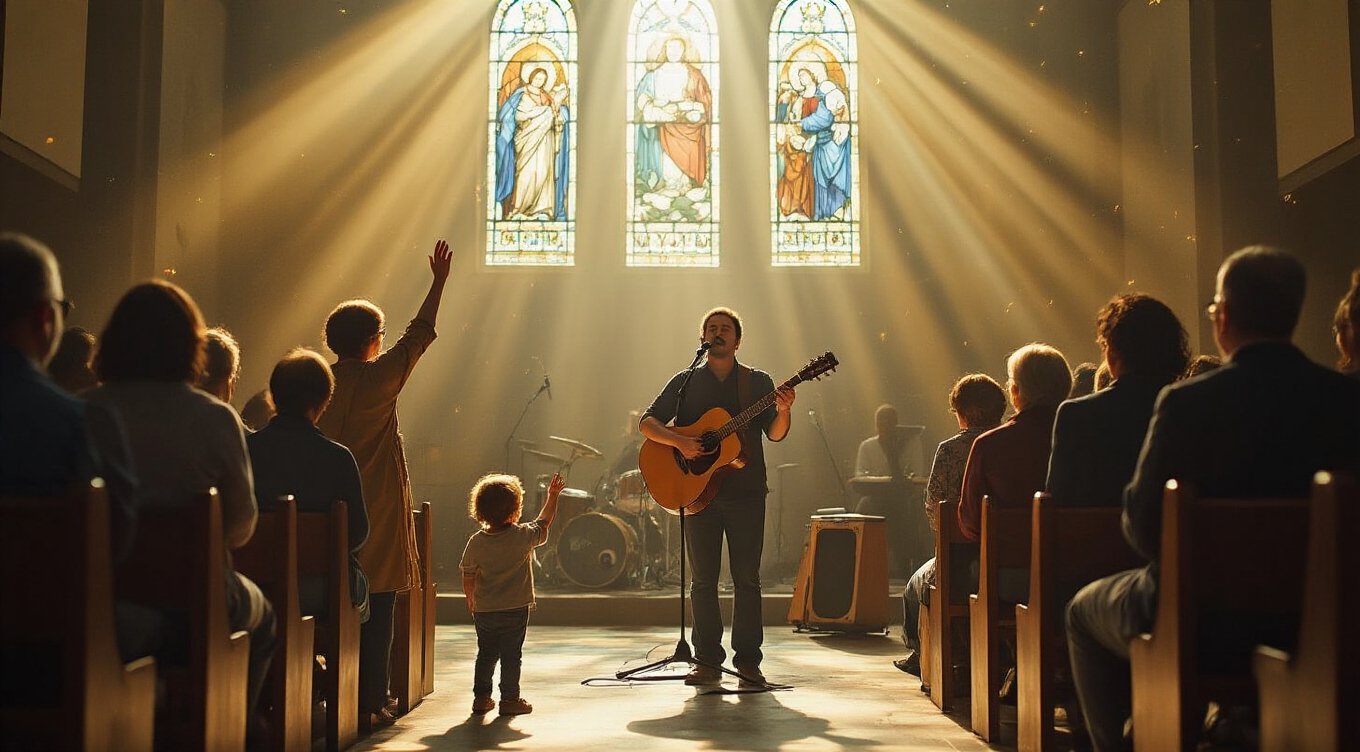
You’ll inevitably face obstacles in your worship journey, but remember that even the most devoted believers encounter seasons of distraction and spiritual dryness. These challenges don’t reflect your worth before God or the authenticity of your faith—they’re simply part of the human experience that Christ understands intimately.
Let’s explore practical, biblical strategies to overcome these common hurdles and restore the joy and focus in your worship life.
Overcoming Distraction During Worship
When your mind wanders during worship, you’re experiencing one of the most common struggles believers face in their pursuit of genuine connection with God. Jesus himself taught about focusing attention when he said, “But when you pray, go into your room, close the door and pray to your Father” (Matthew 6:6). This principle applies to corporate worship too.
Start by eliminating distractions before worship begins. Silence your phone, arrive early, and prepare your heart through prayer. When wandering thoughts arise, gently redirect your mind to God’s presence. Scripture reminds us to “be still, and know that I’m God” (Psalm 46:10). Practice active engagement—sing with intention, listen purposefully to prayers, and participate fully in communion. Remember, God values your sincere effort more than perfect concentration.
Breaking Through Spiritual Dryness
Beyond the challenge of wandering thoughts lies another obstacle many believers face: seasons when worship feels empty and God seems distant. These dry periods don’t indicate God’s absence—they’re opportunities to worship through faith rather than feelings. Remember David’s example in Psalm 42, honestly expressing his spiritual drought while choosing to hope in God.
During these seasons, persist in worship despite your emotions. Declare God’s faithfulness based on His character, not your circumstances. Scripture reading can reignite your passion—let God’s Word speak when your heart feels silent.
Finding joy often returns gradually through faithful obedience. Continue gathering with believers, singing His praises, and serving others. These acts of worship, even when mechanical, create pathways for fostering intimacy with God once again.
Frequently Asked Questions
What Should I Wear to Church for Worship Services?
You should wear appropriate attire that honors God while choosing comfortable clothing that allows you to focus on worship. Remember, “man looks at the outward appearance, but the Lord looks at the heart” (1 Samuel 16:7).
Dress modestly and respectfully, but don’t worry about expensive clothes. God cares more about your sincere heart than your wardrobe. Come as you are, seeking Him genuinely.
How Long Do Typical Christian Worship Services Last?
Most Christian worship services last 60-90 minutes, though service duration varies by denomination and worship format.
You’ll typically experience 30-45 minutes of music, prayer, and Scripture reading, followed by a 20-30 minute sermon.
Can Children Participate in Adult Worship Services?
Yes, children can absolutely participate in adult worship services! You’ll find that family integration strengthens the body of Christ as generations worship together.
Many churches offer age appropriate activities like children’s bulletins, quiet toys, or designated family sections. Scripture encourages bringing little ones before the Lord, and their presence adds joy to corporate worship while teaching them reverence.
What’s the Difference Between Denominations’ Worship Styles?
You’ll find significant liturgical differences between denominations that reflect their theological emphases. Some traditions follow formal liturgies with structured prayers and sacraments, while others create a casual atmosphere with contemporary music and spontaneous worship.
Whether you prefer high church reverence or low church freedom, God welcomes your heart’s sincere devotion. Each style can draw you closer to Christ when approached with genuine faith.
Do I Need to Know Songs Beforehand to Participate?
You don’t need worship preparation through memorizing songs beforehand. Most churches provide hymnals, songbooks, or projection screens to help with worship participation.
Come as you are—God values your heart’s posture more than perfect vocals. Listen, hum along, or simply stand in reverence. The Holy Spirit moves through your sincere desire to connect with Him, regardless of your musical knowledge or preparation level.
Conclusion
You’ve discovered that worship isn’t just Sunday songs—it’s your heart’s response to God’s overwhelming love. Whether you’re singing with your church family or praying quietly at home, you’re joining countless believers throughout history in honoring Christ. Don’t worry if it feels awkward at first; authentic worship grows as you draw near to God. Start where you are, trust the Holy Spirit’s guidance, and watch your relationship with Jesus deepen through genuine, heartfelt worship.











No Comments