

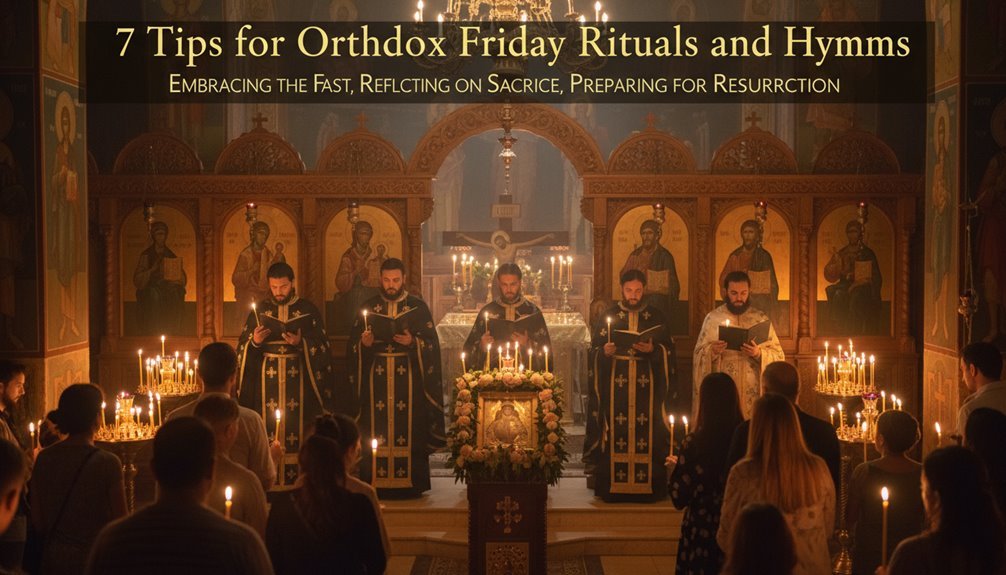
11 Mar 7 Tips for Orthodox Friday Rituals and Hymns
As an Orthodox Christian, you’ll find profound meaning in Good Friday rituals and hymns. Prepare with fasting and abstinence to deepen your connection to the liturgy. Chant the Improperia, venerate the Cross, and hear the Lamentations – these invite you into the mystery of the Passion. Witness the solemn Entombment ritual, then wonder at the sacrificial love it commemorates. There’s much more to explore in this sacred tradition.
Table of Contents
Key Takeaways
- Focus on hymns that evoke the emotions and mystery of Christ’s Passion, allowing worshipers to enter into the sacred events of Good Friday.
- Engage in fasting and abstinence as part of spiritual preparation for the Good Friday liturgy, deepening the connection to the day’s message.
- Participate in the chanting of liturgical hymns and prayers, such as the Improperia, veneration of the Cross, and Lamentations, to immerse oneself in the mystery of the Cross.
- Prepare the altar and liturgical space with reverence, removing decorations and placing a plain, black or purple cloth over the altar to set the somber tone.
- Commemorate the Passion narrative through hymns and readings, reflecting on the sacrificial love of the Savior, and engage in post-ritual practices like the veneration of the Epitaphios.
The Significance of Good Friday Hymns
Why are Good Friday hymns so meaningful for the Orthodox Christian faithful? These ancient hymns tap into the deep emotions and mystery of Christ’s Passion. They allow worshipers to enter into the sacred events of that fateful day. The powerful lyrics and haunting melodies evoke feelings of sorrow, awe, and profound gratitude. Singing these hymns is a way to participate in the suffering and sacrifice of the Lord. It’s a moving experience that connects the believer to the timeless truths of the Christian faith. These hymns aren’t mere songs – they’re vehicles for spiritual transformation. As the faithful raise their voices in these age-old refrains, they’re reminded of the high cost of their redemption and the limitless love of God.
Preparing for Good Friday Liturgy
As you prepare for the Good Friday liturgy, you’ll want to focus on fasting and abstinence. Be sure to incorporate the traditional liturgical hymns and prayers into your observance. Don’t forget to ready the altar for this solemn service.
Fasting and Abstinence
One essential aspect of preparing for the Good Friday liturgy is fasting and abstinence. The Orthodox Church encourages a period of fasting, typically from midnight on Holy Thursday until the Communion service on Good Friday. This means abstaining from all food and drink, except for water. Additionally, the faithful are called to abstain from meat, dairy, and oil throughout Lent. These acts of self-denial help us focus on the gravity of Christ’s Passion and make us more receptive to the spiritual realities celebrated during the Good Friday service. By embracing fasting and abstinence, you’ll deepen your connection to the liturgy and its profound message of sacrifice and redemption.
Liturgical Hymns and Prayers
The Good Friday liturgy is rich with powerful and ancient hymns that guide the faithful through the solemn remembrance of Christ’s Passion. You’ll chant the Improperia, or the “Reproaches,” which poignantly depict Christ’s lament over the ingratitude of His people. The veneration of the Cross is accompanied by the moving hymn “Come, let’s adore,” where you’ll kneel and reverently kiss the instrument of our salvation. The Lamentations of Jeremiah evoke the sorrow of Good Friday, while the triumphant anthem “The Noble Joseph” celebrates Christ’s entombment. These timeless prayers and hymns invite you to enter more deeply into the mystery of the Cross.
Preparing the Altar
How do you prepare the altar for the Good Friday liturgy? Start by removing the altar cloths and decorations. Meticulously clean the altar and linens. Drape a plain, black or purple cloth over the altar, symbolizing the solemnity of the day. Place a large cross, often depicting the crucified Christ, in the center. Arrange candles around the altar, their flames flickering to recall the darkness that fell during the Crucifixion. Carefully place the Gospel book, chalice, and other liturgical items needed for the service. Ensure everything is in its proper place, creating an atmosphere of reverence and preparation for the sacred rites to come.
Traditional Prostrations and Venerations
Proper prostration involves lowering your body to the ground, your forehead touching the floor.
Venerating holy icons is a crucial part of Orthodox worship, as you show reverence and honor to sacred images.
Remember to approach these rituals with humility and devotion.
Proper Prostration Techniques
While performing traditional Orthodox prostrations and venerations, you should maintain proper form and technique.
Start by standing upright, then bow deeply from the waist, keeping your back straight.
Slowly lower yourself to the floor, touching your forehead, hands, and knees.
Remain in this position for a few moments, then push yourself back up to a standing position.
Avoid hunching your shoulders or arching your back.
Ensure your movements are fluid and controlled.
Remember to focus on the spiritual significance of the prostration rather than simply going through the motions.
Proper technique demonstrates your reverence and humility before God.
Veneration of Holy Icons
When venerating holy icons, it’s important to approach the task with reverence and care. Make the sign of the cross, then reverently kiss the icon. Avoid touching the surface of the icon itself. Prostrate yourself before the icon, placing your forehead on the floor. This act of profound respect acknowledges the holy presence represented.
As you venerate, offer a brief prayer, asking the saint or divine figure depicted to intercede on your behalf. Maintain this humble, prayerful posture for a moment before rising. Treat the holy icon with the utmost devotion, for it’s a window into the sacred.
Commemorating the Passion Narrative
As you commemorate the Passion narrative on Orthodox Fridays, you’ll likely include hymns and readings that recount the events of Christ’s suffering, crucifixion, and death. These liturgical elements allow you to reflect deeply on the sacrificial love of the Savior.
You’ll hear the moving lamentations of the Theotokos and witness the dramatic dialogue between Christ and Pontius Pilate. Psalms and scriptural passages describing the Passion will be interwoven throughout the service.
As you sing the haunting refrains and contemplate the profound mysteries, you’re invited to unite your own sufferings with those of the Lord, finding hope in His triumph over sin and death.
The Unveiling of the Holy Cross
The Holy Cross takes center stage during Orthodox Friday observances, as the clergy dramatically unveil it for veneration. They’ll lift the cross, displaying its sacred image to the gathered faithful, who’ll then approach to reverently kiss it. This ritual symbolizes Christ’s crucifixion and the significance of the cross in Orthodox theology.
You’ll hear solemn hymns and readings as the faithful contemplate the passion narrative. The cross remains on display, allowing worshippers to venerate it throughout the service. This powerful ritual reminds us of Christ’s ultimate sacrifice and the central role of the cross in Orthodox Christian faith and practice.
Chanting the Lamentations of the Theotokos
After venerating the Holy Cross, the congregation turns their attention to the Lamentations of the Theotokos. You’ll hear the church choir chant these poignant hymns, filled with Mary’s grief at the Crucifixion. The haunting melodies and mournful lyrics evoke a deep sense of sorrow and contemplation. As you listen, you’re invited to join in the lamentation, reflecting on Christ’s sacrifice and the Theotokos’ profound suffering. These hymns remind us of the humanity at the heart of our faith – the pain, love, and ultimate triumph of the Passion. Chanting the Lamentations is a powerful way to enter into the mystery of Good Friday, preparing your heart for the joy of Pascha.
Observing the Solemn Entombment
Following the chanting of the Lamentations, you’ll witness the solemn Entombment ritual. The priest and faithful reverently place the epitaphios, an icon depicting Christ’s body, into the tomb. As they do, they sing hymns lamenting His death and praising His descent into Hades. You’ll notice the church dimming its lights, symbolizing the world’s mourning. The faithful venerate the epitaphios, kissing it and the tomb. This powerful ritual commemorates Christ’s burial and inspires profound sorrow and hope. Participate wholeheartedly, allowing the solemnity to move your heart. Through this observance, you’ll deepen your connection to the paschal mystery.
Frequently Asked Questions
Can I Listen to Good Friday Hymns at Home?
Yes, you can listen to Good Friday hymns at home. While it’s traditional to attend church services on Good Friday, many Orthodox Christians find it meaningful to listen to the hymns and reflect on their spiritual significance in the privacy of their own homes. Just be mindful of the sacred nature of these hymns and maintain an appropriate reverence.
Do I Need to Attend All Good Friday Services?
You don’t necessarily need to attend all Good Friday services, but it’s recommended to participate in as many as possible. The services on this sacred day are an important part of the Orthodox Christian experience, so try to attend as much as you can. However, don’t feel obligated to attend every single one if it’s not feasible.
Can I Venerate the Cross Outside of Church?
Yes, you can venerate the cross outside of church.
The Orthodox tradition encourages personal veneration of the cross, whether at home or in a sacred space.
You don’t have to wait for Good Friday services to honor the cross – you can do so anytime, as part of your daily prayers and devotions.
Is It Necessary to Commemorate the Passion Narrative?
You don’t necessarily have to commemorate the passion narrative on Fridays. While it’s common practice in the Orthodox tradition, it’s not an absolute requirement. You can still venerate the cross and engage in other Friday devotions without a formal re-enactment of the passion. The important thing is to focus on Christ’s sacrifice and your personal spiritual connection.
Can I Observe the Entombment at a Different Time?
Yes, you can observe the entombment at a different time. While the traditional Orthodox practice is to commemorate the entombment on Good Friday, there’s flexibility in the timing. As long as you observe this important ritual with reverence and intention, the specific day isn’t essential. Feel free to find a time that works best for you and your spiritual needs.
Conclusion
You’ll find that observing these Orthodox Good Friday rituals and hymns can deepen your spiritual connection. They allow you to fully participate in commemorating Christ’s Passion and prepare your heart for the joy of Resurrection Sunday. Don’t be afraid to embrace the solemnity – it’ll make the celebration of new life all the more meaningful.









No Comments