

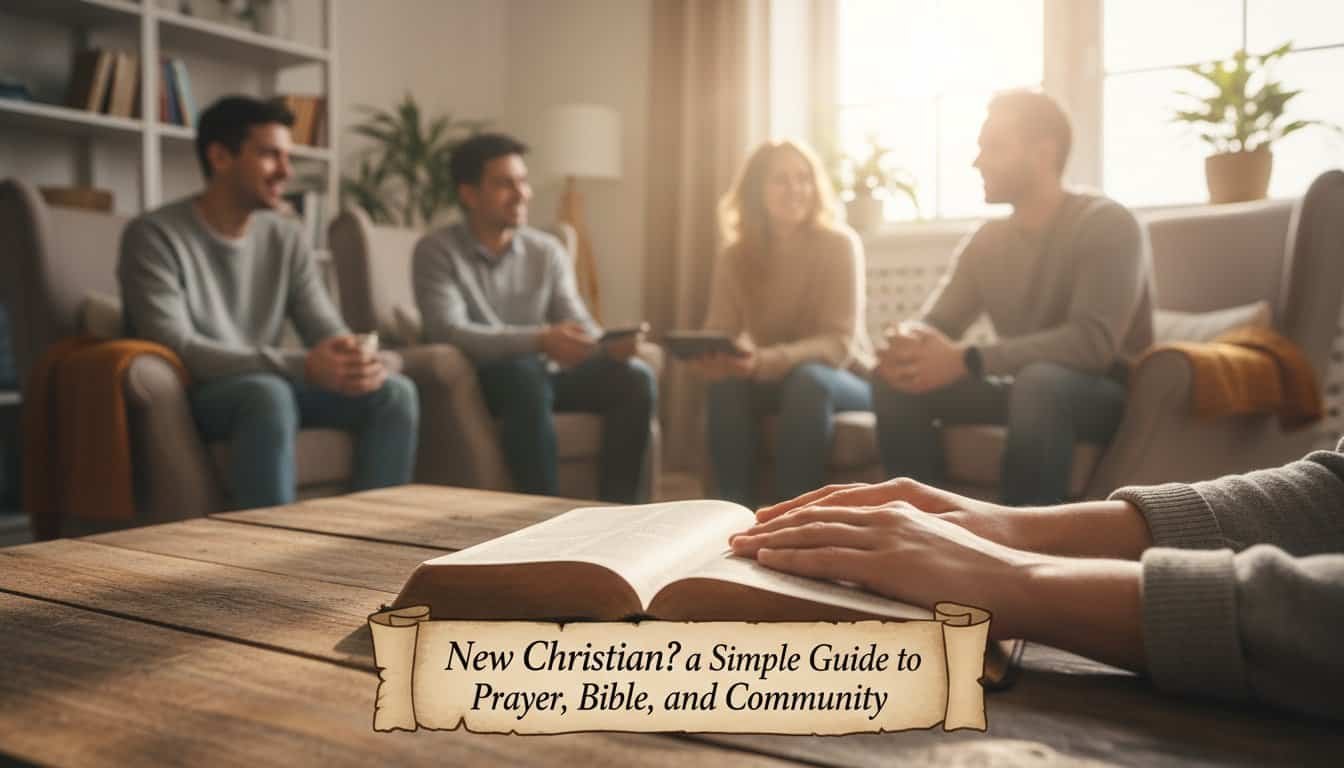
15 Dec New Christian A Simple Guide to Prayer, Bible, and Community
As a new Christian, you’ve received a transformed identity as God’s beloved child, no longer defined by past mistakes but by His grace. Start building your prayer life with just five minutes daily—it’s a conversation, not a performance. Begin reading Scripture with shorter books using a study Bible for context, focusing on one passage at a time. Find a welcoming church community that emphasizes biblical truth and genuine relationships. Continue ahead to discover practical steps for deepening these foundational practices.
Table of Contents
Key Takeaways
- Start with 5 minutes of daily prayer as conversation with God, choosing a consistent time and comfortable location.
- Begin Bible reading with 10-15 minutes daily using a study Bible, starting with shorter books to build confidence.
- Visit different churches to find welcoming communities that emphasize both biblical truth and supportive fellowship for growth.
- Join small groups or newcomer classes to build meaningful relationships and find accountability partners for spiritual encouragement.
- Focus on consistent small steps in spiritual disciplines rather than dramatic changes, extending grace during the learning process.
Understanding Your New Identity in Christ

When you accept Christ as your Savior, you don’t just gain forgiveness—you receive a completely new identity that changes everything about who you are. You’re no longer defined by past mistakes, failures, or worldly labels. Instead, you’re God’s beloved child, chosen and set apart for His purposes.
Embracing spiritual identity means understanding that you’re now a saint, not a sinner. You’re righteous in God’s eyes because of Christ’s sacrifice. This isn’t just theological theory—it’s your new reality. You have direct access to the Father, and His Spirit lives within you.
Discovering personal purpose flows naturally from this identity. God has prepared specific good works for you to walk in. Your talents, experiences, and passions aren’t accidents—they’re tools He’ll use for His kingdom. Start seeing yourself through God’s eyes: loved, valuable, and equipped for meaningful impact in this world.
Building a Personal Prayer Life That Works
You don’t need to master complex prayer formulas or lengthy devotions to connect with God effectively. Building a meaningful prayer life starts with small, consistent steps that fit your unique personality and daily rhythm.
The key is establishing a sustainable routine that creates sacred space for conversation with God rather than checking off a religious obligation.
Start Small, Stay Consistent
Because prayer represents a conversation with God rather than a performance, starting with just five minutes daily will build a stronger foundation than attempting hour-long sessions that you can’t maintain. Set realistic goals that fit your current schedule and energy levels. Choose a specific time—whether morning coffee or before bed—and protect it consistently.
When five minutes becomes natural, you’ll find yourself wanting to extend the time. Make time adjustments gradually, adding just a few minutes weekly. Consistency trumps duration every time. Missing a day won’t derail your progress, but abandoning the habit will.
Focus on showing up regularly rather than praying perfectly. God values your faithful presence more than eloquent words. Small, steady steps create lasting spiritual disciplines.
Find Your Prayer Style
Building consistency sets the foundation, but prayer becomes more meaningful when you discover methods that resonate with your personality and learning style. Experiment with different approaches to find what connects you with God naturally.
Consider your prayer posture—some people feel closest to God kneeling, while others prefer sitting quietly or walking. There’s no wrong way. Your prayer location matters too. You might thrive in a designated quiet corner, outdoors in nature, or even during your commute.
Try various prayer formats: conversational talking, structured prayers like the Lord’s Prayer, journaling your thoughts, or silent meditation. Some prefer morning prayers, others evening reflection. Pay attention to when you feel most engaged and authentic. God meets you wherever you are, however you come.
Create Sacred Time Daily
Transformation happens when prayer shifts from occasional activity to daily rhythm. You don’t need hours—just consistency. Start small with five minutes at the same time each day, whether morning coffee or evening wind-down.
Creating ritual anchors your practice. Light a candle, open your Bible to a specific spot, or sit in the same chair. These physical cues signal your mind it’s time for sacred connection.
Establishing consistency matters more than duration. Your brain craves patterns, and daily prayer becomes as natural as brushing teeth when you stick with it. Don’t aim for perfection—aim for showing up.
Choose a time you can protect. Turn off notifications, tell family you’re unavailable, and guard this appointment with God fiercely. Your relationship with Him deepens through faithful presence, not perfect performance.
Starting Your Bible Reading Journey

You’ll want to select a Bible translation that’s both accurate and readable—start with the NIV or ESV if you’re unsure. Consistency matters more than quantity, so commit to reading just 10-15 minutes daily rather than attempting marathon sessions that you can’t sustain.
Your goal isn’t to understand everything immediately but to establish a rhythm that connects you with God’s word every single day.
Choosing Your First Bible
Walking into a bookstore’s Bible section can feel overwhelming when you’re faced with dozens of translations, study editions, and formats. Don’t let this discourage you from starting your journey.
For new believers, choose a translation that balances accuracy with readability. The NIV, ESV, and NLT are excellent starting points. Avoid overly complex versions initially – you’ll appreciate clarity as you develop your understanding.
Consider a study Bible that includes helpful notes, maps, and explanations. These resources support effective bible study methods without replacing personal reflection. Look for editions designed for new Christians.
Start with a physical Bible rather than digital versions. The tactile experience helps with retention and focus. As you grow familiar with different bible translations, you’ll discover which style resonates with your learning preferences.
Daily Reading Habits
Once you’ve selected your Bible, establishing a consistent reading routine becomes your next priority. Start small with just five to ten minutes daily rather than attempting lengthy sessions that’ll overwhelm you. Pick a specific time—whether morning coffee or before bed—and stick with it consistently.
Begin with shorter books like Philippians or 1 John before tackling longer texts. These daily habits build momentum and confidence. Don’t worry about understanding everything immediately; focus on showing up consistently.
Consider using reading strategies like keeping a simple journal to note verses that resonate with you. If you miss a day, don’t abandon your routine entirely—just pick up where you left off. Consistency matters more than perfection in developing lasting spiritual disciplines.
Making Sense of Scripture as a Beginner
When you first open the Bible, the sheer volume of content can feel overwhelming—sixty-six books spanning thousands of years, multiple genres, and countless stories that seem disconnected from modern life. Don’t let this discourage you. Start with basic reading comprehension strategies that’ll help you navigate Scripture effectively.
Begin by asking simple questions: Who’s speaking? What’s the context? What type of writing is this—history, poetry, or prophecy? These biblical interpretation methods form your foundation for understanding.
Focus on one passage at a time rather than trying to grasp everything immediately. Read surrounding verses to understand the broader context. When you encounter confusing sections, it’s perfectly normal—even seasoned believers wrestle with difficult passages.
Consider using a study Bible with notes that explain historical background and cultural context. Remember, understanding Scripture is a lifelong journey. You don’t need to master everything right away. God reveals truth progressively as you grow in faith.
Finding the Right Church Community
Learning Scripture becomes richer when you’re surrounded by fellow believers who can share insights, answer questions, and encourage your spiritual growth. Finding the right church community requires intentional effort and patience.
Start by visiting different churches in your area. Pay attention to how welcoming they’re to newcomers and whether the teaching aligns with biblical truth. Look for congregations that emphasize both God’s grace and practical Christian living.
Consider the church’s size and style. Some thrive in large congregations with diverse programs, while others prefer intimate settings. Neither is wrong—choose what helps you connect authentically.
Focus on building relationships gradually. Join a small group, volunteer for church activities, or attend newcomer classes. These settings make establishing community more natural than trying to connect during Sunday services alone.
Ask yourself: Does this church challenge you to grow spiritually while providing support? Does the leadership demonstrate Christ-like character? Trust your instincts while remaining open to God’s guidance.
Connecting With Other Believers
Building meaningful friendships with fellow Christians extends far beyond Sunday morning handshakes and casual hallway conversations. You’ll discover authentic community when you intentionally pursue deeper relationships with other believers.
Authentic Christian community requires intentional pursuit of deeper relationships beyond surface-level Sunday interactions.
Start by building small group connections through Bible studies, prayer groups, or fellowship gatherings. These intimate settings create natural opportunities for vulnerability and genuine conversation. You’ll find it easier to share struggles and celebrate victories when you’re part of a smaller circle.
Consider cultivating accountability partners who’ll walk alongside you in your faith journey. These trusted friends can encourage you during difficult seasons, challenge you to grow spiritually, and pray with you regularly. Look for mature believers who demonstrate wisdom and grace.
Don’t wait for others to initiate—take the first step. Invite someone for coffee, join a ministry team, or attend church social events. God designed you for community, and He’ll bless your efforts to connect authentically with His people.
Developing Spiritual Disciplines for Growth
Although spiritual growth happens through God’s grace, you’ll accelerate your development by establishing consistent spiritual disciplines. These practices aren’t legalistic requirements but pathways to deeper intimacy with Christ.
Start with daily Bible reading and prayer, even if it’s just ten minutes. Choose a regular time and location to create consistency. Add journaling to process what you’re learning and track God’s faithfulness in your life.
Developing spiritual habits requires patience and grace with yourself. Don’t abandon everything when you miss a day—simply restart. Consider incorporating worship music, Scripture memorization, or fasting into your routine.
Cultivating spiritual maturity happens gradually through faithful practice. These disciplines train your heart to recognize God’s voice and respond to His leading. Find an accountability partner who’ll encourage your growth without judgment.
Overcoming Common New Christian Challenges
When you first embrace faith in Christ, you’ll likely encounter challenges that can shake your confidence and test your resolve. Doubt often creeps in, making you question what you’ve believed. Remember that questioning doesn’t disqualify your faith—it’s part of becoming spiritually mature.
Questioning your faith doesn’t disqualify it—doubt is often a natural part of spiritual growth and maturity.
You might struggle with prayer, feeling like God isn’t listening. Start small with simple conversations rather than elaborate requests. Bible reading can seem overwhelming, so begin with shorter passages and ask for understanding.
Fellow believers might disappoint you since they’re imperfect people on their own journeys. Don’t let human failures derail your relationship with Christ. Old habits may persist, creating guilt and frustration. God’s grace covers your growth process—transformation takes time.
Focus on nurturing new faith through consistent small steps rather than dramatic changes. Connect with patient mentors who remember their early struggles. These challenges are temporary growing pains, not permanent roadblocks to your spiritual development.
Frequently Asked Questions
What Should I Do if My Non-Christian Family Opposes My Faith?
You’ll need to set boundaries while showing love and respect. Don’t argue or try to convince them through debate. Instead, demonstrate Christ’s love through your actions and character.
Find support through your church community, Christian friends, or mentors who understand your situation. Pray for your family regularly and trust God to work in their hearts. Stay patient, gentle, and committed to your faith journey.
How Do I Handle Doubts About God’s Existence After Becoming Christian?
Question your faith honestly—it’s normal and healthy. Confront doubts by studying Scripture, praying earnestly, and discussing concerns with mature believers.
Doubts don’t disqualify your faith; they can strengthen it. Research apologetics, read testimonies, and examine evidence for Christianity. Remember that faith involves trust beyond complete understanding.
Don’t isolate yourself—seek community support and pastoral guidance. God’s existence doesn’t depend on your feelings or temporary uncertainties.
Is It Okay to Listen to Secular Music as a New Christian?
Yes, you can listen to secular music as a new Christian. Your music choices don’t determine your salvation. However, be mindful of lyrics that contradict your values or pull you away from God.
Consider balancing secular music with prayer music and worship songs that strengthen your faith. Ask yourself: does this music encourage growth in Christ or hinder it? Let wisdom guide your decisions.
Should I Get Baptized Immediately or Wait Until I’m More Mature?
You don’t need to wait for perfect maturity—baptism represents your decision to follow Christ, not your spiritual perfection.
Consider your spiritual readiness by asking yourself if you truly believe in Jesus and want to publicly declare your faith. Seek mentorship guidance from your pastor or mature believers who can help you understand baptism’s significance.
If you’re genuinely committed to following Christ, you’re ready for this important step in your faith journey.
How Do I Share My Faith Without Being Pushy or Offensive?
Share your faith through respectful dialogue rather than aggressive preaching. Listen actively to others’ perspectives and ask thoughtful questions about their beliefs. Use personal testimonies to describe how faith has impacted your life without pressuring others to convert. Focus on building genuine relationships first.
Let your actions demonstrate Christ’s love, and when opportunities arise naturally, you’ll find people more receptive to hearing your story.
Conclusion
You’ve taken the most important step by accepting Christ, and now you’re equipped with the foundational tools to grow in your faith. Don’t expect perfection—spiritual growth takes time and practice. Start small with prayer and Bible reading, find a supportive church community, and remember that every mature Christian was once where you are now. Trust God’s grace to guide you through this exciting journey. You’re not walking alone—He’s with you every step.










No Comments