

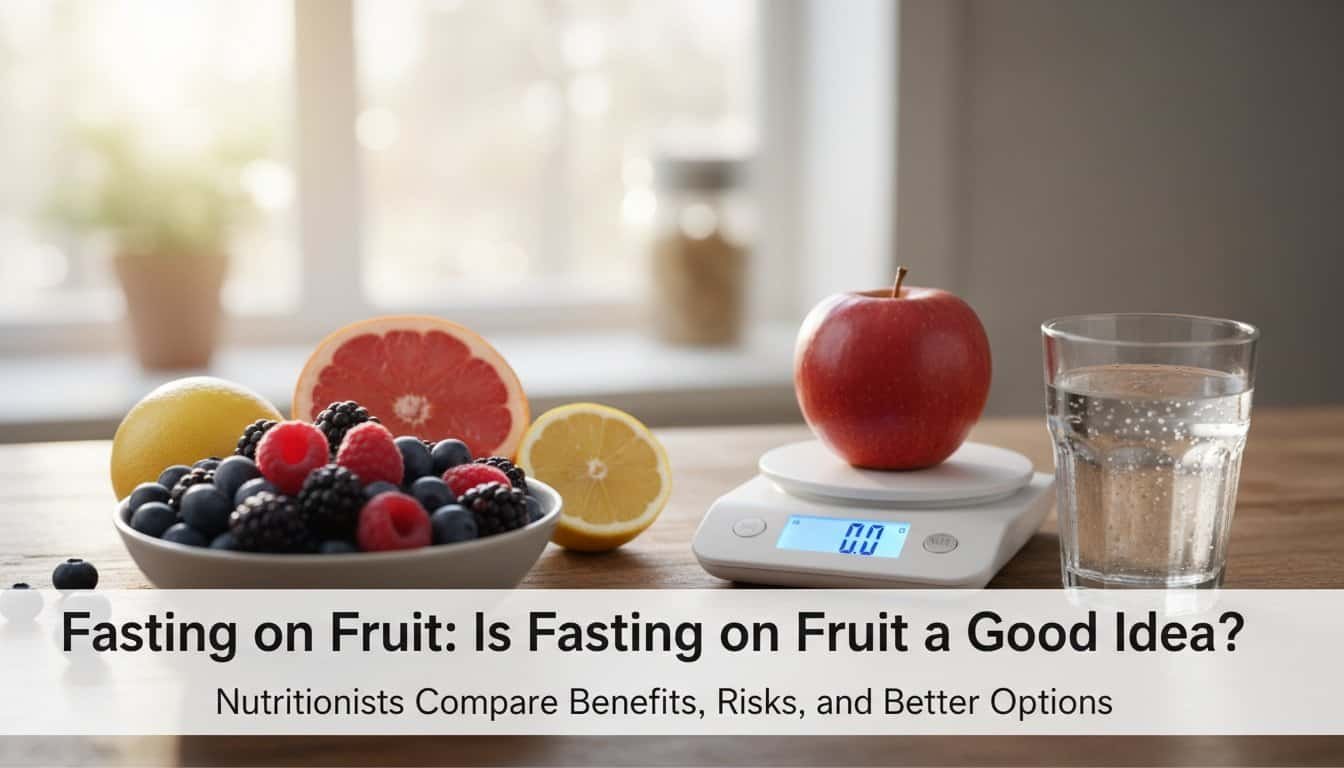
08 Jan Is Fasting on Fruit a Good Idea? Nutritionists Compare Benefits, Risks, and Better Options
Fruit-based fasting isn’t true fasting and doesn’t deliver the metabolic benefits you’re seeking. While whole fruits offer cardiovascular protection and cancer risk reduction when part of a balanced diet, fruit-only approaches cause severe nutritional deficiencies including B12, iron, and protein shortfalls. You’ll miss the ketosis and autophagy that define authentic fasting, while facing blood sugar disruptions and potential malnutrition. Evidence-based intermittent fasting methods like alternate-day or time-restricted eating provide superior, sustainable results without these risks.
Key Takeaways
- Fruit-only fasting isn’t true fasting since constant glucose prevents ketosis and blocks fat-burning metabolic benefits.
- Fruit-only diets risk severe nutritional deficiencies including B12, iron, protein, and calcium leading to serious health complications.
- Whole fruits provide significant health benefits when part of balanced diets, reducing cancer and cardiovascular disease risks.
- Excessive fruit consumption can cause blood sugar spikes, digestive issues, and increased mortality risk in women.
- Evidence-based intermittent fasting methods like alternate-day or time-restricted eating offer superior, sustainable weight loss results.
Understanding the Science Behind Fruit-Based Fasting
How does consuming only fruit during a fasting period affect your body’s metabolic processes? When you fast on fruit, you’re not triggering the same metabolic adaptations that occur during true fasting. Your body relies on carbohydrates from fruit as its primary energy source, preventing the crucial shift to fat-derived ketones that defines authentic fasting.
True fasting activates specific cellular signaling pathways when glucose becomes unavailable. AMPK and CaKMII kinases activate during low glucose states, promoting autophagy and cellular repair. The mTOR pathway decreases, enabling protein recycling. However, fruit’s high carbohydrate content blocks these mechanisms.
You won’t achieve ketosis during fruit-based fasting because the constant glucose availability prevents your body from depleting glycogen stores and switching to fat metabolism. Your insulin levels remain elevated, blocking lipolysis and the production of beneficial ketones like beta-hydroxybutyrate. This means you’re missing the protein-sparing mechanisms and metabolic benefits associated with genuine fasting states. Additionally, authentic fasting helps reduce inflammatory parameters throughout the body, which contributes to many of its health benefits.
Health Benefits of Whole Fruits in Your Diet
When you incorporate whole fruits into your diet, you’re accessing documented cardiovascular protection, with research showing 100g daily intake correlates with a 29% reduction in cardiovascular disease mortality.
Your cancer risk may also decrease significantly, as studies demonstrate that consuming approximately three daily fruit servings during adolescence associates with 25% lower breast cancer risk in premenopausal women over 22-year follow-up periods.
These protective effects stem from fruit’s fiber content, polyphenols, and bioactive compounds that work synergistically to support your body’s defense mechanisms.
Cardiovascular Disease Protection
Multiple large-scale studies demonstrate that incorporating whole fruits into your diet provides substantial protection against cardiovascular disease. You’ll experience up to 33% relative risk reduction when consuming 800 grams of fruits and vegetables daily. Citrus fruits specifically reduce your CVD risk by 12%, while apples and pears lower stroke incidence significantly.
Dried fruits offer unique benefits, reducing heart failure risk by approximately 40% through antioxidant mechanisms that improve myocardial contractility.
These cardiovascular benefits stem from blood pressure reduction and beneficial gut microbiome changes that enhance overall metabolic health. Green leafy vegetables combined with fruits provide the strongest evidence for coronary heart disease prevention. However, you shouldn’t rely solely on fruit fasting to achieve these benefits—balanced, sustained consumption throughout regular eating patterns delivers optimal cardiovascular protection.
Cancer Risk Reduction
Research across thirteen major cohort studies reveals that incorporating whole fruits into your diet provides measurable protection against various cancers, with participants consuming five or more daily servings experiencing an 86% lower cancer risk compared to those not meeting recommended intake levels.
The dose response relationship shows each additional portion reduces cancer risk by 11%, with benefits plateauing around five servings daily. Specific fruits demonstrate targeted protection—daily apple consumption cuts colorectal cancer risk by 50%, while citrus fruits provide 9% lower risk for the same cancer type.
Dietary fiber intake and anti-tumor bioactive compounds in fruits contribute to these protective effects. Cancer survivors also benefit, with higher fruit consumption linked to 18% lower overall mortality in ovarian cancer patients.
Nutritional Deficiencies and Metabolism Concerns With Fruit-Only Diets
Fruit-only diets strip away essential nutrients your body requires for optimal function, creating a cascade of potentially serious health complications. You’ll face severe vitamin B12 deficiency, with documented cases showing levels dropping to 50 ng/mL compared to normal ranges of 200–900 ng/mL. This deficiency triggers reversible dementia, megaloblastic anemia, and cognitive impairment.
Iron deficiency becomes inevitable, causing fatigue and anemia, particularly dangerous for children. Your protein intake plummets, leading to muscle loss, impaired immune function, and hormonal imbalances affecting growth and repair processes. Calcium and vitamin D deficiencies weaken your bones and teeth.
Metabolically, you’ll experience blood sugar disruptions from excessive fructose intake and digestive complications including bloating and cramping. Hyperkalemia poses additional risks. These deficiencies create protein-energy malnutrition that’s especially harmful for children, teenagers, and nursing mothers, potentially resulting in severe malnutrition.
Why Fruit Juice Increases Mortality Risk in Women

If you’re considering fruit juice as part of your dietary approach, you should understand that research reveals concerning mortality risks, particularly for women.
Studies tracking over 18,000 cardiovascular disease patients found that high fruit juice intake increased women’s death risk by 26%, with the hazard persisting even when adequate whole fruit was consumed. The elevated mortality appears linked to juice’s concentrated sugar content and absence of fiber that whole fruits provide, creating metabolic effects that disproportionately impact female physiology.
High Sugar Content
Why does fruit juice pose such significant mortality risks for women, despite being perceived as a healthy beverage choice? The answer lies primarily in its concentrated sugar content, which creates metabolic challenges your body struggles to handle effectively.
When you consume fruit juice, you’re ingesting concentrated sugars without the fiber that naturally slows absorption in whole fruit. This rapid sugar influx triggers significant insulin impacts, causing blood glucose spikes that stress your metabolic systems.
The juice acidity compounds these effects by potentially affecting mineral absorption and dental health.
Research shows each additional 12-ounce serving raises your mortality risk by 24%. Even 100% natural fruit juice increases death risk by 30% when consumed at 250+ grams daily, demonstrating that sugar concentration—not artificial additives—drives these concerning health outcomes.
Fiber Loss Effects
When juice extraction removes approximately 90% of the fiber naturally present in whole fruits, it eliminates the protective mechanisms that regulate how your body processes sugar. This fiber loss creates dangerous metabolic consequences that significantly impact women’s health outcomes.
The fiber free effects transform fruit’s natural nutritional matrix into a simplified liquid containing primarily sugars and water. Without fiber’s glucose-regulating properties, you’ll experience sharp blood glucose spikes and corresponding insulin surges that promote cardiovascular disease risk. These fiber loss implications become particularly concerning for women, who demonstrate stronger mortality associations with fruit juice consumption than men.
Research reveals that women consuming high volumes of fruit juice face a 26% increased all-cause mortality risk, highlighting the critical importance of fiber’s protective role.
Gender-Specific Mortality Data
How does fruit juice consumption create disproportionate health risks for women compared to men? Currently, you can’t rely on definitive gender-specific mortality data regarding fruit juice consumption.
While research shows that sugar-sweetened beverages generally pose greater mortality risk factors for women than men, this evidence doesn’t specifically isolate fruit juice effects by gender.
The available data presents overall mortality findings without gender stratification. Researchers acknowledge that evidence from mortality outcomes remains “only suggestive” and requires further investigation into specific fruit juice health risks and potential benefits.
You’ll need to wait for more comprehensive studies that explicitly compare fruit juice’s metabolic disease risks between genders. Until then, women should exercise the same caution as men when considering fruit juice consumption during fasting periods.
Comparing Short-Term Fasting Methods and Their Effectiveness
While each short-term fasting method offers distinct advantages, their effectiveness varies significantly based on your specific goals and lifestyle constraints.
Alternate-day fasting demonstrates superior weight loss results, ranking highest among intermittent fasting approaches in meta-analyses. You’ll likely experience 7-11 pounds of weight loss over 10 weeks, plus substantial metabolic benefits including 20-25% LDL cholesterol reduction and 15-30% triglyceride decreases. However, this method’s restrictive nature may compromise long term adherence.
The 5:2 approach offers greater flexibility but lower weight loss efficacy. You’ll fast two non-consecutive days weekly while eating normally otherwise. Time-restricted eating (16:8 or 14:10 protocols) aligns with circadian rhythms and may improve insulin sensitivity, particularly beneficial if you struggle with nighttime snacking.
Despite varying mechanisms, no fasting method significantly outperforms continuous calorie restriction for weight loss. Dropout rates reach 65% across studies, indicating that sustainable results depend more on your ability to maintain the chosen approach than the method itself.
Evidence-Based Alternatives to Fruit Fasting for Sustainable Health

Beyond the fasting methods outlined above, several evidence-based approaches offer more sustainable pathways to health improvement than fruit fasting protocols. You’ll find that 4:3 intermittent fasting delivers superior results, achieving 7.6% body weight loss compared to continuous calorie restriction‘s 5% at one year. This approach supports better glycemic control while maintaining higher adherence rates.
Evidence-based intermittent fasting approaches provide more sustainable health improvements than restrictive fruit-only protocols, with superior long-term results.
Alternate day fasting ranks highest for weight loss efficacy, showing -1.29 kg greater reduction versus continuous energy restriction. However, you should consider that longer trials are needed for confirmation beyond 24 weeks.
Time-restricted eating provides moderate benefits, typically producing 7-11 pounds of weight loss over 10 weeks. The 5:2 diet offers comparable results to continuous restriction with similar dropout rates.
For weight maintenance, continuous energy restriction remains a viable option, though it shows less effectiveness than structured intermittent fasting protocols. These evidence-based alternatives provide clearer guidelines than restrictive fruit-only approaches.
Frequently Asked Questions
How Long Can Someone Safely Do a Fruit-Only Fast?
You can safely do a fruit-only fast for a maximum of 3 days if you’re relatively healthy. Beyond 72 hours, you’ll face serious potential health implications including nutritional deficiencies from inadequate protein and essential fats.
Optimal fruit selection involves choosing organic varieties, but even then, prolonged fruit-only intake disrupts blood sugar balance. You must consult your healthcare provider first, especially if you have underlying conditions.
Can Children or Pregnant Women Try Fruit Fasting Diets?
Fruit fasting isn’t recommended for children or pregnant women. Children face severe nutritional deficiencies, protein-energy malnutrition, and impaired growth when following fruitarian diets. Their developing brains need consistent glucose, and calorie restriction causes cognitive decline.
For pregnant women, fruit-only diets aren’t advisable during pregnancy or breastfeeding due to restrictive nutrients and calories that risk malnourishment. You should consult your doctor before considering any fasting approach.
What Fruits Are Best for Fasting – Berries, Citrus, or Tropical?
Berries are your best choice for fasting due to their exceptional fruit fiber benefits and lowest fruit sugar content. You’ll get 8 grams of fiber per cup of raspberries while maintaining stable blood sugar levels.
Citrus fruits rank second with moderate glycemic impact, while tropical fruits require caution due to higher sugar content. You should prioritize strawberries, blueberries, and blackberries for optimal fasting results.
How Much Weight Loss Is Realistic With Fruit Fasting?
You’ll likely see 1-3 pounds of initial weight loss during fruit fasting, but this represents water and muscle loss rather than sustainable fat reduction. Your weight loss rate accelerates due to severe calorie restriction, but you’ll face significant nutrition deficiencies from missing essential proteins and fats.
Research shows modest long-term results of only 1-3 pounds over six weeks with increased fruit intake in balanced diets.
Should Diabetics Avoid Fruit Fasting Completely or Modify the Approach?
You should avoid fruit fasting completely if you have diabetes. Medical guidelines explicitly contraindicate this practice due to dangerous blood glucose spikes from concentrated natural sugars without protein or fat buffering.
Don’t attempt modified approaches either. Instead, consult healthcare provider about incorporating whole fruits into balanced meals and adjust carbohydrate intake appropriately. Complete avoidance of fruit fasting remains the safest medical recommendation for diabetics.
Conclusion
You shouldn’t rely on fruit-only fasting as a sustainable health strategy. While short-term fruit consumption offers vitamins and fiber, extended fruit fasting creates nutritional deficiencies and metabolic imbalances you can’t ignore. Research shows fruit juice particularly increases mortality risk in women due to concentrated sugars. Instead, you’ll achieve better results with evidence-based intermittent fasting protocols or balanced caloric restriction that includes diverse whole foods, ensuring you meet essential nutrient requirements safely.












No Comments