


30 Aug Best Bible Covers to Protect and Personalize Your Bible
You’ll protect your sacred text with covers featuring secure zippers, reinforced handles, and organizational pockets for study materials. Canvas offers breathability and develops a unique patina, while synthetic materials provide water-resistant protection for various ministry contexts. Whether you’re selecting pocket editions (4″x6″) or large print formats (7″x10″), proper sizing ensures compatibility with your Bible’s binding. Custom embroidery incorporating Hebrew scripture transforms your cover into a portable altar of remembrance. Discover how thoughtful design enhances your daily engagement with God’s Word.
Table of Contents
Key Takeaways
- Bible covers protect your scripture from wear, moisture, and damage while preserving pages for years of study and devotion.
- Choose from durable materials like canvas, leather, or water-resistant synthetic fabrics based on your environment and usage needs.
- Measure your Bible’s height, width, and spine thickness to ensure proper fit, checking manufacturer size charts for specific translations.
- Built-in storage features include zippered pockets for notes, pen holders, and compartments for study materials and prayer cards.
- Personalization options like embroidery, monograms, or engraved scripture verses make meaningful gifts for graduations, weddings, or spiritual milestones.
Essential Features to Look for in Quality Bible Covers
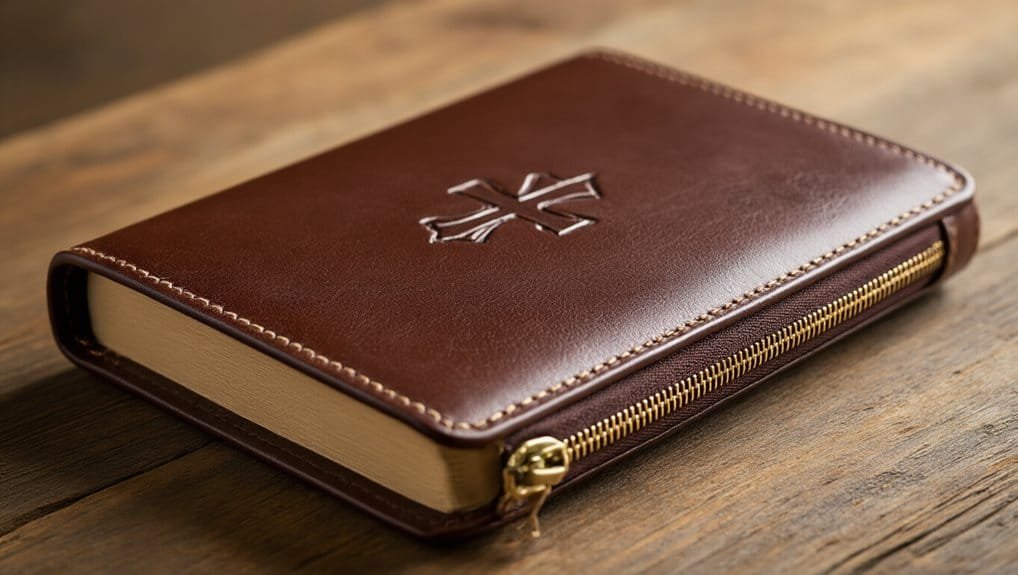
Beyond protection, design aesthetics shouldn’t be overlooked. Your cover should reflect the reverence you hold for Scripture while remaining functional.
Consider covers with secure zippers that won’t snag delicate pages, handles for easy transport to study groups or *beit midrash*, and pockets for note-taking materials.
Quality leather or synthetic alternatives offer longevity while developing a patina that enhances character over time.

The best covers balance form and function, ensuring your Bible remains accessible for daily study while preserving its physical integrity for generations of spiritual engagement.
Popular Materials and Their Benefits
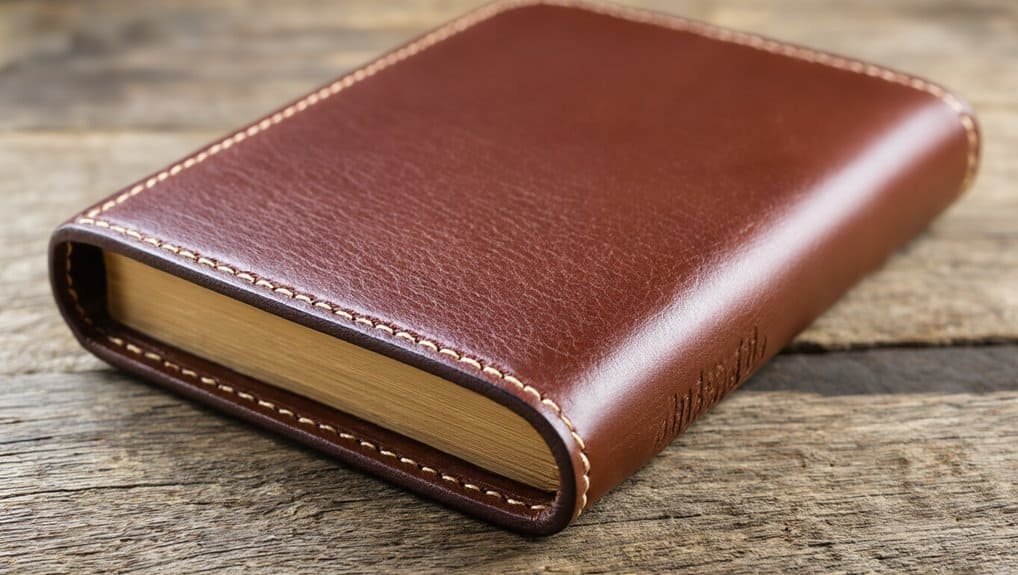
When selecting a Bible cover, the material choice profoundly impacts both the practical preservation of your sacred text and the tactile experience of daily Torah study.
Canvas materials offer exceptional durability, echoing the goatskin coverings of the mishkan (tabernacle) that protected sacred objects during Israel’s wilderness journey. You’ll find canvas resists wear while developing a distinctive patina that reflects your spiritual journey.
Canvas develops a distinctive patina reflecting your spiritual journey while protecting sacred text with mishkan-inspired durability.
Synthetic alternatives provide water-resistant protection crucial for safeguarding the d’var Hashem (word of God). These modern materials mirror the technological advancement seen in contemporary Torah scroll cases, combining reverence with practicality.
You’re investing in longevity when choosing polyurethane or nylon blends that repel moisture and resist tearing.

Consider how each material facilitates your devotional practice. Canvas breathes naturally, preventing mildew in humid climates, while synthetics offer lightweight portability for mission work.
Your choice should reflect both your environmental conditions and ministry context, ensuring your Bible remains accessible for consistent study and proclamation.
Sizing Guide for Different Bible Editions
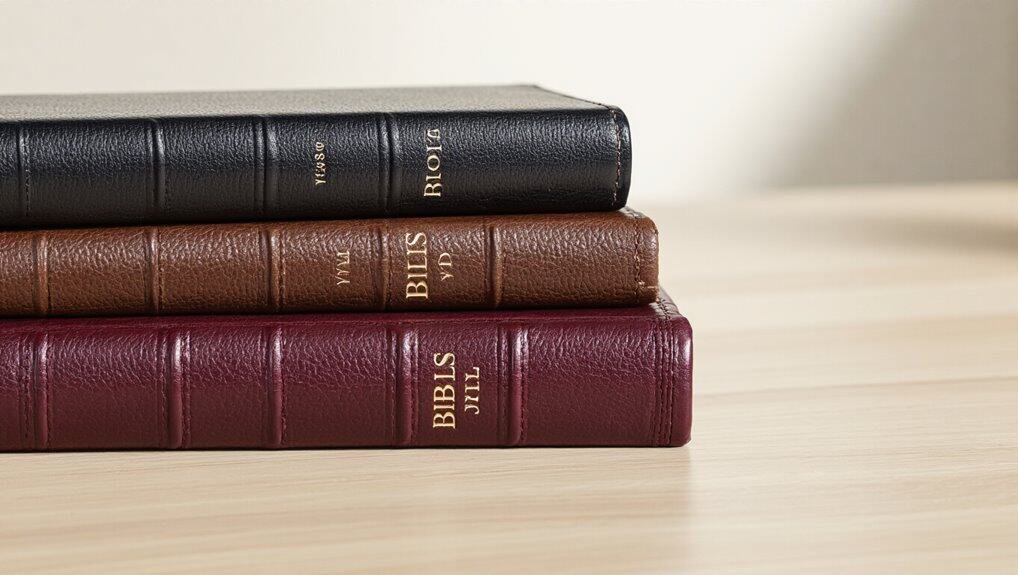
Three primary dimensions determine whether a Bible cover will properly fit your chosen edition: height, width, and spine thickness. You’ll find Bible sizes range from pocket editions (4″ x 6″) to large print formats (7″ x 10″). Standard cover dimensions accommodate these edition variations, but you must verify compatibility before purchasing.
Most manufacturers provide size charts listing measurements for common translations. Your KJV Study Bible requires different cover dimensions than a thin-line NIV. Measure your Bible’s closed dimensions, including spine width—this prevents purchasing covers that won’t zip or snap shut properly.
Fit assessments prove crucial for specialty editions. Hebrew-Greek interlinears and reference Bibles contain additional pages, increasing spine thickness substantially. You’ll need covers with expandable spines or adjustable straps.
Consider cover compatibility with your Bible’s binding type too—hardcover, softcover, or leather editions each present unique sizing requirements. Always check manufacturer specifications against your Bible’s exact measurements for optimal protection.
Storage Options and Organizational Compartments
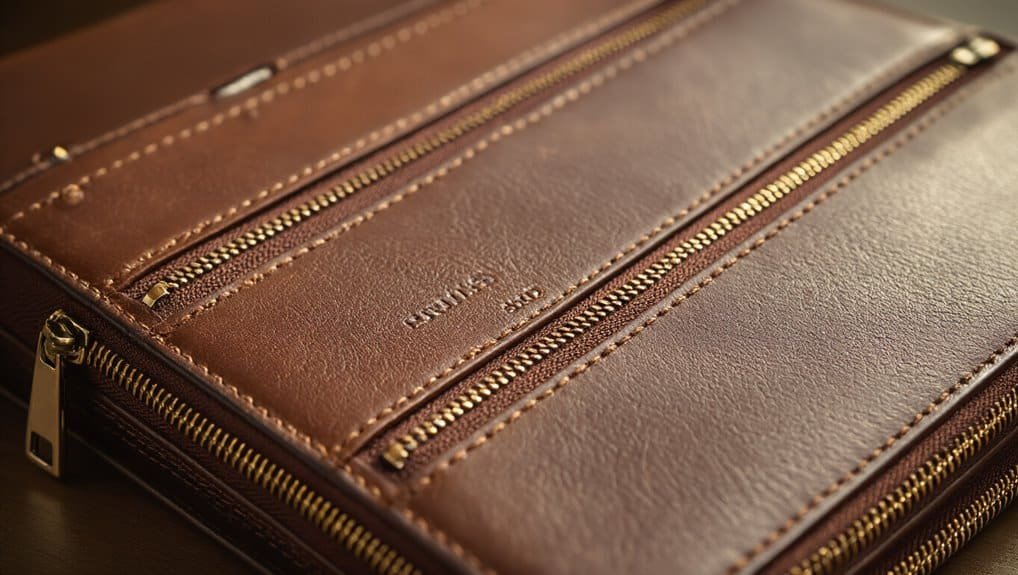
Bible covers with integrated storage compartments transform your study experience by organizing essential materials alongside sacred text.
You’ll find exterior pockets designed for notebooks, concordances, and Hebrew-Greek lexicons that facilitate deeper scriptural analysis. Interior mesh pouches secure highlighters and pens, preventing damage to delicate pages while maintaining quick access during exegetical work.
Consider storage solutions featuring zipper closures that protect loose study notes and prayer cards from falling out during transport.
You’ll appreciate compartment organization systems with dedicated slots for reference cards containing Hebrew root words or theological cross-references. Some designs incorporate expandable sections accommodating thicker study aids or journal inserts.
Look for reinforced dividers that maintain shape under weight, ensuring your organizational system remains functional through years of dedicated study.
These thoughtful features enable you to carry complete study resources within one protective case, supporting systematic theological research wherever you’re called to open God’s Word.
Personalization and Custom Design Choices
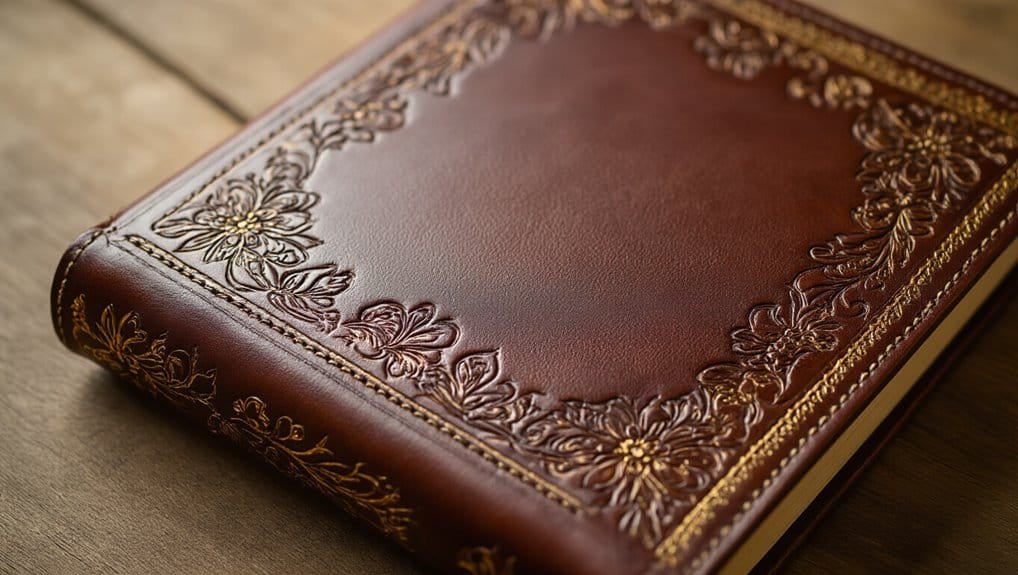
Beyond functional storage elements, personalizing your Bible cover creates a unique expression of faith that reflects your spiritual journey and theological commitments.
You’ll find custom embroidery offers profound opportunities to incorporate Hebrew scripture, such as the Shema (שְׁמַע) or sacred names of God, transforming your cover into a visual testimony.
Consider monogram options that integrate biblical symbolism—perhaps your initials intertwined with the Chi-Rho (☧) or Alpha-Omega symbols. You’re not merely decorating; you’re creating a theological statement that proclaims your covenant relationship with YHWH.
Many artisans now offer hand-tooled leather designs featuring the seven-branched menorah, the cross of Calvary, or intricate vine patterns echoing John 15:5.
You can commission Hebrew calligraphy of meaningful verses like Psalm 119:105, making your cover a portable altar of remembrance. These personalization choices transform a simple protective covering into a sacred object that bears witness to your faith journey.
Top Brands and Manufacturers to Consider
When you’re selecting a Bible cover, you’ll encounter manufacturers ranging from heritage leather artisans who honor the כָּבוֹד (kavod – glory) of Scripture through meticulous craftsmanship to contemporary faith-based companies integrating modern functionality with reverent design.
Premium makers like Crossway, Cambridge, and Allan’s employ traditional bookbinding techniques that echo the care ancient scribes took in preserving God’s Word, while brands such as Zondervan and Christian Art Gifts balance theological mindfulness with accessible pricing.
You’ll find that whether investing in heirloom-quality leather or choosing economical synthetic options, the most reputable manufacturers understand their products serve as τὰ ἱερὰ γράμματα (ta hiera grammata – the sacred writings), deserving both protection and dignity.
Premium Leather Cover Makers
Several distinguished artisans have mastered the ancient craft of leather-working, echoing the biblical tradition of skilled craftsmanship exemplified by Bezalel, whom God filled with wisdom and understanding for sacred artistry (Exodus 31:3).
You’ll find exceptional leather craftsmanship in brands like Lifepoint Custom Leather and KJV Store, where artisans treat each piece as חֲרָשׁוּת (charashut) – sacred workmanship.
These premium makers ensure superior cover durability through vegetable-tanned processes, reminiscent of ancient tanning methods using tree bark.
When you’re selecting a leather Bible cover, consider Cambridge and Allan’s hand-stitched offerings, which demonstrate meticulous attention to detail. Their goatskin and calfskin options mirror the tabernacle’s covering materials, providing both protection and reverence for God’s Word.
Faith-Based Brand Leaders
As you explore beyond individual craftsmen, you’ll discover established faith-based companies that have built their reputations on covenant faithfulness—אֱמוּנָה (emunah)—to both quality and ministry.
These faith leadership pioneers don’t merely manufacture products; they steward a sacred trust, understanding that protecting God’s Word reflects בְּרִית (berit)—covenantal responsibility.
You’ll find companies like Zondervan, Crossway, and DaySpring exercising significant brand influence through decades of consistent excellence.
They’ve mastered the balance between commercial viability and kingdom purposes, channeling profits into Bible translation projects and global distribution initiatives.
Their covers feature innovative materials—from genuine leather to vegan alternatives—while maintaining reverent aesthetics.
Each design decision reflects theological intentionality, whether through embossed crosses, Hebrew inscriptions, or symbolic imagery that honors Scripture’s divine authority.
Budget-Friendly Quality Options
While premium leather covers command high prices, you’ll discover that חָכְמָה (chokmah)—wisdom—often means finding quality protection without straining your resources.
You’ll find manufacturers using affordable materials like canvas-polyester blends and synthetic leather that rival genuine leather’s durability. These budget-conscious options don’t sacrifice stylish designs; they incorporate embossed crosses, debossed scripture references, and decorative stitching that mirror high-end aesthetics.
Consider brands offering water-resistant nylon with reinforced corners—practical stewardship reflecting biblical prudence. You’re investing in protection that honors God’s Word without financial burden.
Many economical covers feature multiple pockets, pen holders, and sturdy zippers comparable to luxury versions. Remember, the cover’s purpose remains שָׁמַר (shamar)—to guard and preserve—regardless of price point.
Care and Maintenance Tips for Long-Lasting Protection
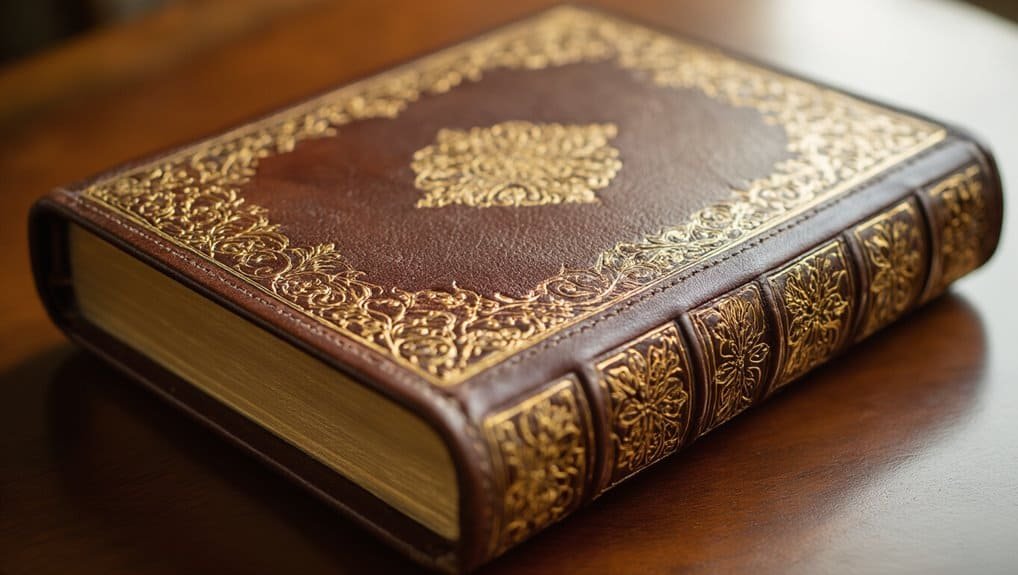
Establish maintenance routines that honor the text within.
Store your covered Bible flat or upright—never at an angle that strains the binding.
Keep it away from direct sunlight, which fades both cover and pages.
Monitor humidity levels; excessive moisture encourages mold while dryness causes cracking.
When transporting, use the cover’s handles or straps rather than gripping the spine.
These practices ensure your Bible’s *nitzchiyut* (נִצְחִיּוּת)—its endurance through time.
Budget-Friendly Vs Premium Options
Your stewardship of Scripture extends to the practical matter of selecting a cover within your means. You’ll find budget-friendly materials like polyester canvas and vinyl that effectively shield your Bible from daily wear.
These economical options mirror the Hebrew concept of “shamar” (שָׁמַר) – to guard and preserve – without financial burden.
Budget-friendly materials embody shamar – the sacred Hebrew practice of guarding and preserving God’s Word without financial strain.
Premium design features elevate protection through genuine leather, reinforced stitching, and interior padding. You’re investing in longevity when selecting full-grain leather that develops a rich patina, reflecting how God’s Word grows more precious through sustained meditation.
Premium covers often include ribbon markers, pen holders, and expandable spines accommodating study notes.
Consider your Bible’s purpose: daily carry demands durability, while ceremonial use permits aesthetic emphasis.
Whether you choose affordability or luxury, remember that protecting Scripture demonstrates reverence for divine revelation. The Psalmist’s declaration “Your word I’ve treasured in my heart” (119:11) applies equally to physical preservation.
Matching Your Bible Cover to Your Lifestyle
As you select a Bible cover that aligns with your daily rhythms, consider how Jacob anointed the stone at Bethel (Genesis 28:18) – transforming ordinary material into sacred purpose through intentional use. Your lifestyle choices shape which cover serves you best. A construction worker needs rugged leather that withstands dust and moisture, while a student benefits from lightweight fabric with organizational pockets.
Personal expression through your cover reflects the Hebrew concept of kavod(כָּבוֹד) – honor given to God’s Word through careful presentation. If you’re frequently traveling, choose compact designs with secure closures. For home study, larger covers with note-taking space enhance your devotional practice.
Consider your environment: professional settings may call for understated elegance, while creative ministries embrace vibrant patterns. Match durability to usage frequency – daily carriers need reinforced spines and corners. Your cover becomes a practical theology statement, demonstrating reverence through thoughtful selection.
Gift Ideas and Special Occasion Selections
When you’re selecting a Bible cover as a gift, consider how the Hebrew concept of *zikaron* (memorial) transforms a practical item into a sacred reminder of God’s covenant faithfulness.
You’ll find that holiday selections often feature liturgical colors matching the church calendar. Wedding options incorporate symbols of *chesed* (covenant love), and graduation choices emphasize the transition from milk to meat in spiritual maturity.
These occasions call for covers that serve as both protective vessels and theological statements, marking pivotal moments in the recipient’s faith journey.
Holiday Gift Guide
During the season of gift-giving, selecting a Bible cover transcends mere accessory shopping—it becomes an act of honoring the sacred text itself.
You’re not merely purchasing bible accessories; you’re acknowledging the Hebrew concept of *kavod*—the weightiness and glory inherent in God’s Word. When choosing holiday gifting options, consider covers that reflect the recipient’s spiritual journey.
Leather symbolizes durability, echoing the eternal nature of Scripture (*davar Adonai* endures forever). Embossed crosses or Hebrew lettering add theological significance.
You’ll find that personalized covers bearing names or meaningful verses transform functional protection into devotional reminders.
Whether selecting for new believers or seasoned theologians, prioritize quality that mirrors the text’s sacred value—because protecting Scripture physically demonstrates reverence for its spiritual authority.
Wedding Present Options
Though selecting a wedding gift often feels daunting, a Bible cover offers profound theological symbolism for couples beginning their covenant journey together.
You’ll find that presenting newlyweds with matching covers reflects the Hebrew concept of “echad” (אֶחָד) – unified oneness within marriage.
Consider wedding theme coordination: ivory leather for traditional ceremonies, rustic designs for barn celebrations, or metallic accents for modern affairs.
When selecting couple styles, you’re acknowledging their distinct personalities while honoring their spiritual union.
Embossed initials or wedding dates transform ordinary covers into heirloom pieces.
Choose durable materials that’ll withstand decades of shared devotions, representing the enduring nature of both God’s Word and marital commitment.
This gift transcends mere functionality – it’s a tangible reminder of their covenant before the Lord.
Graduation Ceremony Choices
You’ll discover that graduation marks a pivotal threshold in the believer’s journey, paralleling the Hebrew concept of “abar” (עָבַר) – to cross over or pass through.
When selecting a Bible cover for this sacred transition, you’re acknowledging the graduate’s passage from milk to meat, from student to teacher-disciple.
Choose covers featuring graduation themes that reflect biblical wisdom—perhaps embossed with Proverbs 9:10 or incorporating symbols of knowledge and divine illumination.
Your selection should complement their ceremony attire while serving as a lasting testament to God’s faithfulness through their academic pilgrimage.
Consider leather-bound options with personalized engravings marking both their earthly achievement and heavenly calling.
You’re not merely gifting an accessory but consecrating a tool for their next season of spiritual formation and kingdom service.
Frequently Asked Questions
Can I Use a Bible Cover for Other Books Besides the Bible?
You can certainly repurpose any covering for alternative book protection, reflecting the Hebrew concept of “kisui” (כִּסוּי) meaning “covering” or “concealment.”
Just as ancient scrolls required protective wrappings, your creative book storage solutions honor the principle of preserving sacred and secular texts alike.
There’s no theological prohibition against using protective coverings interchangeably – stewardship extends to all literature that enriches your mind and spirit.
Are Bible Covers Allowed in All Churches and Religious Settings?
You’ll find Bible cover etiquette varies across denominations, reflecting diverse theological perspectives on religious symbolism.
Orthodox traditions might emphasize uncovered sacred texts, echoing ancient Hebrew practices of Torah reverence.
Protestant churches typically welcome protective covers, viewing them as stewardship.
Catholic parishes generally permit them, though some prefer exposed bindings during liturgy.
Consider each congregation’s unwritten rules – what’s acceptable in evangelical settings might differ in high church environments.
How Do I Transfer My Bible to a New Cover Without Damage?
To execute proper Bible transfer techniques, you’ll first assess your cover material considerations – whether leather, fabric, or synthetic.
Remove any existing bookmarks and ribbons. Open the new cover completely flat.
Gently flex your Bible’s spine, then slide it carefully into the new cover’s spine cavity.
The Hebrew term “kelim” (כֵּלִים) denotes vessels that protect sacred texts.
Work slowly, ensuring theological texts aren’t stressed during this reverent process.
Do Bible Covers Protect Against Water Damage and Spills?
You’ll find that waterproof materials in protective coverings mirror the biblical concept of “sukkah” (סֻכָּה) – divine shelter.
Just as God’s protection shields His people from life’s storms, modern spill resistance technology guards sacred texts from liquid damage. These barriers function like Noah’s pitch-sealed ark, creating an impermeable defense.
When you’re selecting protection, you’re embodying the stewardship principle of preserving God’s Word for future generations through practical wisdom.
Can Vintage or Antique Bibles Safely Use Modern Covers?
You’ll find vintage preservation requires careful consideration when selecting protective coverings.
Your antique protection strategy must account for the delicate nature of aged parchments and bindings, much like ancient Hebrew scrolls demanded meticulous care.
Modern covers can work if they’re acid-free and breathable, preventing moisture buildup that damages fragile pages.
Choose materials that honor the theological treasure within while providing gentle support for deteriorating spines and weakened leather.
Conclusion
You’ve explored the practical aspects of protecting God’s Word, but remember that true preservation begins with hiding His דָּבָר (dabar) in your heart. While quality covers shield the physical text, your reverence safeguards its eternal message. Whether you’ve chosen leather or canvas, basic or premium, you’re acknowledging Scripture’s sacred value. As you carry your protected Bible, let it remind you that you’re also a living vessel, called to embody and proclaim these holy truths daily.










No Comments