

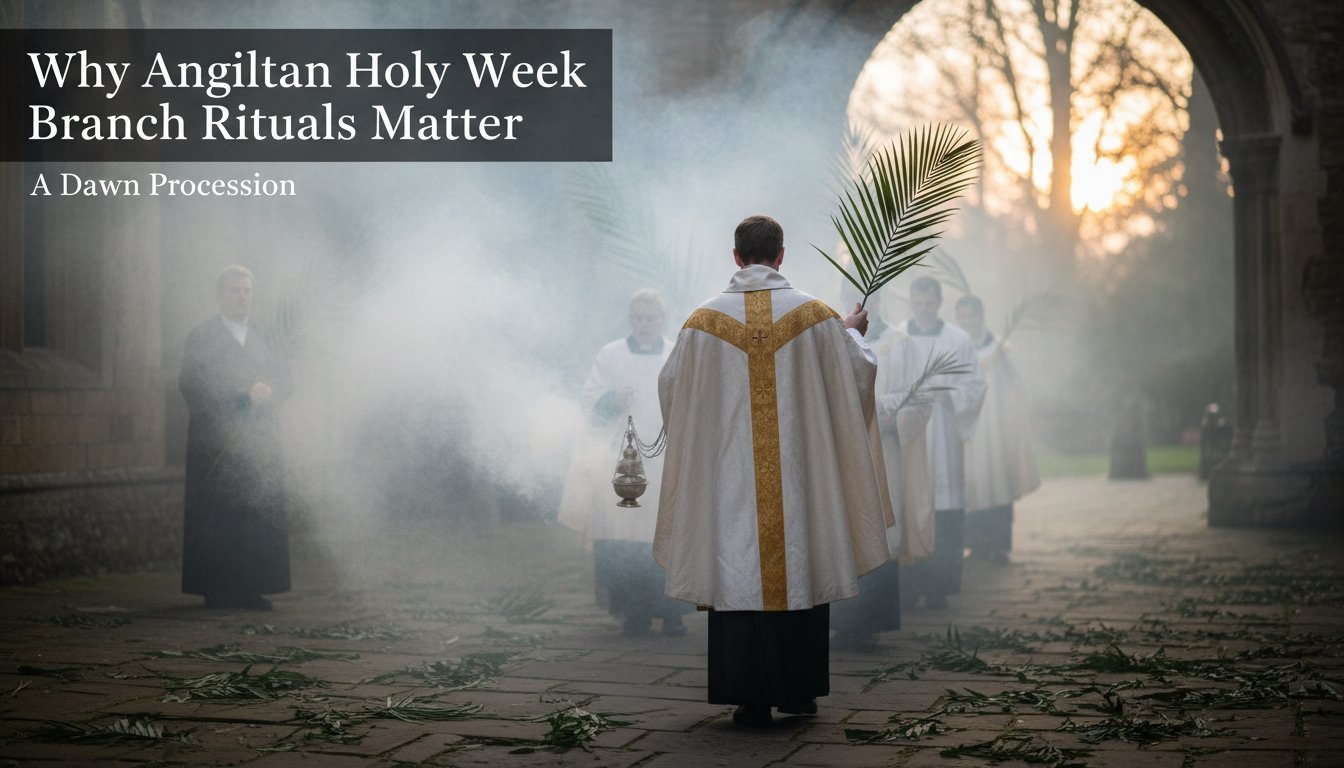
28 Feb Why Anglican Holy Week Branch Rituals Matter
Anglican Holy Week branch rituals matter because they connect you to the historic, symbolic, and liturgical significance of palm branches in Christian tradition. These rituals ground your faith in the events and meaning of Holy Week, from Jesus’ triumphal entry to his sacrifice and resurrection. If you’d like to learn more about the rich history and observances surrounding blessed palms, keep reading.
Table of Contents
Key Takeaways
- Anglican Holy Week branch rituals connect worshippers to the historical events of Jesus’ triumphal entry and passion.
- Rituals involving blessed palm branches symbolize Christ’s kingship, the kingdom, and the promise of eternal life.
- Palm Sunday processions and the incorporation of palms throughout Holy Week foster a sense of continuity with the past.
- Blessed palms are used in various liturgical practices, integrating the symbolism of new life, hope, and victory.
- Observing Holy Week branch rituals grounds Anglican faith in the significance of Christ’s sacrifice and resurrection.
The Significance of Palm Branches in Christian Tradition
Why are palm branches so deeply meaningful in Christian tradition? On Palm Sunday, Christians commemorate Jesus‘ triumphal entry into Jerusalem, where people waved palm branches in celebration. This symbolic gesture represents joy, victory, and the welcoming of Christ as the Messianic king.
The palm branch also evokes images of the Israelites’ exodus from Egypt and the lush oasis of Elim. For Christians, the palm branch signifies Christ’s kingship, the welcoming of His kingdom, and the hope of eternal life. Its use in Holy Week rituals underscores the significance of Jesus’ sacrifice and the glory of His resurrection.
The palm’s enduring greenery mirrors the eternal hope found in Christ. This humble branch, then, carries deep theological meaning, connecting worshippers to pivotal events and truths at the heart of the Christian faith.

The History and Origins of Anglican Palm Sunday Observances
When did Anglicans first begin observing Palm Sunday rituals? The Anglican tradition of Palm Sunday observances dates back to the early 17th century. Inspired by the biblical account of Jesus’ triumphal entry into Jerusalem, Anglicans started incorporating the blessing and procession of palm branches into their Holy Week liturgies. Over time, these rituals became an integral part of Anglican worship, symbolizing Christ’s kingship and the people’s joyous welcome.
Today, Anglicans continue this centuries-old tradition, processing with palms and reenacting the Gospel narrative. These observances connect modern worshippers to the historic events of that first Palm Sunday, fostering a sense of continuity and belonging within the larger Christian community.
Anglican Palm Sunday Liturgical Practices
Anglican Palm Sunday observances extend beyond the processional with palms. The liturgical practices on this day are rich with symbolism and tradition. You’ll find the blessing and distribution of palm branches, which represent Christ’s triumphant entry into Jerusalem. Many churches also incorporate the reading of the Passion narrative, reminding worshippers of Jesus’ impending suffering and death. Hymns and prayers further enhance the solemnity of the occasion.
Anglican Palm Sunday celebrates both Christ’s kingship and foreshadows the sorrow of Good Friday. These rituals connect the faithful to the core events of Holy Week, preparing hearts and minds for the journey to the cross and ultimately, the resurrection.
The Symbolic Meaning of Palm Branches in Anglican Holy Week
On Palm Sunday, Anglicans commemorate Jesus’ triumphant entry into Jerusalem.

They process with palm branches, recalling the crowds who welcomed Christ with these symbolic leaves.
This ritual holds deep spiritual significance, connecting the faithful to that historic event.
Palm Sunday Processions
Why do palm branches hold such significance in the Anglican tradition during Holy Week? On Palm Sunday, many Anglican churches hold processional rituals where congregants carry palm branches, reenacting Jesus’s triumphal entry into Jerusalem. This symbolic gesture commemorates Christ’s arrival and the people’s joyous welcome of their Messiah. The palms aren’t just decorative – they represent the crowd’s acclaim, submission, and anticipation. As worshipers process into the church, waving the palms, they align themselves with that original crowd, sharing in the anticipation and hope of Christ’s coming kingdom. These rituals ground Anglicans in their faith’s history, reminding them of Jesus’s identity and their own role in his ongoing story.
Commemorating Christ’s Entry
The palm branches carried by Anglican worshipers on Palm Sunday symbolize the people’s joyful acclamation of Jesus as the Messiah. They reflect the biblical account of Jesus’ triumphant entry into Jerusalem, where the crowd laid palm branches and their cloaks on the road, hailing him as the promised king. This ritual reenactment reminds us that Christ’s kingship isn’t of this world but a spiritual reign. The branches also symbolize new life, hope, and victory – fitting for the beginning of Holy Week, which culminates in the resurrection. By carrying and waving these branches, Anglicans participate in commemorating Christ’s entry and affirm their faith in his saving work.
Using Blessed Palms in Anglican Holy Week Rituals
Essentially, the use of blessed palms holds profound significance within the Anglican tradition during Holy Week. You’ll process into the church on Palm Sunday, waving palm fronds to commemorate Jesus’ triumphant entry into Jerusalem. The palms are then blessed, preserved, and used throughout the week’s rituals. On Good Friday, you’ll bring the blessed palms to the altar as you venerate the cross, reminding you of the fickle crowd who first welcomed Christ but later condemned Him. Finally, the palms are burned, and their ashes are used on Ash Wednesday, connecting the cycle of the liturgical year. This ancient practice connects you to generations of Anglicans, deepening your Holy Week experience.
Integrating Palm Branches Into Anglican Liturgical Celebrations
Beyond the procession on Palm Sunday, you can further integrate blessed palm branches into your Anglican liturgical celebrations throughout Holy Week. Use them as markers to designate sacred spaces, like placing them above doorways or around altars. Weave them into wreaths or crosses to display. Distribute them to congregants to hold during services, fostering a deeper sense of participation. You might even encourage people to take the branches home, where they can be kept as reminders of the season’s significance.
Ultimately, the versatile palm offers numerous ways to enrich your church’s observances, connecting the faithful to the triumphal entry and Christ’s Passion.
Frequently Asked Questions
How Do Anglican Churches Obtain the Palm Branches for Holy Week?
Anglican churches typically obtain palm branches for Holy Week from local suppliers or farms. They’ll order the palms in advance, ensuring they arrive in time for the Palm Sunday procession. The branches are blessed and distributed to the congregation, who wave them as they commemorate Jesus’ triumphal entry into Jerusalem. It’s a symbolic rite that connects the church to the ancient tradition.
Can Anglicans Use Substitutes for Palm Branches in Holy Week Rituals?
Yes, Anglicans can use substitutes for palm branches in Holy Week rituals. The traditional palms represent Jesus’ triumphal entry into Jerusalem, but other locally-sourced greenery like olive, willow, or yew branches may be used if palms aren’t available. The focus is on the symbolic meaning, not the specific plant material. As long as the substitutes reflect the theme of Christ’s arrival, Anglicans can adapt to local conditions.
What Is the Proper Way to Display Blessed Palm Branches in Churches?
You should display blessed palm branches in churches by placing them in a prominent location, such as the altar or near the entrance.
Encourage congregants to take a branch home and display it prominently, as a reminder of Christ’s triumphant entry into Jerusalem.
Ensure the branches are treated with reverence and care, as they’ve been blessed for this sacred occasion.
Are There Any Restrictions on How Anglicans Can Dispose of Used Palm Branches?
There are no strict restrictions on how Anglicans can dispose of used palm branches.
The common practice is to burn them, bury them, or return them to the earth in some respectful way.
You can choose the method that best aligns with your church’s traditions and your personal preferences for honoring these blessed symbols.
Do Anglican Priests Bless the Palm Branches Before Palm Sunday Celebrations?
Yes, Anglican priests do bless the palm branches before Palm Sunday celebrations. They’ll typically perform this ritual blessing during the service, invoking divine protection and sanctification of the branches. This blesses the palms, which are then distributed to the congregation for the processional and other Holy Week rituals.
Conclusion
You should recognize the importance of palm branches in Anglican Holy Week rituals. They symbolize Christ’s triumphant entry into Jerusalem and remind you of the journey towards the cross. Incorporating blessed palms into your liturgical celebrations can deepen your spiritual experience during this sacred time. Don’t underestimate the power of these simple yet meaningful branch rituals to enrich your Anglican faith.












No Comments