

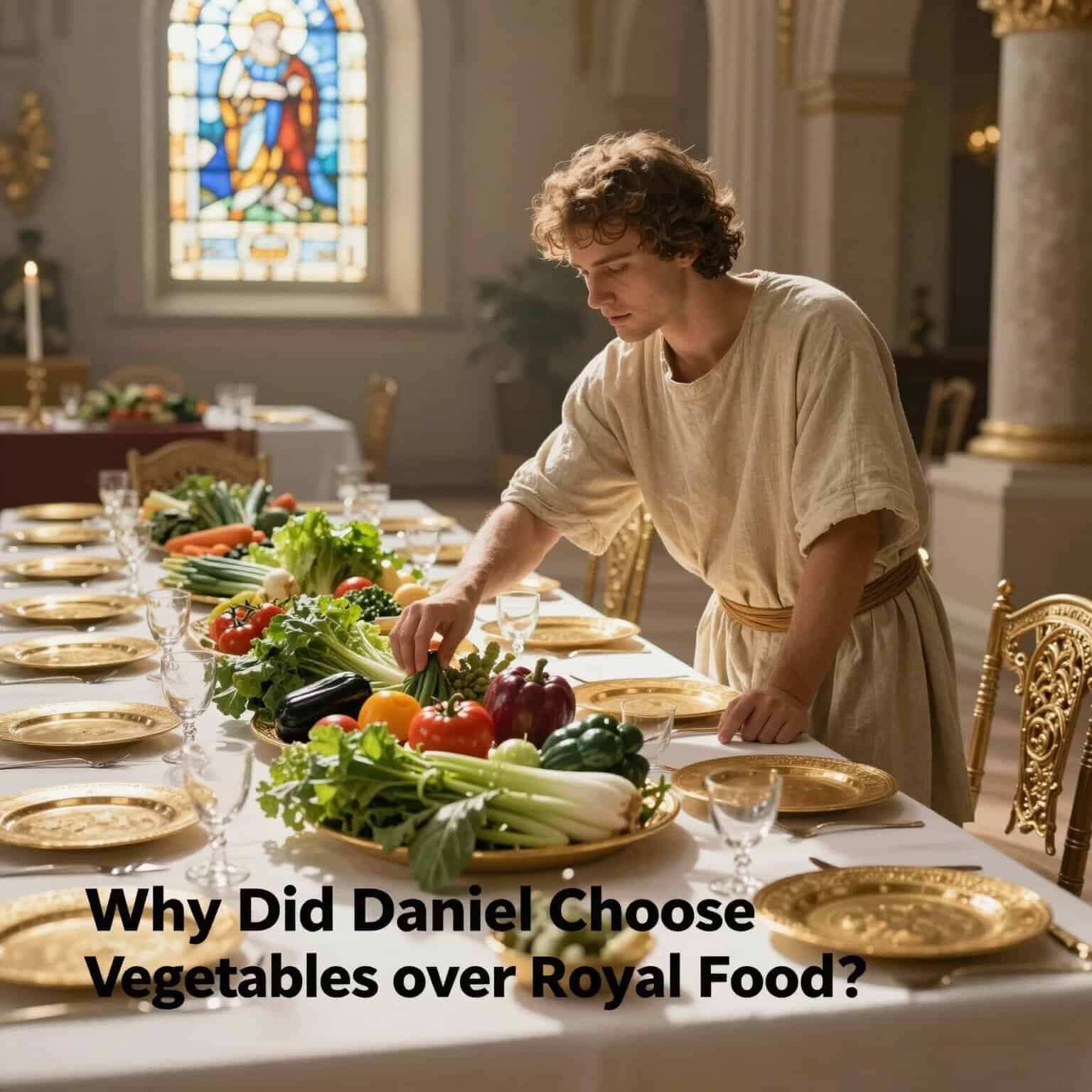
08 May Daniel Vegetables — Why He Chose Plants Over Royal Food
Daniel vegetables and water — this simple diet became one of the Bible’s most powerful faith statements. Daniel turned down the king’s lavish meat and wine because he wanted to keep his body and faith pure during the Babylonian exile, showing that a simple plant-based diet could honour God even in a hostile court. By refusing the royal provisions, he proved that God could sustain him with vegetables and water, and his health and vigour impressed the officials. Continue and you’ll discover how this choice shaped his influence and what lessons it holds today.
Table of Contents
Daniel Vegetables: Historical Context of the Babylonian Exile
Why does Daniel’s diet matter in the Babylonian exile? You’re living in a city that the conquered your homeland, surrounded by a court that insists on pork, rich breads, and wine poured to foreign gods. The exile began around 605 BCE, when Nebuchadnezzar forced Judean youths into a three‑year training program. Their new names—Belteshazzar, Shadrach, Meshach, Abednego—signaled assimilation, yet the law you cherish still bans pork, shellfish, and blood. You see the king’s provisions as a test of loyalty, not just nutrition. By refusing the royal fare, you protect your covenant purity and avoid participating in idolatrous rites. Your decision also signals to Babylonian officials that you won’t compromise your faith, even under pressure. The historical backdrop—political domination, cultural pressure, and strict dietary law—makes your choice a bold statement of identity and resistance.
Daniel Vegetables — Why He Refused Royal Food
Could the royal banquet be seen as a betrayal of your covenant? You recognize that every dish on the king’s table carries a spiritual charge. The meat often comes from animals forbidden by Leviticus, the wine is poured in libations to Babylonian gods, and the blood is never fully drained—each element violates the purity statutes you vowed to keep. Consuming such food would mean endorsing idolatry, compromising your allegiance to Jehovah, and blurring the line between survival and worship. Your conscience tells you that the banquet isn’t merely a nutritional choice; it’s a public statement of faith. By refusing, you protect your identity, keep your vows intact, and demonstrate that devotion transcends comfort. The defilement isn’t about taste; it’s about the covenant you cherish and the symbolic weight each bite carries in a foreign court.
The Ten‑Day Trial: Testing Daniel Vegetables Based Diet
What drives you to trust a ten‑day experiment over the king’s lavish provisions? You watch the officials weigh the risk: a brief, observable test versus endless suspicion.

You propose a simple regimen—vegetables, legumes, fruit, and water—while the palace offers meat, rich bread, and wine. You ask for a ten‑day window, confident the results will speak louder than petitions.
Over those days you monitor skin tone, energy, and strength, noting the youth’s complexion brightens and his vigor steadies. You record the data, showing the plant‑based diet yields healthier, better‑nourished bodies without royal indulgence.
The steward, seeing the tangible improvement, relents and reports to the king. The experiment proves that a short, controlled trial can overturn entrenched expectations, granting you the freedom to maintain dietary purity while satisfying the court’s demand for evidence.
What Foods Did Daniel Eat? Nutritional Benefits of the Vegetable Regimen
Ever wondered what Daniel actually ate during his ten‑day trial? You’ll find he subsisted on simple, plant‑based fare: fresh vegetables, legumes, fruits, and plenty of water. The vegetables likely included leafy greens, cucumbers, and root crops, while legumes such as lentils and beans supplied protein. Fruits like figs and dates offered quick energy and vitamins. This diet is rich in fiber, which improves digestion and stabilizes blood sugar, while the low sodium content reduces water retention, giving his skin a clearer, healthier look. Antioxidants from the produce combat oxidative stress, supporting immune function. The protein from legumes maintains muscle mass without the saturated fat found in royal meat dishes. Hydration from water keeps cells plump and metabolism active. Overall, the regimen delivers essential micronutrients, promotes lean body composition, and enhances overall vitality—exactly what the ten‑day trial needed to prove.
Political Advantages Gained From Daniel’s Dietary Obedience
Why does Daniel’s refusal to eat the king’s flesh matter beyond personal piety? You see, his dietary obedience became a political lever. By insisting on vegetables, you turned a private conviction into a public statement that the court couldn’t ignore. The chief official, impressed by the youths’ healthier appearance, granted Daniel and his friends a special concession, showing that the empire could accommodate foreign customs when they proved beneficial. This concession gave you a foothold in the palace hierarchy, allowing you to earn trust and access to administrative duties. Your visible vigor and discipline impressed Nebuchadnezzar, who later appointed you to high‑rank positions, using your example to demonstrate the king’s magnanimity toward loyal subjects.

Moreover, your refusal signaled to other exiles that obedience to God could coexist with service to the state, reinforcing social stability and reducing potential rebellion.
Spiritual Lessons From Daniel’s Faithful Choice
How does Daniel’s steadfast refusal to eat the king’s food teach you about true devotion? You see that devotion isn’t a feeling but a concrete choice to honor God even when it costs comfort. By rejecting flesh and wine linked to idolatry, you learn that spiritual integrity outweighs worldly gain. Daniel’s ten‑day trial shows that faith can be tested and proven practical; you’re invited to set measurable limits that safeguard your conscience.
His willingness to ask for a compromise demonstrates humility—he doesn’t demand the impossible, yet he doesn’t compromise his covenant. The result—healthier, stronger youth—illustrates that God rewards obedience, reinforcing trust that divine provision surpasses royal indulgence. When you face pressure to conform, Daniel’s example reminds you to anchor your identity in God’s standards, letting that anchor shape every decision, big or small.
Long‑Term Health and Influence of Daniel’s Diet
Typically, the ten‑day test proved that a simple vegetable‑based diet could sustain the youths’ vigor, and over the long term it kept them healthier, sharper, and more resilient than their meat‑and‑wine counterparts. You’ll notice that the sustained intake of legumes, greens, and water helped maintain lean muscle while reducing inflammation. The reduced sodium and absence of alcohol prevented hypertension, allowing the youths to stay alert during demanding palace duties. Their clear skin and steady weight gain signaled metabolic stability, which impressed officials and secured Daniel’s position.
Over years, this diet reinforced a robust immune system, lessening susceptibility to the frequent illnesses that plagued the crowded exile camp. The visible vitality became a silent testimony to the power of disciplined, God‑aligned living, influencing peers to request similar accommodations and gradually reshaping the court’s perception of foreign customs.
Applying Daniel’s Diet Principles in Modern Life
In today’s fast‑paced world, you can adopt Daniel’s simple, plant‑focused strategy by swapping processed snacks and sugary drinks for fresh vegetables, legumes, and plenty of water. Begin with a ten‑day trial: replace one meal a day with a colorful salad and a glass of water, noting energy, skin clarity, and mood. Track your progress in a journal, and when you see improvements, extend the plan. Use whole foods—leafy greens, beans, nuts—to meet protein needs without relying on meat or alcohol. Keep your pantry stocked with seasonal produce, and batch‑cook legumes for quick meals. When dining out, choose vegetable‑centric dishes and ask for sauces on the side. This disciplined yet flexible approach honors Daniel’s principle of staying faithful to personal convictions while thriving in a modern environment. It shows that small, consistent changes can yield lasting health and spiritual benefits.
Frequently Asked Questions – Daniel Vegetables Diet
Did Daniel’s Diet Affect His Prophetic Visions?
You’ll find that Daniel’s diet didn’t directly shape his prophetic visions; the text links his clarity to divine gifting, not nutrition.
The narrative emphasizes his faithfulness and God’s empowerment, while the vegetable regimen simply proved his physical vigor and loyalty.
How Did Babylonian Officials React to the Diet’s Success?
You’ll see that the officials were surprised and impressed. When the ten‑day trial proved the youths looked healthier and stronger, the chief steward reported the results to the king. He praised the diet’s success, granting Daniel and his friends permission to continue eating vegetables and water.
Their superior appearance earned the officials’ respect, and the king’s court accepted the new regimen without further objection.
Were Any Other Exiles Allowed Similar Dietary Accommodations?
You’ll find that only a few exiles received comparable accommodations.
The Babylonian officials, impressed by Daniel’s ten‑day trial, extended the same vegetable‑only allowance to his three friends—Hananiah, Mishael, and Azariah—who also refused the king’s meat and wine.
Beyond this small group, the records don’t mention other captives getting similar dietary exemptions; the policy remained a unique, case‑by‑case concession.
What Specific Vegetables Were Available in Babylon at That Time?
You’d find barley, wheat, lentils, beans, chickpeas, cucumbers, onions, garlic, leeks, radishes, lettuce, melons, figs, dates, grapes, and olives in Babylon’s markets. The region cultivated Mediterranean grains, legumes, and garden crops, and imported Egyptian and Persian fruits. These foods formed the plant‑based fare Daniel and his friends requested, providing nourishment while respecting their dietary convictions.
Did Daniel’s Diet Influence Later Jewish Fasting Traditions?
You’ll see that Daniel vegetables‑only regimen set a precedent for later Jewish fasting customs. By refusing royal meat and wine, he showed that abstaining from rich foods could be a devotional act, not just a health choice.
This example inspired later practices like the fast of Esther and the minor fasts, where believers limit indulgence to demonstrate humility and reliance on God.
Conclusion
You see that Daniel vegetables choice wasn’t just a personal quirk; it was a strategic act of faith that protected his purity, impressed his captors, and set a lasting example of disciplined living. By refusing the king’s delicacies, he proved that spiritual conviction can shape health, politics, and legacy—reminding us that even simple dietary decisions can carry profound, timeless influence.












No Comments