

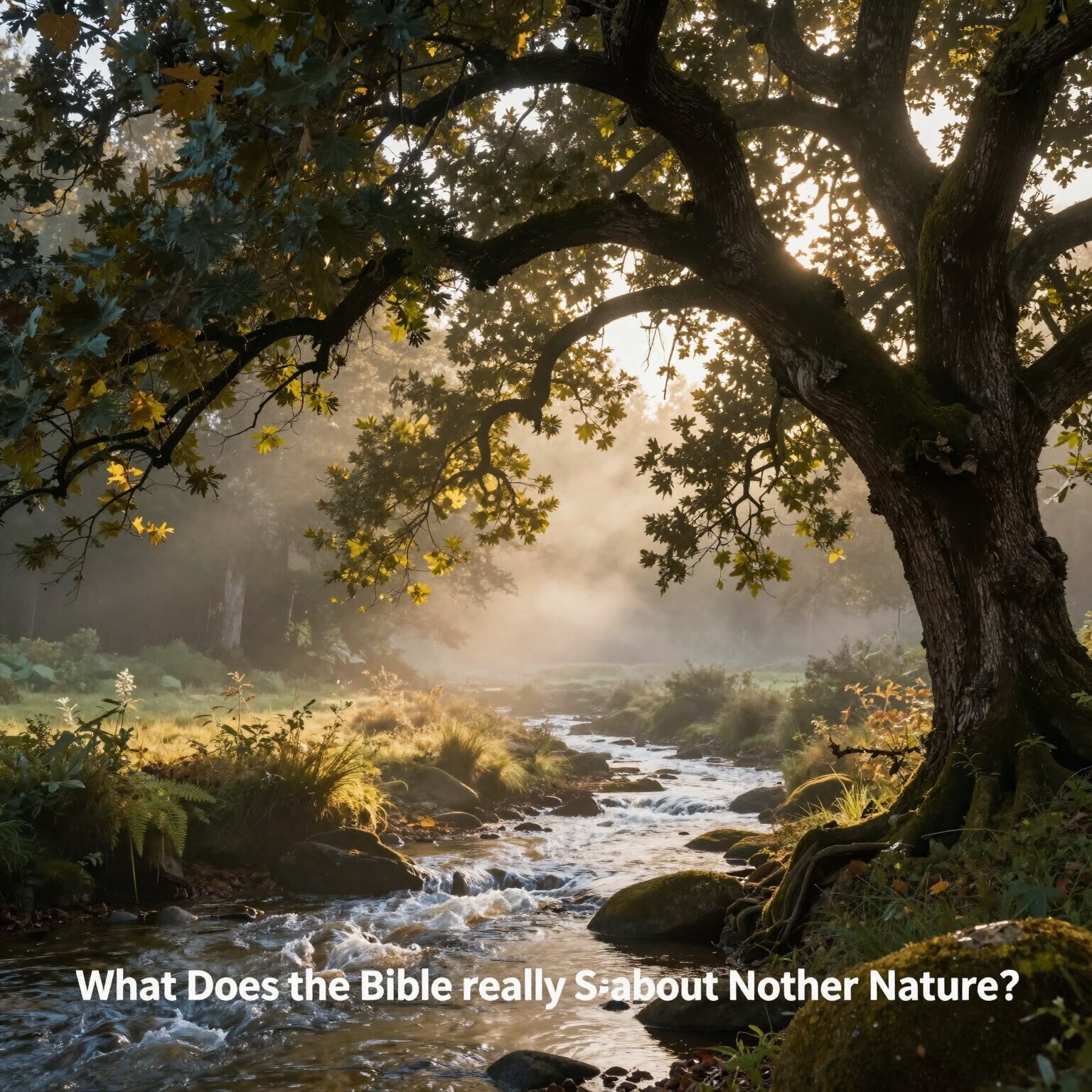
25 Apr What Does the Bible Really Say About Mother Nature?
You’ll find that the Bible never calls the natural world “Mother Nature.” Instead, it describes creation as God’s handiwork—heavens and earth that declare His glory (Ps 19:1) and serve as a testimony to His power (Rom 1:20). Humans are given dominion and a stewardship role (Gen 1:28), not to worship nature itself. The Scriptures keep a clear Creator‑creation distinction, warning against idolatry (Deut 4:19). If you keep going, you’ll discover deeper biblical insights on stewardship and eschatological hope.
Table of Contents
What “Mother Nature” Means and Why It’s a Biblical Question?
What does “Mother Nature” even mean, and why should you care whether the Bible mentions her? You’re probably hearing the phrase in documentaries, podcasts, and everyday conversation, but the term isn’t a biblical label. It tries to personify the natural world as a nurturing mother, yet Scripture consistently treats creation as God’s handiwork, not a deity. When you read Deuteronomy 4:19, it warns against idolatry of the heavens and earth, making it clear that the cosmos isn’t a divine partner.
Recognizing this distinction matters because it shapes how you view stewardship. If you think nature is a separate mother figure, you might overlook the biblical call to dominate responsibly (Genesis 1:28) and to see creation as testimony to God’s power (Psalm 19:1). Understanding the term’s cultural origin helps you evaluate whether it aligns with biblical theology or merely reflects modern metaphor.
Why the Term “Mother Nature” Is Not Biblical?
The phrase “Mother Nature” may sound poetic, but Scripture never uses it, and that matters for how you understand God’s relationship to the world. You’ll find the term absent from every verse; the Bible consistently calls the world “creation,” “the heavens and the earth,” or simply “the earth.” By avoiding a mother metaphor, the text keeps God distinct from His work, rejecting any hint of pantheism (Deut 4:19) and preserving the Creator‑creation distinction (Gen 1:1).
When the Bible speaks of nature, it does so as a testimony to God’s power (Ps 19:1) and providence (Gen 8:22), not as a divine consort. This linguistic choice reminds you that nature is a created witness, not a deity, and that your reverence should focus on the sovereign Maker, not on a personified “Mother.”
How Scripture Describes Creation Without Calling It “Mother Nature
Creation is presented in Scripture as God’s handiwork, not as a personified mother. You’ll find that the biblical writers call the world “creation,” “the heavens,” or “the earth,” and they always tie these nouns back to the Maker. When Psalm 19 says the heavens declare God’s glory, it isn’t attributing agency to nature; it’s describing a testimony to the Creator.
Jeremiah 10:12‑13 reminds you that God stretched out the heavens and measured the waters, emphasizing His sovereign power rather than a maternal figure. Even the poetic voice in Job frames the natural order as a stage for divine questioning, not a deity itself.
The New Testament echoes this pattern: Romans 1:20 argues that visible creation reveals God’s invisible qualities, not that creation possesses its own divine nature. Throughout, Scripture treats nature as a created good, a witness, and a responsibility, never as a mother‑like god.
Key Bible Verses That Show God’s Power in Nature
Ever wonder how Scripture illustrates God’s might through the natural world? You’ll see it in Psalm 19:1—“The heavens declare the glory of God.” The sky’s vastness testifies to His power. Genesis 8:22 reminds you that “as long as the earth endures, seedtime and harvest, cold and heat, summer and winter, shan’t cease,” underscoring His sovereign control over seasons. Job 38:4‑7 paints a picture of God setting the foundations of the earth, commanding the “morning stars” and “sons of God” to rejoice at His handiwork. Matthew 8:23‑27 shows Jesus calming the storm, proving that even the winds obey His word. Colossians 1:17 declares, “All things hold together in Him,” highlighting the divine order that sustains the universe. These verses collectively reveal that nature isn’t a random backdrop; it’s a vivid display of God’s unrivaled authority and wisdom.
What the Bible Teaches About Human Responsibility for Creation
Why does Scripture repeatedly call you to care for the world? Because you’re entrusted with a divine stewardship mandate. Genesis 1:28 gives you dominion, but the word “dominion” is coupled with “to rule over” and “to tend” the garden (Genesis 2:15). You’re not a ruler who exploits; you’re a caretaker who preserves. Psalm 24:1 reminds you that the earth belongs to God, so your actions must honor that ownership. Romans 8:22 reveals that creation groans under sin, urging you to work toward its redemption. When you plant, conserve, or advocate for ecosystems, you echo the biblical ethic of stewardship. Your responsibility isn’t optional—it’s woven into the covenantal story that culminates in the new heavens and earth (Revelation 21:1‑5). By living responsibly, you align with God’s purpose for creation and participate in its ultimate restoration.
Creator vs. Creation: The Biblical Distinction
Having seen how stewardship calls you to protect the world, it’s important to recognize that the Bible draws a clear line between the One who made all things and the things themselves. You’ll notice Scripture repeatedly calls God the Creator, not a deity of nature,—Deuteronomy 4:19 rejects any pantheistic identification. Creation is described as “work” (Romans 1:25) and “creation” (Genesis 1:1), not as a divine consort.
Even the Psalms treat the heavens and earth as witnesses to God’s power, not as a living mother. The biblical picture places God’s sovereignty over every natural force (Job 38) and affirms that Christ holds all things together (Colossians 1:17). This distinction means you honor the Creator by respecting the created order, without attributing divinity to the elements themselves. Recognizing the gap safeguards against conflating worship with reverence for the world.
Eschatological Hope for Creation in the Bible
What hope do you find in Scripture’s vision of the end times? You see creation’s groaning, as Romans 8:23 describes, pointing toward a future where every creature is liberated from decay.
The promise of a new heaven and earth in 2 Peter 3:13 assures you that the current brokenness will be replaced by a restored, glorious order.
Revelation 21:1‑4 paints a picture of a world where death, mourning, and pain have vanished, confirming that redemption extends beyond humanity to the whole cosmos.
This eschatological hope isn’t abstract; it grounds your expectation that God’s redemptive plan will renew the rivers, mountains, and skies, making them fully reflect His glory.
As you anticipate this consummation, you can trust that the biblical narrative consistently links the salvation of humanity with the renewal of all creation, offering a hopeful, unified destiny for the earth and its inhabitants.
Practical Biblical Stewardship Practices for Today
How can you turn biblical principles into everyday actions that protect the planet? First, treat the garden you inherit as a trust, not a commodity. Reduce waste by fixing what breaks, recycling, and composting—mirroring Genesis 2:15’s call to “work and keep.” Choose renewable energy or car‑pool to honor God’s dominion without exploiting resources. Plant native trees and support local farms, echoing Psalm 24:1’s reminder that the earth belongs to God and all peoples. Conserve water with low‑flow fixtures, reflecting the stewardship of the “seas” praised in Psalm 104. Advocate for policies that protect habitats, because Romans 8:22 tells us creation groans under sin and needs redemption. Finally, educate children on creation care, passing on the covenant of stewardship. By aligning daily habits with Scripture, you embody the biblical mandate to preserve, restore, and glorify God’s work.
Frequently Asked Questions
Is “Mother Nature” a Synonym for God’s Wisdom in Proverbs?
No, “Mother Nature” isn’t a synonym for God’s wisdom in Proverbs. The passage in Proverbs 1:20‑23 personifies wisdom as a woman calling in the streets, not as a natural force.
The Bible never calls nature “Mother” or equates it with wisdom; it presents nature as God’s creation, a testimony to His power and order.
Do Any Biblical Texts Personify Nature as a Female Figure?
You won’t find any biblical passage that personifies nature as a female figure. The Scriptures describe nature as God’s creation—heavens, earth, sea, and animals—without gendered personification.
Psalms and Job celebrate creation’s beauty and power, but they never call it “she” or give it a motherly role.
The Bible reserves feminine imagery for wisdom (Proverbs) and for Israel, not for nature itself.
How Does the Bible Address Environmental Racism or Injustice?
You’ll find the Bible doesn’t name “environmental racism,” but it condemns oppression and calls for justice. It commands you to love your neighbor (Matt 22:39) and to defend the vulnerable (Prov 31:8‑9). The prophets denounce exploitation of the poor (Isa 1:17).
Through stewardship (Gen 1:28) you’re urged to protect land and resources, ensuring fairness for all peoples and creation.
Can the Concept of “Mother Earth” Be Reconciled With Biblical Creation?
You can reconcile “mother earth” with biblical creation by seeing the term as a poetic metaphor for God’s handiwork, not a deity. The Bible calls nature God’s creation and a witness to His power, wisdom, and care. It assigns you stewardship, urging protection and renewal. While it rejects pantheism, it affirms that caring for the planet honors the Creator and aligns with biblical redemption promises.
What Biblical Basis Exists for Climate‑Change Activism?
You have biblical grounds for climate‑change activism because Scripture calls you to steward creation (Genesis 1:28, 2:15), warns that sin damages the earth (Romans 8:22), and promises redemption for all creation (Romans 8:19‑22).
The Psalms and Romans describe nature as testimony to God’s power and wisdom, urging you to preserve its order.
Thus, caring for the climate aligns with your biblical mandate to protect and restore God’s handiwork.
Conclusion
So, while the Bible never labels the world “Mother Nature,” it clearly shows God as the Creator and us as stewards. He commands us to care for the earth, respects its beauty, and promises its renewal. By honoring that divine mandate, you align your life with biblical truth and help preserve the creation God lovingly made.








No Comments