

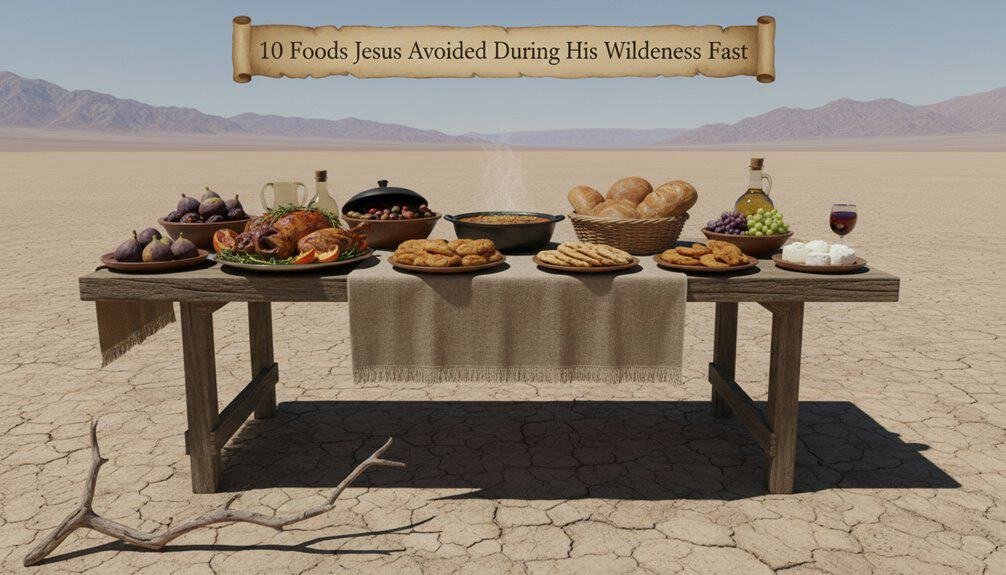
28 Apr 10 Foods Jesus Avoided During His Wilderness Fast
You’ll find that Jesus shunned ten everyday foods during His 40‑day desert fast: bread, manna, water, fruit, grains, locusts, wild herbs, dairy, salt, and spices. He chose the barren wilderness to confront temptation, rely solely on God, and sharpen his spiritual focus. By refusing these comforts, He turned the desert into a crucible of obedience and faith. Keep going, and you’ll discover the deeper reasons behind each omission.
Table of Contents
Why Jesus Fasted for 40 Days in the Desert?
Why did Jesus endure a 40‑day desert fast? You’ll find that his purpose wasn’t simply hunger‑induced suffering; it was a deliberate, spiritual rehearsal. By stepping into isolation, he confronted temptation head‑on, proving his obedience to God’s will. The desert stripped away comforts, forcing him to rely on prayer, Scripture, and divine provision alone. This intense discipline sharpened his resolve for the ministry ahead, modeling how believers should face trials with faith. Moreover, the fast echoed Israel’s wilderness experience, positioning Jesus as the new Israel who succeeds where the nation failed. You see, the 40 days served as a crucible, forging his identity as the Son of God and preparing him to teach, heal, and ultimately sacrifice. The desert’s emptiness highlighted his dependence on God, making his later miracles all the more powerful and credible.
Why He Did Not Eat Bread or Manna?
Could Jesus have survived on bread and manna alone? You’ll find that the desert’s harsh reality made both impractical. Bread, once baked, spoils quickly under scorching sun; without ovens or storage, it would turn stale or moldy within hours. Manna, the miraculous provision for Israel, fell only when the Israelites were in the promised land, not in wilderness wilderness wilderness You’s the for it He that’s wilderness, and you’d quickly run out.
Moreover, the fast was intentional, a test of reliance on God rather than on sustenance. By refusing even the simplest staples, you demonstrate obedience and trust, showing that spiritual nourishment outweighs physical cravings. The desert’s scarcity forces you to confront dependence on divine provision, turning every hunger pang into a reminder of the higher purpose behind the 40‑day journey. This deliberate denial underscores the depth of his commitment and the power of faith over flesh.
Why He Skipped Water and Embraced Thirst?
You see the thirst as a tool for spiritual purification, stripping away comfort to reveal deeper devotion. By pushing your body to its limits, you test the strength of your faith and learn where true reliance lies.
The empty cup becomes a symbol that you depend not on earthly sustenance but on divine providence.
Spiritual Purification Through Deprivation
Ever wondered how a desert’s relentless thirst can sharpen a soul? You feel the heat, the dryness, and the mind’s chatter fades.
In that emptiness, you discover a raw, unfiltered connection to the divine. Deprivation strips away distractions, forcing you to listen to the still, small voice within. Each drop of sweat becomes a prayer, each pang of hunger a reminder that reliance shifts from flesh to spirit. You learn that the body’s weakness is the spirit’s strength, and the barren landscape mirrors an inner wilderness where true purity grows. By embracing thirst, you surrender control, allowing God’s grace to flow through the very void you once feared. This intentional emptiness cultivates humility, focus, and an unwavering faith that endures beyond physical limits.
Testing Faith in Physical Limits
Why did Jesus deliberately forgo water, letting thirst become his teacher? You feel the desert’s heat pressing against your skin, the sand slipping through your fingers. As you walk, each dry breath reminds you that reliance on the physical is temporary.
He chose to deny water to test the limits of his body, proving that faith can sustain you when the body protests. The sting of dehydration sharpens focus, turning every heartbeat into a prayer.
You notice how the mind steadies, refusing to surrender to panic. By embracing thirst, he demonstrates that spiritual strength can override bodily cravings, urging you to trust the unseen source that fuels perseverance.
This deliberate hardship reshapes your understanding of dependence, turning scarcity into a catalyst for deeper belief.
Symbolic Dependence on Divine Providence
How does a desert’s relentless thirst become a lesson in divine reliance? You walk beside Jesus as the sun blazes, feeling each drop of sweat evaporate. He refuses water, not out of stubbornness, but to dramatize dependence on God’s provision. The barren landscape turns into a classroom where thirst signals a deeper need: trust. Each pang of dehydration reminds you that human effort alone can’t satisfy the soul’s hunger. By embracing thirst, Jesus models surrender, inviting you to pray for the “living water” that only the Father can supply. The desert’s silence amplifies your inner dialogue, urging you to exchange self‑reliance for divine reliance, and to recognize that true sustenance flows from God’s mercy, not from the well.
Why He Avoided Fruit and Relied on God?
When Jesus entered the wilderness, He chose to for the by earthly’s the relying on a God the, that sustenance comes not from fleeting pleasures but from divine provision.
You can picture the desert’s scarcity; fruit, with its sweet allure, represents comfort and abundance that the world offers. By rejecting it, He demonstrates that true nourishment isn’t a seasonal bounty but a spiritual reliance on the Father.
You see that fruit, though wholesome, still depends on soil, rain, and human labor—factors that can fail or be manipulated. In refusing it, He teaches you to trust a source that never falters, a God who supplies exactly what you need at the right moment.
This deliberate denial sharpens your focus, turning your appetite from temporary gratification to lasting, divine satisfaction. It’s a powerful reminder that genuine sustenance is found in faith, not in the fleeting sweetness of fruit.
Why He Refused Locusts and Wild Herbs?
You might notice that his rejection isn’t about calories but about spiritual symbolism, signaling reliance on divine provision. The cultural taboos surrounding locusts and wild herbs also frame them as impure choices for a holy fast. Moreover, practical health concerns—possible toxins and digestive strain—make them unsuitable for a sustained, purposeful abstention.
Spiritual Symbolism Over Nutrition
Many scholars see the desert’s scarcity not as a test of caloric endurance but as a stage for spiritual symbolism, and that perspective explains why Jesus turned down locusts and wild herbs. You recognize that the wilderness represents a place of purification, where sustenance becomes a metaphor for divine reliance. By refusing ordinary food, he signals that true nourishment comes from prayer and faith, not from the earth’s fleeting offerings. The locusts, though permitted by law, carry connotations of impurity and worldly temptation; the wild herbs suggest self‑sufficiency that could distract from dependence on God. In this light, his diet becomes a silent sermon, teaching you to seek spiritual sustenance above physical gratification, aligning body and soul with heavenly purpose.
Cultural Taboos and Purity
The desert’s symbolic scarcity already hints that Jesus’ food choices carried cultural weight, and the next layer reveals how purity and taboo shaped his refusal of locusts and wild herbs.
You notice that Jewish law prized ritual cleanliness; insects, even kosher ones, were associated with impurity, and wild herbs grew untended, often linked to pagan rites.
By rejecting them, you see Jesus aligning with a purity narrative that transcended mere sustenance. He avoids foods that could taint his body or spirit, preserving a holy separation from the surrounding wilderness.
This deliberate abstention signals that his fast isn’t just physical—it’s a cultural statement, upholding sanctity while confronting the surrounding’s ambiguous moral landscape.
Practical Health Considerations
Why would a desert wanderer turn down locusts and wild herbs? You might think scarcity forces acceptance, yet practical health concerns likely guided his choices.
Locusts can carry parasites and bacteria, especially when harvested from contaminated plants or water sources. In a barren landscape, proper cooking is hard, raising the risk of foodborne illness.
Wild herbs, while nutritious, often contain toxic alkaloids or heavy metals absorbed from the soil; misidentifying a species could cause severe poisoning. Moreover, the desert’s extreme heat and dehydration amplify the body’s need for safe, easily digestible nutrients.
Why He Did Not Eat Meat During the Fast?
Ever wondered why Jesus chose a plant‑based diet during his wilderness fast? You can see that his abstention from meat wasn’t random; it reflected a deliberate spiritual and practical stance. By for flesh, he avoided the blood‑rich symbolism that the Law associated with life and death, keeping his focus on the pure, untainted nourishment God provides.
Meat also demands preparation, fire, and tools—resources unavailable in the barren desert. Relying on manna‑like plants kept his diet simple, minimizing distraction and emphasizing reliance on divine provision.
Moreover, a plant‑only intake aligns with the prophetic call to humility, reminding you that true strength comes from obedience, not from the indulgence of flesh. In this way, Jesus modeled a fast that stripped away excess, sharpening his prayer, and inviting you to consider how restraint can deepen spiritual clarity.
Why He Excluded Dairy Products in the Wilderness?
You’ll notice that dairy spoils quickly in the desert heat, making it impractical for a prolonged fast.
Its fleeting nature also mirrors the spiritual call to simplicity, stripping away comforts that could distract from devotion.
Dairy’s Perishability in Desert
Could a desert’s scorching heat and lack of water make dairy a liability?
You’ll notice that milk spoils within hours when temperatures climb above 30 °C, especially without refrigeration. Bacterial growth accelerates, turning fresh milk into sour, unsafe liquid that can cause illness.
Even cheese, though firmer, softens, loses flavor, and develops mold when exposed to dry, hot air.
The lack of clean water prevents you from washing containers or diluting spoiled products, increasing the risk of contamination.
Moreover, the desert’s low humidity speeds dehydration, making any liquid dairy product a heavy, inefficient source of hydration.
Consequently, you’d avoid dairy to prevent foodborne disease, preserve energy, and maintain safe nutrition during a prolonged fast.
Spiritual Symbolism of Simplicity
When Jesus chose a barren diet, he wasn’t just coping with scarcity; he was embodying the spiritual principle of simplicity. You can see that by refusing dairy, he stripped away comfort and luxury, reminding followers that faith thrives without excess. The milk’s smoothness and richness symbolize worldly indulgence; by leaving it behind, he taught that true nourishment comes from reliance on God, not from material abundance. This deliberate austerity mirrors the desert’s starkness, urging you to focus on inner sustenance rather than sensory pleasure. In your own practice, emulate this simplicity: choose plain meals, pray for humility, and let the absence of dairy become a reminder that spiritual depth outweighs fleeting taste.
Why He Omitted Salt and Spices From His Meals?
Why did Jesus skip salt and spices during his wilderness fast? You see, the desert offered a stark backdrop for spiritual focus, and every flavor could distract from that purpose. Salt and spices, while common in daily meals, carry sensory allure that pulls attention toward bodily comfort rather than divine contemplation. By refusing them, you’d recognize his commitment to pure, unadorned sustenance—an intentional denial of excess that mirrors his call for humility. Moreover, spices often symbolize wealth and celebration; their absence underscores the humility of a life stripped of luxury. The desert’s natural bitterness already tested his resolve, so adding seasoning would have softened that trial. In this way, his diet became a tangible lesson: simplicity sharpens spiritual perception, and restraint cultivates deeper reliance on God’s provision. You can feel the same lesson when you strip away nonessential comforts and focus on what truly nourishes the soul.
Why He Ignored Grains and Other Staples?
The desert already stripped away flavor, so the next step was to for the very foundation of a regular diet—grains and other staples.
You notice that bread, barley, and wheat were conspicuously absent from his wilderness menu. By ignoring these staples, he avoided the heavy, lingering satiety that grain‑based meals create, keeping his body in a state of heightened alertness for prayer.
Grains also demand water for digestion and fermentation; in an arid landscape, conserving moisture becomes a survival priority.
Moreover, grain foods often carry a lingering, earthy taste that could mask the raw, bitter notes of the desert’s own provisions, preventing you from fully experiencing the starkness of the environment.
By rejecting them, he also sidestepped the cultural rituals tied to communal meals, allowing his fasting to remain a solitary, unmediated dialogue with the divine.
This deliberate omission sharpened his focus, reinforced his reliance on God, and kept his spirit unburdened by earthly comforts.
Why He Rejected All Comfort Foods in the Desert?
Ever wondered how a desert without comforts can sharpen the spirit? You feel the heat pressing against your skin, the silence echoing louder than any banquet hall.
In that stark setting, Jesus turned away from comfort foods—bread, honey, figs, and wine—because each bite promised ease, not growth. Those foods soothe cravings, mask fatigue, and distract from deeper longing. By rejecting them, He forced His body into scarcity, letting hunger become a teacher rather than a tyrant. The empty stomach amplified prayer, turning every breath into a dialogue with the divine. You notice how the lack of indulgence strips away pretenses, exposing raw dependence on God. The desert’s austerity stripped away cultural expectations, leaving only essential truth: spiritual resilience thrives when comfort is absent. In that vacuum, His resolve sharpened, and you, observing his example, understand that true nourishment often comes from disciplined emptiness, not from abundant feasting.
Frequently Asked Questions
Did Jesus Ever Fast Again After the Desert?
You’ll find that,, Jesus fasted again after the desert.
The Gospels record several later fasts: before choosing the twelve apostles, He spent a night in prayer on a mountain; before His crucifixion, He prayed in the Garden of Gethsemane, fasting and sweating blood; and after His resurrection, He appeared to disciples, still teaching about fasting.
These episodes show fasting remained a regular spiritual discipline throughout His ministry.
What Modern Diets Mimic Jesus’s Wilderness Fasting?
You’ll find that modern intermittent fasting, especially the 24‑hour or 48‑hour fasts, mirrors Jesus’s wilderness fast the most.
People also adopt a “ Daniel‑fast” style, cutting out meat, dairy, sweeteners, and processed foods for a set period, which aligns with the simple, plant‑based sustenance he likely ate.
Both approaches emphasize brief, total abstention from food, focusing on water and minimal, whole‑food intake.
How Did Jesus’s Fasting Influence Early Christian Practices?
You see Jesus’s wilderness fast set a template for early Christians, who adopted regular fasting periods—like Lent and weekly fast‑free days—to emulate his discipline and deepen prayer.
They linked abstinence with repentance, using it to prepare for sacraments, especially Easter. This practice reinforced communal identity, encouraging believers to share meals modestly, focus on spiritual hunger, and view self‑denial as a pathway to divine intimacy.
Were Any Animals Harmed During Jesus’s 40‑Day Fast?
You won’t find any record of animals being harmed during Jesus’s 40‑day fast.
The biblical accounts describe him in the wilderness, fasting from food and water, but they never mention him killing or injuring any creature.
The focus is on his spiritual endurance, not on any animal sacrifice.
What Biblical Evidence Supports the Exact Foods Jesus Avoided?
You won’t find a verse that lists specific foods Jesus skipped, because the Bible only says he fasted. Matthew 4:2 and Luke 4:2 note he “went without food” for forty days, implying total abstinence rather than selective avoidance. The Old‑Testament fasting rules (e.g., Leviticus 16:29) also describe complete refraining from eating, not a menu of prohibited items.
Conclusion
You’ve seen why Jesus chose a stark, empty diet—no bread, water, fruit, locusts, dairy, salt, grains, or any comfort. By denying these basics, He proved His reliance on God alone, turning hunger into a spiritual weapon. The desert wasn’t a punishment; it was a crucible that stripped away everyday comforts, leaving only faith and divine provision to sustain Him.









No Comments