

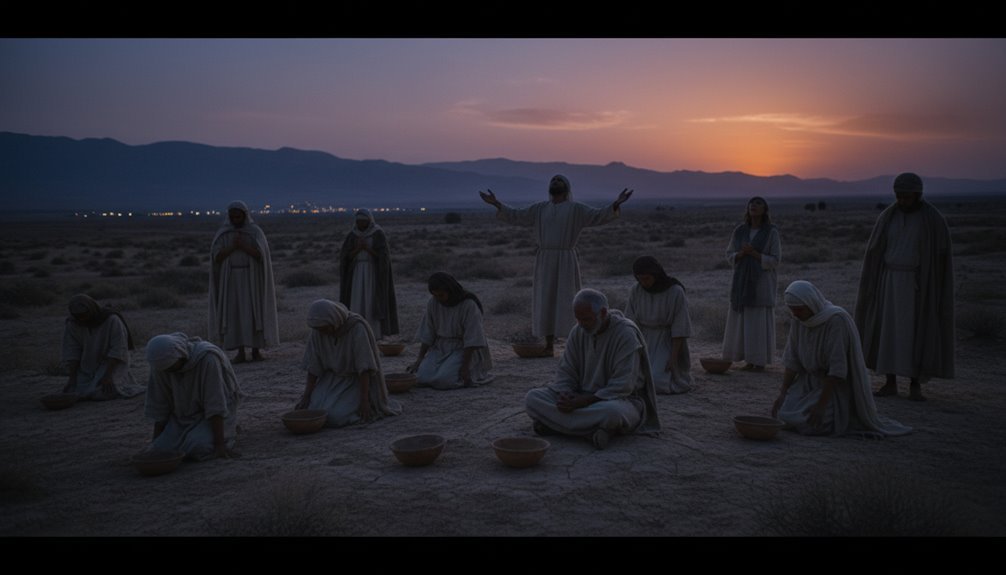
14 Apr 10 Types of Fasting in Ancient Israel
You’ll find ten ancient‑Israeli fasts, each tied to prayer, repentance, or communal memory. There’s the Sabbath fast that blends rest with humility, Yom Kippur’s one‑day atonement fast, Esther’s three‑day plea for deliverance, the Nisan dawn‑to‑dusk spring fast, Elijah’s seven‑day prophetic silence, the ten‑day Red Sea crossing remembrance, the Tishrei harvest fast, and three national mourning fasts on the 17th of Tammuz, 9th of Av, and Gedaliah. Each fast follows specific timing, restrictions, and rituals, and if you keep going you’ll discover how they’re observed today.
What Is a Fast in Jewish Tradition?
What exactly counts as a fast in Jewish tradition? You observe a fast when you intentionally abstain from food and drink, sometimes also refraining from pleasures like bathing or marital relations, for a prescribed period. The purpose is to elevate prayer, repentance, or mourning, aligning your physical restraint with spiritual focus. A fast can be full‑day, beginning at dawn and ending at nightfall, or partial, allowing a meal before sunrise and after sunset. You might fast on communal fast days—such as Yom Kippur, the most solemn—or on personal occasions like a family tragedy. The halakhic guidelines dictate the minimum of 24 hours for full fasts, while minor fasts permit a brief break for sunrise meals. You’re expected to maintain a solemn mindset, avoid frivolous activity, and use the deprivation to deepen introspection and connection to the Divine.
Sabbath Fast – Why the Seventh‑Day Rest Includes Fasting
Why does the Sabbath, a day of rest and joy, sometimes involve fasting? You’ll find that ancient Israelite sages linked the seventh‑day rest to moments of national mourning or divine judgment, when the usual festive meals were set aside. When a calamity struck—such as a plague, a military defeat, or the death of a leader—the community gathered on the Sabbath to pray, repent, and fast, turning the day of celebration into a solemn appeal for mercy. This practice didn’t replace the Sabbath’s sanctity; instead, it amplified the sense of collective responsibility, reminding you that rest and reflection can coexist.
The fast was typically partial—abstaining from meat, wine, and rich foods—so you could still observe the prohibitions against work while focusing on humility and prayer. By integrating fasting, the Sabbath became a flexible canvas for both gratitude and contrition, reflecting the dynamic relationship between joy and sorrow in ancient worship.
Yom Kippur – One‑Day Fast, Timing, and Core Rules
You’ll notice that Yom Kippur begins at sunset and ends at nightfall the next day, with strict prohibitions on eating, drinking, work, and even wearing leather.
These timing rules frame a day focused on sincere repentance, prayer, and seeking divine forgiveness. By honoring the limits, you align your actions with the core spiritual intention of complete self‑examination and renewal.
Timing and Prohibited Activities
When does Yom Kippur actually begin, and what can you’t do from sunset to nightfall?
It starts at sunset on the 10th of Tishrei and ends at nightfall the following day.
From the moment the sun dips below the horizon, you must abstain from eating, drinking, washing for pleasure, applying cosmetics, and marital relations. You also refrain from work, including writing, using electronic devices, and any activity classified as melacha. The fast persists continuously; even a sip of water or a brief brush of your teeth counts as violation. The only permissible actions involve prayer, reflection, and necessary medical care if life is at risk. Observe these restrictions strictly to honor the day’s sanctity.
Core Spiritual Intentions
What draws you to Yom Kippur isn’t merely its calendar date but the profound inner reset it demands. You step into a day where fasting becomes a conduit for repentance, humility, and communion with the Divine. The core intention is to strip away external distractions, allowing your heart to confront sin and seek at. You acknowledge collective responsibility, recognizing that personal atacts affect the community. Through abstaining from food, drink, and physical comforts, you heighten spiritual awareness, creating space for sincere prayer and confession. The fast also symbolizes solidarity with the needy, reminding you that compassion must accompany atonement. Ultimately, Yom Kippur invites you to realign your actions with divine will, emerging renewed and ethically reoriented.
Esther’s Three‑Day Fast – Historical Context and Practical Tips
You’ll learn why Esther called for a three‑day fast to secure her people’s safety and how that urgency shaped the tradition.
The historical backdrop shows the fast as a collective plea for divine intervention before a critical political moment.
To observe it today, set aside three days of prayer, abstain from food and drink, and focus on heartfelt petitions aligned with the original purpose.
Historical Reason for Esther’s Fast
Why did Esther and the Jews fast for three days before she approached the king? You’ll find that the fast served a strategic, spiritual purpose. Faced with Haman’s plot to annihilate the Jewish people, Esther needed divine favor and communal solidarity. The three‑day abstention symbolized humility, repentance, and a plea for God’s intervention. It also unified the community, creating a shared moment of prayer and dependence on God’s providence. By fasting, Esther demonstrated seriousness, gaining moral authority and the courage to risk her life.
The historical context shows that fasting was a culturally accepted way to seek divine assistance in crises, aligning personal risk with collective hope for salvation. This explains why the fast was essential, not merely ceremonial.
Practical Steps for Modern Observers
Considering you want to honor Esther’s three‑day fast today, start by setting a clear intention: define why you’re fasting—whether for spiritual reflection, communal solidarity, or personal growth.
Choose a three‑day window that aligns with your schedule, and inform close friends or family so they can support you.
Begin each morning with a brief prayer or meditation, reminding yourself of Esther’s courage.
Hydrate with water, herbal tea, or broth; avoid caffeine and sugary drinks.
Plan light, nutrient‑dense meals for the evenings, focusing on fruits, vegetables, and whole grains to sustain energy.
Keep a journal to record thoughts, emotions, and any insights that arise.
At the fast’s end, break it gently with a modest meal, thanking God for the experience.
Nisan Dawn‑to‑Dusk Fast – Seasonal Significance and Observance
Ever wondered why the Nisan dawn‑to‑dusk fast aligns with the season’s renewal? You experience the fast as spring’s first light breaks over the fields, symbolizing rebirth and divine closeness.
The fast begins at sunrise on the 14th of Nisan, the night before Passover, and ends at nightfall, mirroring the natural cycle of day and night. You abstain from food and drink, focusing on prayer and gratitude for the harvest that will soon follow.
The timing reinforces the link between physical restraint and the agricultural calendar: as barley sprouts and blossoms emerge, you echo the Israelites’ anticipation of liberation. You may recite psalms that celebrate renewal, and you often share a modest meal after sundown, marking the transition from fasting to festivity. This seasonal observance reminds you that spiritual renewal is rooted in the earth’s own rhythm.
Moses’ Six‑Day Sinai Fast – Biblical Background and Modern Practice
When Moses ascended Mount Sinai, he and the Israelites endured a six‑day fast that still resonates in Jewish tradition. You’ll find that the biblical account (Exodus 24:18; 34:28) frames the fast as a period of divine revelation, prayer, and purification. The narrative emphasizes total abstention from food and water, underscoring humility before God’s law.
In modern practice, some observant communities commemorate the event by fasting on the 6th of Sivan, aligning with the historical timeline of the covenant ceremony. You might join a communal study session, recite the Ten Commandments, and refrain from meals until nightfall, mirroring the ancient rhythm. While the fast isn’t mandated by halacha, it serves as a spiritual bridge, connecting today’s believers with the foundational moment of Torah delivery. Embracing this practice deepens your sense of continuity and reverence for the covenantal heritage.
Elijah’s Seven‑Day Fast – Prophetic Meaning and How It’s Observed Today
You’ll notice that Elijah’s seven‑day silence isn’t just a personal discipline; it carries a prophetic weight that signals divine urgency.
Today, many observers keep the fast by abstaining from food and media, creating a quiet space for prayer and reflection.
This practice links the ancient call for silence to modern efforts to hear God’s direction more clearly.
Prophetic Significance of Silence
The seven‑day silence that Elijah observed isn’t just a historical footnote; it’s a prophetic act that signals divine urgency and prepares the community for revelation. You’ll notice that silence in his fast isn’t merely the absence of speech but a deliberate, sacred pause that amplifies prayer and heightens spiritual awareness. By withholding words, Elijah creates a vacuum where God’s voice can echo louder than any human chatter. This quietness also mirrors Israel’s covenantal need for introspection, urging the people to listen inwardly for divine instruction. As you reflect on this, understand that the prophetic significance lies in the transition from external noise to internal reverence, a shift that readies hearts for the forthcoming divine message.
Modern Observance Practices
Why do believers still cling to Elijah’s seven‑day silence? You join a community that gathers each dawn for prayer, reads the prophetic text, and observes a strict fast from sunrise to sunset. You abstain from food, drink, and leisure, using the quiet to deepen repentance and seek divine guidance. In many congregations, you replace meals with communal scripture study and charitable acts, extending the fast’s spirit beyond personal deprivation. Some modern groups incorporate a digital detox, turning off devices to amplify the silence. You conclude the seventh day with a celebratory feast, sharing testimonies of renewed faith. This blend of ancient rite and contemporary practice keeps Elijah’s prophetic message alive in today’s world.
Red Sea Crossing Ten‑Day Fast – Symbolic Journey and Ritual Details
Ever wondered how the Red Sea Crossing Ten‑Day Fast transforms a historic deliverance into a personal pilgrimage? You begin on the first evening by lighting a single candle that represents the pillar of fire guiding the Israelites. Each day you recite a brief passage from Exodus, focusing on the Israelites’s fear, the miracle of the waters, and the promise of freedom. You abstain from grain‑based foods, substituting fish and vegetables to echo the sea‑borne sustenance. Mid‑fast, you walk a short, measured route around a communal space, symbolizing the Israelites’ march toward the shore. On the seventh day, you pause for a silent meditation, visualizing the waters parting. The final three days involve a communal meal of unleavened bread and fresh herbs, celebrating the covenant renewed after the crossing. Throughout, you keep a journal, noting insights and prayers, turning ancient history into a lived, transformative experience.
Tishrei Harvest Fast – Agricultural Roots and Contemporary Observance
When autumn’s first chill settles over the hills of Israel, you’ll notice farmers gathering the season’s last grain, a practice that sparked the ancient Tishrei Harvest Fast. You join them, acknowledging that the harvest’s completion demands gratitude and humility. In biblical times, the fast marked the transition from sowing to reaping, a pause before the festive season of Sukkot. You’d abstain from food and drink from sunrise until sunset, offering prayers for a bountiful yield and protection against pestilence. Today, you observe the fast similarly, often aligning it with the modern “Harvest Day” celebrated in agricultural communities.
You may substitute a light meal after sundown, sharing dishes made from the very grain you harvested. The fast’s core remains: a collective pause that honors the land’s generosity, reinforces communal bonds, and prepares you spiritually for the joyous celebrations that follow.
National Days of Mourning in Jewish History – Collective Fast Practices
The rhythm of the harvest fast gives way to another communal expression of grief: the national days of mourning that punctuate Jewish history. When you encounter a national fast, you join a lineage that transforms personal sorrow into collective memory. You’ll find three primary days: the 17th of Tammuz, the 9th of Av, and the Fast of Gedaliah. Each commemorates a distinct catastrophe—walls breached, temples destroyed, and a leader assassinated—yet all demand complete abstention from food and drink from sunrise to sunset. You observe the fast by gathering in the synagogue, hearing the liturgy that recounts the tragedy, and reflecting on the moral lessons embedded in the loss. The fast also obliges you to refrain from work, marital intimacy, and comfort‑seeking pleasures, reinforcing the solemn atmosphere. By participating, you help preserve communal identity, ensuring that the wounds of the past remain visible and that future generations remember the cost of disobedience.
Frequently Asked Questions
Can Fasting Affect Fertility in Ancient Israel?
You can’t say for certain that fasting directly altered fertility in ancient Israel, but biblical and rabbinic sources link prolonged, extreme fasts with weakened bodies, which could lower reproductive capacity.
The community believed that excessive self‑denial disrupted the balance of humors and divine favor, so they warned against fasting during child‑bearing years.
In practice, moderate fasts were permitted, while harsh, continuous abstinence was discouraged to protect health and fertility.
Do Women Fast During Their Menstrual Cycles?
You don’t fast during your menstrual cycle because ancient Israelite law classified menstruation as a period of ritual impurity, and fasting was a sacred act reserved for purity.
The Torah and later rabbinic rulings forbid women from undertaking fasts while they’re niddah, fearing that impurity would invalidate the prayerful intent.
How Were Children Involved in Communal Fasts?
You’d see children standing beside elders as the community gathered for a fast. They’d be taught to pray quietly, sometimes holding a small loaf or a symbolic piece of bread. Parents would guide them to refrain from food for the designated period, emphasizing humility and solidarity.
Their participation reinforced communal identity, and the act of fasting together—adults and kids alike—strengthened the shared spiritual purpose.
What Foods Were Traditionally Eaten After Breaking a Fast?
You break a fast with simple, nourishing foods like dates, figs, olives, and barley bread, often accompanied by honey or cheese.
Warm soups made from lentils or beans follow, sometimes seasoned with herbs like mint or cumin.
Fresh fruit and nuts appear on the table, and a modest amount of wine or grape juice may be poured.
These dishes restore energy gently, honoring tradition while easing your stomach back into regular meals.
Did Ancient Israelites Fast for Personal Vows?
Yes, you’ll find that ancient Israelites did fast for personal vows. When someone made a solemn promise to God—often to fulfill a request or avert disaster—they’d set a specific period of abstinence as part of the vow. The fast could be a single day or several days, and it was usually accompanied by prayer and a later offering once the vow was kept. This practice linked personal devotion directly to communal religious norms.
Conclusion
By exploring these ten ancient fasts, you’ve seen how Jewish tradition weaves prayer, history, and the land into each period of abstinence. From the solemn silence of Yom Kippur to the hopeful sunrise of the Nisan fast, every fast serves a distinct purpose—remembrance, repentance, or renewal. Embracing these practices connects you to centuries of collective memory, reminding you that fasting is as much a spiritual journey as it is a communal rite.








No Comments