

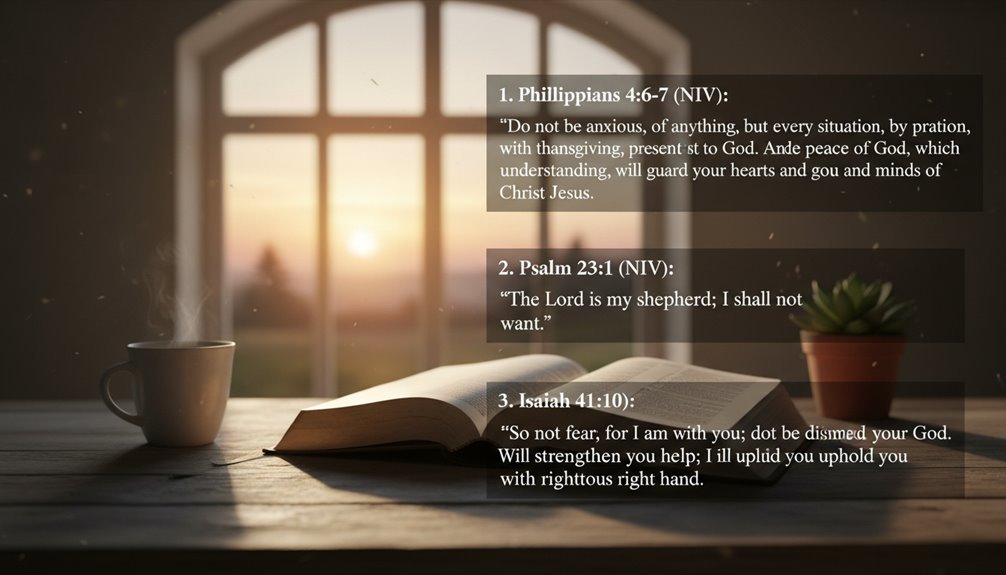
12 Apr 3 Best Daily Verses for Spiritual Encouragement
You can boost your morning confidence with Philippians 4:13, reminding yourself “I can do all things” as you sip coffee and set a mental anchor for the day. Keep calm all day by pausing for a breath and silently repeating Psalm 46:10, “Be still and know,” which steadies you during stress. End with hope by reflecting on Psalm 23, letting “The Lord is my shepherd” guide you into peace and gratitude, and discover deeper practices ahead.
Morning Boost: Daily Devotional With Philippians 4:13 – “I Can Do All Things
Ever feel like the day’s challenges are piling up? You can flip that script with Philippians 4:13. As you sip your morning coffee, read “I can do all things” aloud and let it settle in your mind. Picture the verse as a mental anchor; it reminds you that strength isn’t a distant ideal but a present reality. When a deadline looms or a tough conversation awaits, pause, breathe, and repeat the phrase. Notice how the words shift from abstract to actionable, nudging you toward confidence. You’ll find that the verse doesn’t promise effortless success, but it assures you that divine empowerment backs every effort. Use this simple ritual each sunrise, and watch how the day’s weight lightens, replaced by a quiet, persistent belief that you’re equipped to meet whatever comes your way.
How to Keep Peace All Day: Daily Devotional From Psalm 46:10 – “Be Still and Know
How can you stay calm when the world feels chaotic? You can anchor your mind in Psalm 46:10, “Be still, and know that I’m God.” Begin by pausing for a breath, letting the rush fade as you repeat that phrase silently. As you move through meetings, traffic, or chores, remind yourself that God’s presence isn’t dependent on external noise. When anxiety spikes, close your eyes for a few seconds, feel the steadiness of the promise, and let it settle your thoughts. Write the verse on a sticky note, set it as a phone wallpaper, or whisper it before each task. This simple habit transforms ordinary moments into intentional pauses, creating a continuous thread of peace. By consciously choosing stillness, you invite divine calm into every interaction, and the day unfolds with a quiet confidence that transcends the surrounding turmoil.
How to End the Day With Hope: Daily Devotional Using Psalm 23 – “The Lord Is My Shepherd”
After a day of stillness and calm, you can close it with hope by turning to Psalm 23’s promise, “The Lord is my shepherd.” Let the image of a caring shepherd guide your thoughts as you reflect on the day’s moments, trusting that the same steady hand that led you through morning challenges now leads you into restful night. Begin by breathing deeply, then read verse one: “I shan’t want.” Notice how scarcity fades when you acknowledge divine provision. Move to verse three: “He restores my soul.” Identify a tired part of you and invite the Shepherd’s renewal. Visualize the green pastures and still waters, letting their peace settle over your mind. End with verse six: “Surely goodness and mercy shall follow me.” Speak a quiet prayer, thanking God for today’s lessons and asking for tomorrow’s strength. This simple ritual transforms bedtime into a moment of hopeful surrender.
Frequently Asked Questions
How Can I Memorize Verses Quickly?
You’ll memorize verses quickly by breaking them into short phrases, repeating each phrase aloud, and linking the words to vivid images or personal stories. Use a spaced‑repetition app or set a timer for 5‑minute sessions, reviewing the same verse at increasing intervals. Write the verse on sticky notes, place them where you look daily, and recite them while walking or doing chores. Consistency and active recall solidify the memory fast.
Do These Verses Work for Non‑Christian Readers?
Yes, they can still resonate. You’ll find the core ideas—hope, perseverance, compassion—are universal, so even if you don’t share the Christian background, the messages can uplift you. Focus on the underlying principles rather than the specific religious framing, and you’ll likely feel the same encouragement. If a verse feels too doctrinal, skip it and choose one that aligns with your own worldview.
What if I Struggle With Understanding the Original Language?
You can bridge the language gap by using reliable translations, study guides, and commentaries that explain key terms and cultural nuances. Look for side‑by‑side versions that show the original text alongside modern language, and tap into audio recordings to hear pronunciation and rhythm.
Join a discussion group or online forum where members break down difficult passages, and don’t hesitate to ask scholars or pastors for clarification on specific words or phrases.
Can I Use These Verses for Mental Health Therapy?
Yes, you can incorporate those verses into mental‑health therapy, especially if you find them uplifting. They can serve as grounding tools, help you reframe negative thoughts, and foster resilience. Just discuss their use with your therapist so they align with your treatment plan, and treat them as complementary, not a substitute for evidence‑based interventions. You’ll likely notice improved mood and a stronger sense of purpose.
How Often Should I Repeat the Same Verse?
You should repeat the same verse as often as it feels meaningful, but generally a few times a day works well. Start with morning, noon, and evening repetitions, then adjust if you notice diminishing impact. If the verse begins to feel stale, pause for a week and switch to another passage. Consistency matters more than frequency, so aim for focused, heartfelt recitation rather than mechanical repetition.
Conclusion
You’ve got a powerful toolbox: start your day with Philippians 4:13 to feel unstoppable, let Psalm 46:10 calm you whenever anxiety creeps in, and close each evening with Psalm 23’s promise of peace and protection. By weaving these verses into your routine, you’ll carry confidence, serenity, and hope from sunrise to sunset—turning every moment into a chance to experience God’s steadfast love.












No Comments