

23 Mar How to Attend Easter Monday Church Services & Customs
Check your local church’s website or use a finder app like ChurchFinder to see if they list an Easter Monday service, then note the time, sanctuary address, and any livestream link. If you prefer virtual worship, click the streaming URL or Zoom invite; for in‑person attendance, confirm parking, childcare, and translation options. Expect a bright worship with choir, a short sermon, communion, and a post‑service fellowship featuring rolls, eggs, and community games. Keep going to discover the specific customs you’ll encounter.
Table of Contents
Find a Local Easter Monday Service (Online or In‑Person)
Where can you find a local Easter Monday service, whether online or in‑person? Start by checking your church’s website; most post a schedule with livestream links and sanctuary addresses. Use a search engine with keywords like “Easter Monday service + your city” to uncover nearby parishes, community chapels, or virtual gatherings. Social media pages—Facebook, Instagram, Twitter—often announce live streams and Zoom invites. If you belong to a denomination, explore its regional portal; many list satellite churches and online worship options. Local newspapers and community bulletin boards may also post flyers for special Easter Monday events. For a broader view, consult apps such as “ChurchFinder” or “FaithStreet,” which filter by date, denomination, and format. Once you locate a few options, compare service times, accessibility, and whether they offer translation or childcare. Then pick the one that fits your schedule and preferences, and add the link or address to your calendar.
Easter Monday Service Liturgy: What to Expect
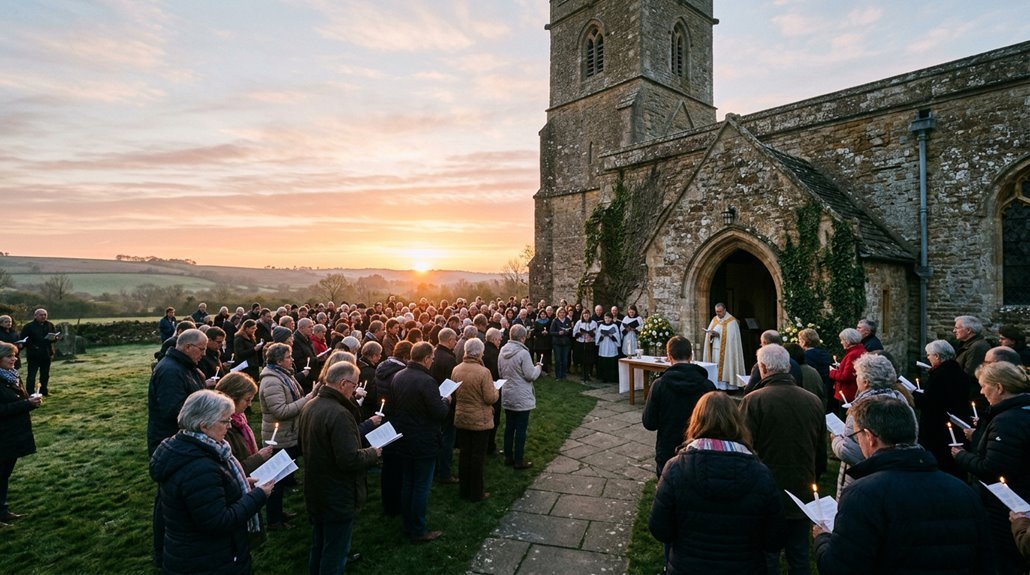
What’ll you hear and see during an Easter Monday service? You’ll enter a bright sanctuary where the choir lifts a triumphant hymn, the organ swells, and the congregation rises for a solemn “Alleluia.” The pastor greets you, then reads a brief passage from Acts that highlights the early church’s joy after the resurrection. Expect a short sermon that connects Easter Sunday’s triumph to the ongoing work of the Holy Spirit in daily life, followed by a reflective prayer of gratitude. The liturgy often includes a symbolic foot‑washing or a simple rite of blessing, reminding you of service and renewal. You’ll hear the clinking of communion cups as the pastor offers the sacrament, and you may receive a small piece of bread and wine if you choose. The service concludes with a final hymn, a benediction, and a gentle reminder to carry Easter’s hope into the week ahead.
Easter Monday Community Customs After the Service
After the hymn fades and the benediction rings out, parishioners spill out into the churchyard, where a lively mix of traditions awaits. You’ll find families gathering around picnic tables, sharing buttered rolls, boiled eggs, and sweet pastries that symbolize new life.

Children chase each other with brightly painted eggs, while elders explain the origins of the “egg‑rolling” game that dates back to medieval harvest rites.
Some congregations set up a communal “blessing of the harvest” booth, where you can place fresh produce for a short prayer of gratitude.
In many towns, a short procession follows the service, marching toward the local park for a folk dance or a brass band performance.
You’re invited to join the sing‑along, clap along with the rhythm, and mingle with neighbors you may not have seen all year.
These customs reinforce fellowship, celebrate renewal, and keep the spirit of Easter Monday alive beyond the sanctuary.

Frequently Asked Questions
Do Easter Monday Services Require a Donation?
You typically aren’t required to give a donation for Easter Monday services, but many churches welcome contributions. If you feel moved, you can place an offering in the collection plate, give online, or support the church’s charitable projects. Some congregations have a “suggested” amount, yet it’s optional. Respect the community’s guidelines, and remember your generosity reflects personal gratitude, not obligation.
Can Children Participate in the Easter Monday Liturgy?
Yes, children can join the Easter Monday liturgy. You’ll find most churches welcome them, often providing age‑appropriate prayers, songs, and a brief homily.
Bring them early so they can settle, and ask the clergy about any special children’s program or altar‑service opportunities.
If the congregation offers a kids’ corner or Sunday school, let your child participate there, then bring them back for the main worship.
This involvement helps them experience the celebration fully.
Are There Specific Dress Codes for Easter Monday Worship?
You’ll find most Easter Monday services expect modest, respectful attire—no shorts, tank tops, or ripped clothing. Men typically wear a collared shirt and slacks; women often choose a dress or skirt that covers the knees, or a modest blouse with trousers. Some congregations ask for head coverings, especially in more traditional settings. Check the church’s website or call ahead; a quick inquiry ensures you meet any specific expectations without guessing.
Do Churches Offer Translation Services for Non‑English Speakers?
Yes, most churches provide translation services for non‑English speakers, especially on major holidays like Easter Monday. You’ll find multilingual hymn books, live interpreters, and audio headsets offering real‑time translation. Check the church’s website or call the office ahead of time to confirm which languages are available and whether you need to reserve a seat. If you arrive early, you can also ask the greeter for the translation equipment.
Is It Customary to Bring Food for Easter Monday Community Gatherings?
You can bring food, and it’s usually appreciated, but it isn’t mandatory. Many churches organize potluck‑style meals after the service, so sharing a dish shows community spirit.
If you’re unsure, ask the organizer or check the bulletin—some groups prefer a specific dish or have dietary guidelines.
Bringing a modest, easy‑to‑serve item, like bread, fruit, or a dessert, is a safe bet and helps create a warm, inclusive atmosphere.
Conclusion
So you’ve found a service, learned the liturgy, and joined the community customs—now you’re ready to celebrate Easter Monday fully. Embrace the fellowship, soak in the music, and carry the joy of the day into your week. Keep the spirit alive by sharing the experience with friends and family, and let the traditions you’ve discovered enrich your own faith journey.










No Comments