

24 Mar Why Do Countries Celebrate Easter Monday Differently?
You’ll find Easter Monday varies because each country blends its own religious roots, historic rituals and modern lifestyle. Catholic nations treat it as the Octave of Easter, with processions and koliva, while Protestant regions see it as a secular long‑weekend for family picnics and games. Local customs—like Poland’s water‑splashing, Germany’s Emmausgang walks, or Greece’s tsoureki—reflect centuries‑old traditions and climate. Economic policies also decide if it’s a public holiday. Keep going and you’ll discover the festivals, foods and travel trends that shape today’s celebrations.
Table of Contents
What’s the Story Behind Easter Monday Traditions?
Ever wondered why Easter Monday feels so different from place? You’ll find the answer in history’s layered tapestry. In many Catholic nations, the day marks the “Octave” of Easter, extending the celebration of Christ’s resurrection. You’ll see processions that reenact the walk to Emmaus, where disciples recognize Jesus.
In Protestant‑dominant regions, the focus shifts to family gatherings and outdoor activities, reflecting the Reformation’s emphasis on personal reflection over ritual.
Scandinavia treats Monday as a “bright” holiday, encouraging picnics and games that echo ancient spring rites honoring fertility.

In Eastern Orthodox countries, the date often follows the Julian calendar, so you experience a later Monday with unique foods like koliva, a sweetened wheat dish symbolizing rebirth.
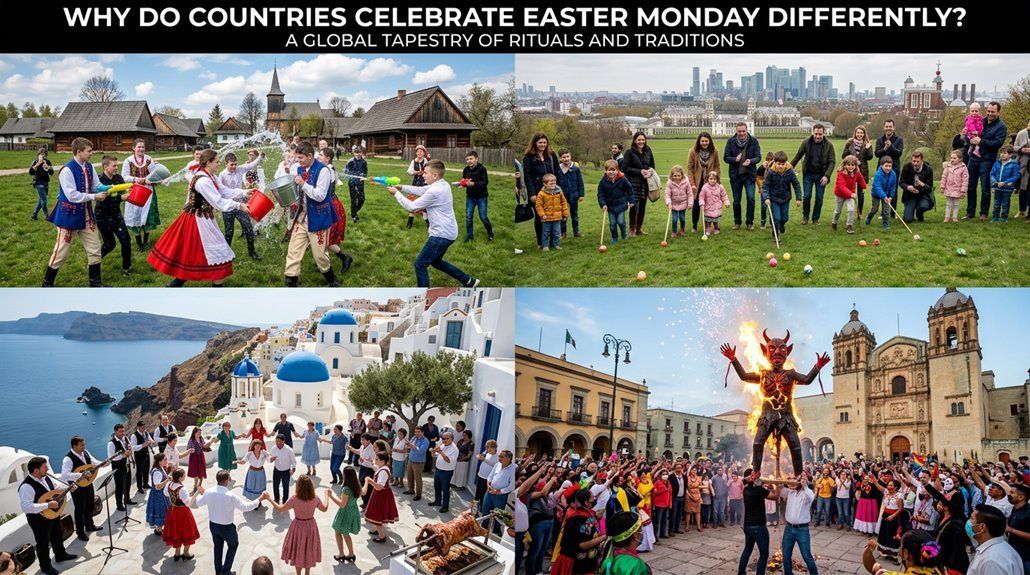
You also encounter regional customs: Poland’s “Śmigus‑dyngus” water fights, Germany’s “Emmausgang” walks, and the Philippines’ “Salubong” reenactments.
Each tradition ties back to local history, climate, and cultural values, turning Easter Monday into a mosaic of distinct yet connected celebrations.
Where Are the Must‑See Monday‑After‑Easter Festivals?
Where can you find the most unforgettable Monday‑after‑Easter celebrations? You’ll discover them in Seville, where the Feria de Abril kicks off with flamenco, rose‑filled patios, and midnight fireworks that light the Guadalquivir.
In Kraków, the Lajkonik parade roams the Old Town, with riders on faux‑horse rigs tossing sweets to cheering crowds.

Head to Dubrovnik for the “Easter Monday Regatta,” a vibrant sail‑race that transforms the Adriatic into a sea of color and music.
In Budapest, the “Easter Monday Market” sprawls along Váci Street, offering handcrafted folk art, paprika‑spiced street food, and live gypsy violinists.
Melbourne’s “Spring Fest” blends Easter traditions with Aussie spring, featuring pop‑up art installations, surf‑style parades, and brunch trucks serving lamingtons.
Finally, in Oaxaca, the “Guelaguetza” dance festival showcases indigenous costumes, marimba rhythms, and communal feasts that turn the city into a living tapestry of sound and color.
These events promise unforgettable cultural immersion and joyous celebration.
Why Do Some Countries Give the Day Off and Others Don’t?
After exploring the most unforgettable Monday‑after‑Easter festivals, you might wonder why some nations treat Easter Monday as a public holiday while others don’t. The answer lies in history, religion, and labor policy. Countries with strong Protestant roots, like the United Kingdom, often view Easter Monday as a secular extension of the weekend, so they grant a day off to boost tourism and family time. In contrast, many Catholic‑majority nations, such as Italy and Spain, embed the day in religious observance, making it a statutory holiday tied to liturgical calendars.
Secular states sometimes drop the holiday to reduce economic disruption, especially where Easter already consumes a full weekend. Governmental decisions also reflect labor‑market priorities: a country that values work‑life balance may keep the day off, while one focused on productivity may treat it as a regular workday.
Ultimately, cultural heritage and policy goals shape whether you get to relax or report to work.
What Foods and Games Do People Enjoy on Easter Monday?
What foods and games make Easter Monday memorable? You’ll find buttery hot cross buns, sweet Easter breads, and savory lamb roasts filling tables across Europe, while in the U.S. you might bite into ham glazed with pineapple or enjoy a colorful salad of fresh peas and mint.
In Greece, tsoureki—an orange‑scented braided loaf—steals the spotlight, and in Australia you’ll spot pavlova topped with fresh berries.
After the feast, you dive into games that blend tradition and fun. Kids chase rolling painted eggs in a lively egg‑hunt, while adults join a spirited “egg‑and‑spoon” race that tests balance and laughter.
In Poland, the “Śmigus‑Dyngus” water‑splash tradition turns sidewalks into playful battlegrounds, and in the UK, the “Easter egg roll” on the lawn sparks friendly competition. These foods and games turn the day into a shared celebration of spring’s arrival.
How Are Travel Trends Reshaping Easter Monday Celebrations?
Ever notice how your Easter Monday plans now hinge on a quick flight or a weekend road‑trip rather than a backyard feast? You’re joining a global shift where travel trends dictate celebration styles. Low‑cost airlines and high‑speed trains make cross‑border get possible, so you often spend the day exploring a new city’s historic churches, street markets, or coastal promenades.
Ride‑sharing apps and flexible‑ticket policies let you swap a family brunch for a spontaneous hike in the Alps or a weekend getaway to a Mediterranean island.
Social media amplifies these choices; you post sunrise photos from a foreign beach, and friends follow suit, turning Easter Monday into a travel showcase. Meanwhile, tourism boards market “Easter escapes,” bundling local customs with accommodation deals.
As a result, you experience traditional rituals—processions, egg hunts, festive meals—through the lens of a traveler, blending cultural immersion with personal adventure.
Frequently Asked Questions
How Does Easter Monday Affect Public Transportation Schedules?
You’ll notice that many transit agencies cut back service on Easter Monday, so you should expect reduced frequencies, earlier last‑train times, and occasional route suspensions.
Some commuter lines run only a half‑day schedule, while intercity buses may skip stops or operate on a holiday timetable.
Check the operator’s website or app before you travel, and plan extra time for connections because fewer vehicles and staff are on duty.
Are There Any Legal Restrictions on Commercial Activities on Easter Monday?
You’ll find that many countries impose specific legal restrictions on commercial activities on Easter Monday, especially in Europe.
In Germany, most retail stores must close, while Austria allows limited opening hours for essential services.
France mandates a public holiday, so non‑essential businesses stay shut.
In the UK, it’s a regular working day, but some local councils may enforce reduced hours for certain trades.
Always check national and regional statutes before planning sales or promotions.
What Environmental Initiatives Are Linked to Easter Monday Celebrations?
You’ll find that many Easter Monday events now tie into green initiatives. Communities organize tree‑planting drives, clean‑up walks, and bike‑friendly parades to cut car emissions.
Churches and NGOs host recycling workshops, encouraging participants to bring reusable containers for picnics.
Some cities ban single‑use plastics for the day, while others plant pollinator gardens in public squares. These actions turn the holiday into a chance to boost local biodiversity and lower waste footprints.
How Do Digital Media Platforms Influence Easter Monday Customs?
You’ll see digital media platforms reshaping Easter Monday customs by amplifying trends, livestreaming parades, and prompting viral challenges. Influencers share regional recipes, prompting you to adopt new dishes. Hashtags aggregate photo contests, so you post your family’s egg‑hunting moments, spreading local traditions worldwide. Platforms also push targeted ads for holiday travel, nudging you toward specific destinations. In short, you’re constantly exposed to curated content that guides how you celebrate, blend, and share Easter Monday experiences.
Do Schools Incorporate Easter Monday Themes Into Their Curricula?
You’ll find that many schools do weave Easter Monday themes into lessons, especially in regions where the holiday holds cultural weight. Teachers often link the day to history, art, and literature, using stories of resurrection or spring traditions to spark discussion. You might see projects on religious symbols, seasonal science experiments, or creative writing prompts. In secular settings, the focus shifts to cultural diversity, encouraging you to explore how different societies celebrate the day.
Conclusion
So, whether you’re hunting for eggs in Germany, dancing around fires in Spain, or simply enjoying a lazy brunch in the U.K., Easter Monday’s customs reflect each nation’s history, religion, and local flavor. You’ll find that the day’s vibe can swing from festive parades to quiet family time, and travel trends keep reshaping how we experience it. Embrace the diversity, and let the celebrations inspire your own holiday plans.







No Comments