

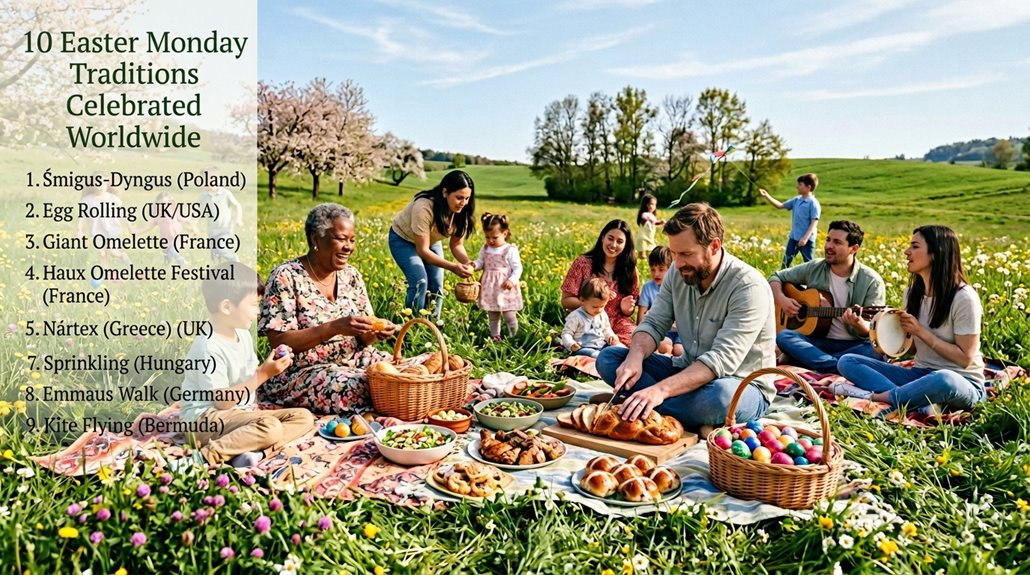
21 Mar 10 Easter Monday Traditions Celebrated Worldwide
You’ll find Easter Monday buzzing with egg hunts in U.S. parks, Poland’s splash‑filled Śmigus‑Dyngus water fights, France’s Lundi de Pâques horse races, Greece’s colorful Koulouma kite‑flying, and the UK’s charitable almsgiving. Germany lights bonfires and holds sunrise services, Italy spreads picnics with regional dishes, New Zealand rallies around rugby matches, and South Africa gathers for family braais and dance circles. Keep going to discover even more vibrant celebrations.
Table of Contents
United States – Easter Monday Egg Hunts & Community Events
Ever wondered how Easter Monday comes alive across the United States? You’ll find towns turning parks into vibrant egg‑hunting arenas, where families sprint after plastic shells filled with candy, toys, or cash. Municipalities often pair the hunt with live music, food trucks, and local artisans showcasing crafts. You can join a community “Golden Egg” contest, where a single egg hides a larger prize, adding excitement for all ages.
Many churches host sunrise services followed by a communal brunch, encouraging fellowship and shared meals. In suburban neighborhoods, volunteers hide eggs along walking trails, creating a safe, family‑friendly environment. You’ll also see charity runs that combine fitness with egg‑finding, donating entry fees to local shelters. These events blend tradition with modern fun, fostering neighborhood pride and giving you a chance to celebrate spring’s arrival while making lasting memories.
Poland – Śmigus‑Dyngus Water‑Throwing Celebrations
Where does the fun start? You step onto a Polish street on Easter Monday and instantly feel the splash of water. Śmigus‑Dyngus, the country’s beloved water‑throwing tradition, turns friends, family, and strangers into a lively battlefield of droplets. You’ll see buckets, hoses, and even plastic water guns wielded with playful vigor. The custom dates back to pagan rites of purification, yet today it’s a light‑hearted way to celebrate spring’s arrival. You’re encouraged to soak anyone you meet—especially the opposite gender—because a dry person on this day is considered unlucky.

Many towns organize organized “water parades,” where participants march while sprinkling each other. After the drenches, you’ll share laughter, dry off with warm tea, and enjoy traditional pastries like mazurkas. The day ends with smiles, soggy clothes, and a shared sense that the season’s renewal has truly begun.
France – Lundi De Pâques Horse Races & Spring Festivals
After the splashy celebrations in Poland, France greets Easter Monday with a very different kind of excitement: the Lundi de Pâques horse races and vibrant spring festivals. You’ll find yourself strolling through historic towns where the scent of fresh baguettes mingles with blooming lilacs, while locals gather at the racecourse for centuries‑old contests. At the famous Chantilly track, you watch sleek Thoroughbreds thunder past the grandstand, their hooves echoing a rhythmic chant that feels almost ceremonial.
Meanwhile, villages host flower‑laden parades, and you join in traditional folk dances, waving ribbons that flutter in the gentle breeze. Regional specialties—like lamb stew and pastel de Pâques—are served on communal tables, inviting you to share meals with strangers turned friends. The day blends sport, music, and culinary delights, turning Easter Monday into a lively celebration of renewal and community across the French countryside.
Greece – Koulouma Kite‑Flying Traditions on Easter Monday
On Easter Monday, Greeks gather in coastal towns and hilltop villages to launch colorful kites in a tradition called Koulouma, believing the soaring fabric carries prayers for a bright, prosperous year. You’ll see families stretching vibrant paper or fabric kites, each shaped like a diamond or a stylized bird, then running across the breezy hillsides. Children compete to see whose kite climbs highest, while elders whisper blessings into the wind, hoping the currents will lift their wishes. The sky fills with a patchwork of reds, blues, and whites, mirroring the national flag and the spring blossoms below. After the launch, you share sweets—tsoureki, melomakarona, and fresh figs—while sipping strong coffee, recounting stories of past Koulouma celebrations. The ritual ends as the sun dips, and the kites drift down, symbolizing hopes grounded in community and faith, ready to blossom throughout the year.
United Kingdom – Easter Monday Almsgiving & Charitable Giving
You’ll notice that Easter Monday in the United Kingdom still echoes its historic almsgiving roots, now woven into modern charity initiatives. Communities gather for festive activities that double as fundraisers, turning celebration into support for those in need. This blend of tradition and contemporary giving keeps the spirit of generosity alive every year.

Char Historic Almsgiving Roots
When Easter Monday arrives in the United Kingdom, many communities revive a centuries‑old custom of almsgiving, turning the holiday into a day of charitable giving. You’ll find that this practice traces back to medieval parish festivals, when clergy instructed congregants to distribute food, cloth, and coins to the poor after the Easter vigil. The tradition linked to the “almsgiving” rites of the Lenten season, emphasizing compassion and communal solidarity. You may notice that local guilds and manor houses recorded donations in parish ledgers, often earmarked for winter relief. By the 16th century, the custom had spread to town squares, where volunteers set up “charitable stalls” offering alms to beggars. Understanding these roots helps you appreciate how historic generosity still shapes Easter Monday’s spirit today.
Modern Charity Initiatives
The historic almsgiving tradition now fuels a range of modern charity initiatives across the United Kingdom, turning Easter Monday into a day of organized giving. You’ll find churches partnering with food banks, prompting congregants to donate surplus meals right after the service. Many workplaces host “Easter Giving Hours,” where employees match donations to local shelters. Online platforms streamline micro‑gifts, letting you contribute a few pounds to youth mentorship programs with a single click. Community centers organize charity runs, channeling entry fees into mental‑health charities. Schools involve students in fundraising drives, teaching them the value of philanthropy. By aligning these efforts with the holiday’s spirit, you help sustain vulnerable families, support environmental projects, and reinforce a nationwide culture of compassion.
Community Festive Activities
How do you turn Easter Monday into a lively celebration of giving? You start by gathering neighbors for a community walk that ends at the local church, where you distribute fresh-baked goods and small cash gifts to those in need.
You organize a pop‑up market where artisans donate a percentage of sales to a charity chosen by the crowd.
You set up a “kindness booth” where participants write uplifting notes for seniors in care homes, then deliver them together.
You invite local schools to host a recycling drive, turning collected items into funds for food banks.
You cap the day with a communal picnic, encouraging everyone to share stories of generosity and plan next year’s almsgiving projects.
Brazil – Segunda‑Feira De Páscoa Street Parades & Festive Feasts
Ever wondered why Brazil’s Easter Monday bursts into vibrant street parades and feasts? You’ll find the nation’s “Segunda‑Feira De Páscoa” turning cities into kaleidoscopes of music, dance, and color. In Rio, samba schools roll out elaborate floats, each depicting biblical scenes or local folklore, while drummers pound rhythms that echo through the streets.
São Paulo’s neighborhoods host bloco‑style marches, where you join crowds in glittering costumes, waving flags and sharing smiles. Food stalls line the avenues, offering feijoada, pão de queijo, and sweet roasted corn—comfort dishes that families savor after sunrise services. You’ll also taste traditional sweets like cocada and pastel de nata, baked fresh for the holiday.
The celebration isn’t just a party; it’s a communal affirmation of faith, heritage, and togetherness, inviting you to dance, eat, and revel in Brazil’s spirited Easter spirit.
Germany – Osterfeuer Bonfires, Sunrise Services & Local Customs
You’ll notice that German towns light massive Osterfeuer bonfires on Easter Monday, symbolizing the end of winter’s darkness. At dawn, many communities gather for sunrise services that blend solemn prayers with the glow of the fire. These customs vary by region, but each one invites you to experience a vivid mix of faith and celebration.
Osterfeuer Traditions
When Easter Monday arrives in Germany, towns across the country light towering bonfires—known as Osterfeuer—to chase away winter’s darkness and herald spring’s renewal.
You’ll find the flames gathered on hilltops, riverbanks, and village squares, each blaze fed by wood, straw, and sometimes old Easter decorations.
Communities invite families to gather, sharing mulled wine, pretzels, and roasted sausages while children chase sparks with playful shouts.
In many regions, the fire is lit after a brief pause for a moment of silence, honoring the transition from cold to warm.
Local choirs may sing traditional songs, and the glowing embers become a backdrop for spontaneous dancing.
You’ll leave feeling the collective warmth, a vivid reminder that winter has truly fled.
Sunrise Service Practices
Morning light spills over German towns as families gather by the Osterfeuer, but the day’s heart often begins earlier with sunrise services. You’ll find yourself walking toward a church or an open field just before dawn, where a choir lifts hymns as the first rays breach the horizon. In Bavaria, locals light modest candles, forming a glowing circle that mirrors the sunrise, while in the Rhineland they chant “Christ ist auferstanden” in unison. The service blends prayer, scripture, and a communal toast of egg‑nog or herbal tea. After the liturgy, you mingle with neighbors, sharing chocolate eggs and stories of past feasts. These early gatherings reinforce faith, community, and the seasonal promise of renewal.
Italy – Pasquetta Picnics, Regional Dishes & Family Outings
Where does the celebration begin? In Italy, you’ll find Pasquetta—Easter Monday—turning parks and countryside into bustling picnics. You gather with family, packing focaccia, fried artichokes, and salty salami. In the north, you’ll bite into risotto alla milanese, while the south offers savory pastiera and fresh seafood. You trade city crowds for rolling hills, often heading to a local agriturismo where you can stroll among olive groves and sip chilled Prosecco. Children chase each other with painted eggs, and elders share stories of past holidays. You’ll notice regional twists: in Lombardy, you’ll enjoy panettone leftovers, whereas in Sicily you’ll savor cannoli filled with ricotta. The day ends with a relaxed stroll through town squares, where you admire spring blossoms and the lingering scent of rosemary from the grill. Pasquetta unites food, family, and the outdoors in a joyful, shared tradition.
New Zealand – Easter Monday Rugby Match Tradition & Fan Gatherings
You’ll find yourself cheering at the local rugby match, where the Easter Monday tradition turns the game into a community celebration.
Fans spread out blankets, sharing picnics and stories while the teams clash on the field.
The lively atmosphere makes the sport feel like a holiday gathering you won’t want to miss.
Rugby Match Traditions
When Easter Monday rolls around in New Zealand, the nation’s love for rugby bursts onto the streets as fans flock to the iconic match at the local club grounds, turning the game into a lively community celebration. You’ll hear the roar of the crowd before the whistle, feel the pulse of the haka echoing through the stands, and see families wave black and white banners proudly.
The pre‑match ritual includes a quick “kōrero” where players exchange friendly banter, while local choirs sing traditional Māori songs. You’ll notice the halftime “tangihanga” tribute, where a brief moment of silence honors past legends. After the final try, you’ll join the jubilant chorus of cheers, knowing this tradition stitches together sport, culture, and national pride.
Fan Picnic Gatherings
The roar of the crowd fades into a sprawling lawn where families and friends spread blankets, coolers, and homemade pies, turning the rugby match into a communal picnic.
You’ll find yourself swapping jerseys for sun‑hats, sharing scones with strangers, and cheering as the haka reverberates across the field.
The scent of lamb roast mingles with fresh-cut grass, while kids chase each other with water‑filled balloons.
You can’t miss the tradition of “tiki‑taka” – a quick, friendly tug‑of‑war that decides who gets the last slice of pavlova.
As the sun dips, you’ll hear acoustic guitars, see fireworks, and feel the collective heartbeat of a nation that celebrates sport, food, and togetherness in one vibrant, unforgettable Easter Monday gathering.
South Africa – Easter Monday Family Braais & Community Dances
On Easter Monday, South Africans gather for lively braais and vibrant community dances, turning the holiday into a colorful celebration of family, food, and rhythm. You’ll find backyard grills blazing as relatives and neighbors share boerewors, sosaties, and marinated chicken, while potluck dishes like pap and chakalaka complete the feast. The scent of charcoal mingles with laughter, and you’re invited to flip meat, stir salads, and sip cold beers or homemade ginger beer.
After the meal, the rhythm shifts to drums and guitars; you join impromptu dance circles where the kwaito beats and traditional Zulu steps echo through streets and community halls. Children clap, elders sway, and everyone feels the pulse of shared heritage. You’ll notice that these gatherings strengthen bonds, preserve cultural stories, and create lasting memories, making Easter Monday in South Africa a heartfelt blend of culinary delight and joyous movement.
Frequently Asked Questions
Do Easter Monday Traditions Differ Between Urban and Rural Areas?
You’ll find Easter Monday customs vary sharply between urban and rural spots. In cities, you often join organized parades, street festivals, or church services that blend modern entertainment with tradition.
Rural areas tend to keep older practices alive—family picnics, egg‑rolling games, and local folk dances passed down generations. The pace differs too: urban events run on tight schedules, while rural celebrations stretch over the whole day, letting you linger longer with community and nature.
How Do Easter Monday Customs Influence Local Economies?
You’ll see Easter Monday boost local economies by drawing crowds to markets, festivals, and tourism spots. Vendors sell seasonal foods, crafts, and souvenirs, while hotels and transport services fill up with visitors. Communities often host parades or fairs that attract sponsors and media coverage, generating advertising revenue. These activities create temporary jobs, increase tax collections, and stimulate demand for local producers, reinforcing regional economic resilience.
Are There Any Environmental Concerns Linked to Easter Monday Celebrations?
You’ll find that many Easter Monday events generate waste and emissions. Large gatherings often rely on single‑use plastics for food service, and fireworks or bonfires release pollutants. Transportation spikes as people travel, increasing carbon footprints. In rural areas, traditional hunts can disturb wildlife habitats. To mitigate these impacts, you can encourage reusable containers, promote low‑emission travel, and opt for eco‑friendly decorations instead of fireworks.
What Role Does Social Media Play in Spreading Easter Monday Traditions?
You see social media amplifying Easter Monday traditions instantly. You share photos, videos, and memes that showcase local customs, so your friends and followers can watch and copy them. You tag hashtags, join groups, and comment on posts, creating a viral loop that spreads ideas across borders. You also discover new twists—like eco‑friendly egg hunts—through influencers, and you adopt them, further enriching the celebration. This digital buzz turns a regional habit into a global trend.
Do Any Countries Combine Easter Monday With Other Cultural Festivals?
Yes, several countries blend Easter Monday with other celebrations. In Germany, you’ll find “Ostermontag” overlapping with regional spring fairs and “Kirmes” festivals, so markets and rides stay open.
In the Philippines, the day coincides with “Flores de Mayo,” a month‑long Marian devotion that adds flower processions to Easter rites.
In parts of Brazil, Easter Monday merges into “Corpus Christi” preparations, extending processions and communal feasts into a longer festive period.
Conclusion
You’ve seen how Easter Monday bursts with life around the globe—from egg hunts in the U.S. and water fights in Poland to horse races in France and kite‑flying in Greece. Each country adds its own flavor, whether it’s bonfires in Germany, picnics in Italy, rugby in New Zealand, or braais in South Africa. Together they turn a single day into a worldwide celebration of spring, community, and shared joy.





No Comments