

23 Mar Bible Trivia Games for Adults Who Want a Challenge
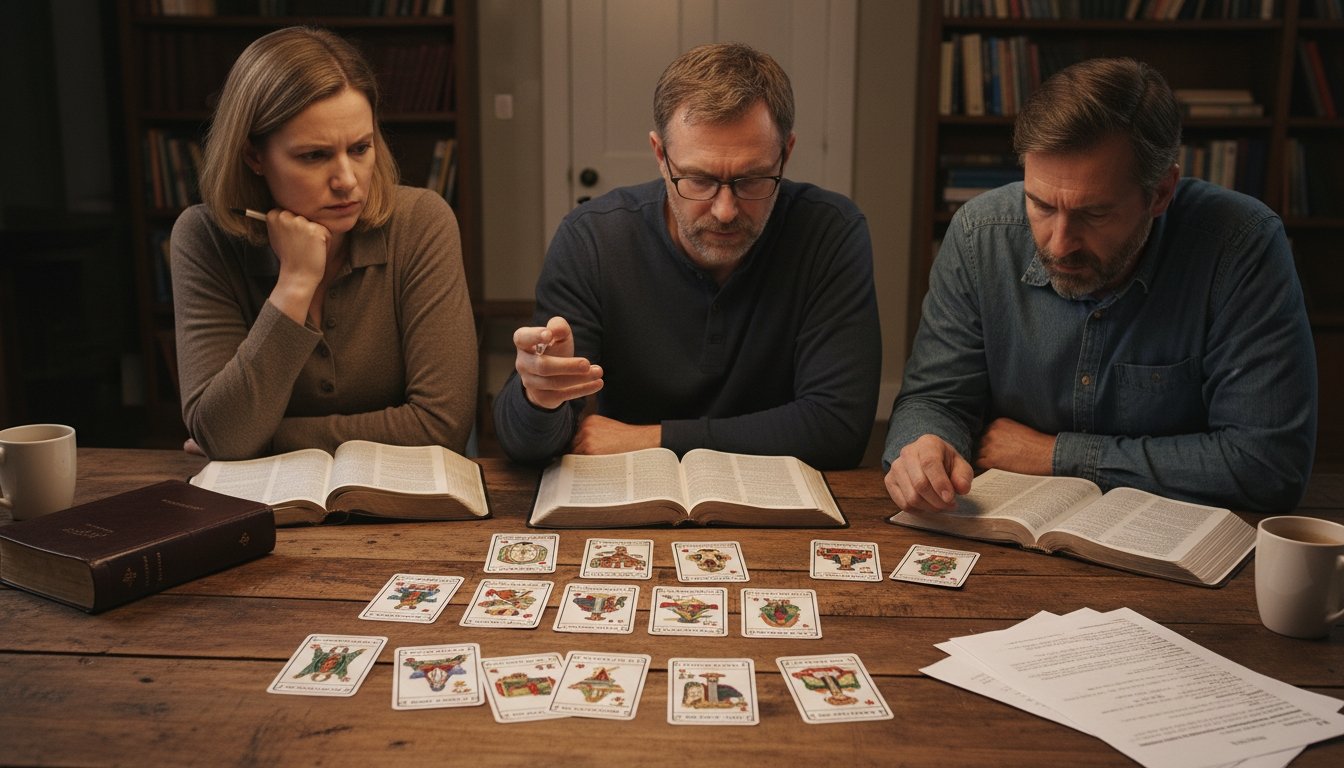
You’ll love fast‑paced, team‑based Bible trivia that pushes your knowledge to the limit. Try timed rapid‑fire rounds with ten‑second limits, pass‑the‑bible relays where you race to locate verses, story‑shuffle challenges that scramble narratives, multiple‑choice tournaments that ramp up difficulty, and thematic deep‑dive rounds on prophecy or genealogies. Mix in solo ten‑minute challenges, apostle anagrams, or verse‑swap puzzles for extra brain‑work. Keep the competition fierce with clear rules, visible scores, and rotating hosts, and you’ll see your mastery grow. Continue and and discover even more strategies.
Table of Contents
5 Proven Bible‑Trivia Game Formats for Adults
Ever wondered which Bible‑trivia formats keep adults engaged and challenged? You’ll find that timed rapid‑fire rounds, where each question must be answered within ten seconds, spark urgency and keep minds sharp. Pair that with a “pass‑the‑bible” relay: teams race to locate verses, fostering teamwork and deep scriptural knowledge. Consider a “story‑shuffle” game, where you scramble plot elements and players reconstruct the narrative, testing comprehension beyond mere recall. A “multiple‑choice tournament” with escalating difficulty levels lets you track progress and reward mastery. Finally, a “thematic deep‑dive” round—focusing on prophecy, genealogies, or apocryphal references—adds depth and encourages research. Mix these formats, rotate them weekly, and you’ll maintain excitement, challenge seasoned participants, and cultivate a vibrant, intellectually stimulating Bible‑trivia community.
Running a Competitive Bible‑Trivia Night
How do you turn a casual gathering into a high‑stakes Bible‑trivia showdown? First, set clear rules: timed rounds, point values, and a buzzer or app for rapid answers. Choose a venue with good acoustics and enough seating for teams of three to five. Use a mix of question types—multiple‑choice, fill‑in‑the‑blank, and picture‑based—to test recall, context, and visual literacy. Keep a scoreboard visible, updating it after each round to heighten tension. Offer a modest prize—gift card, book, or themed trophy—to motivate competitors. Encourage sportsmanship by reminding participants that the goal is fun learning, not just winning. Rotate the host role so fresh energy flows throughout the night. Finally, record high scores for a leaderboard that can be revisited at future events, turning each gathering into a recurring, escalating challenge.
Solo Bible‑Trivia Challenges for Deep Scriptural Mastery
Ready to push your biblical knowledge beyond group games? Dive into solo Bible‑trivia challenges that sharpen your memory, deepen comprehension, and test precision. Pick a theme—prophets, miracles, or epistles—and set a timer for ten minutes. Use a random‑verse generator or a flash‑card app to pull questions, then answer without notes. Track your score, note missed verses, and revisit those passages in a study Bible. Rotate difficulty levels weekly: start with easy recall, then move to cross‑reference puzzles that force you to connect Old‑Testament foreshadowing with New‑Testament fulfillment. Keep a journal of patterns you discover, like recurring motifs or covenantal promises. When you hit a plateau, increase complexity by adding language‑specific cues—original Hebrew or Greek terms—to force deeper engagement. This disciplined solo practice builds scriptural fluency, prepares you for competitive nights, and turns personal study into an exhilarating, self‑directed quest.

Creative Bible‑Trivia Twists & Thematic Rounds
After mastering solo drills, spice up your sessions with themed rounds that turn familiar verses into fresh puzzles. Pick a motif—prophecies, miracles, or Psalms—and craft clues that demand more than rote recall. For a “Parable Parade,” give a modern scenario and ask which Jesus story it mirrors; for “Apostle Anagrams,” scramble the names of the twelve and let players unscramble them within a time limit. Use “Chronology Chains” to link events in order, forcing participants to visualize the biblical timeline. Introduce “Verse‑Swap” where you replace a key word with a synonym and have them identify the original passage. “Location Lore” challenges you to match a city or region to its biblical significance, sharpening geographic memory. Mix visual aids like maps or artwork, and reward quick, accurate answers with bonus points. These twists keep the game lively, deepen scriptural insight, and foster friendly competition.
Frequently Asked Questions
How Many Bible Verses Can a Typical Game Cover in One Round?
You can usually cover about 15‑20 verses per round.
Most games pick a handful of key passages, then break them into multiple questions, so you end up testing roughly a dozen verses plus a few extras for bonus clues.
That range keeps the pace lively, lets participants recall details, and still fits within a typical 30‑minute session without overwhelming anyone.
Can Non‑Christian Participants Join a Bible‑Trivia Night?
Yes, you can join a Bible‑trivia night even if you’re not Christian. Most organizers welcome anyone curious about the material, because the game focuses on knowledge and fun rather than faith.

You’ll just need to listen, answer questions, and maybe learn a few verses along the way. Bring your enthusiasm, respect the rules, and enjoy the challenge with the rest of the group.
What Are the Best Ways to Verify Answers Quickly?
You can verify answers quickly by using a digital quiz platform with built‑in answer keys, setting up a shared Google Sheet that auto‑scores entries, or employing a slide‑show app that flashes correct responses after each round.
Keep a printed answer sheet handy for manual checks, and assign a timer so participants know they’ve a limited window to answer.
If you use a buzzer system, program it to display the correct answer instantly once the buzzer stops.
This streamlines scoring and keeps the game flowing.
Do Digital Platforms Improve the Fairness of Scoring?
Yes, digital platforms boost scoring fairness by automating answer checks, eliminating human bias, and applying consistent timing rules. You’ll see instant, objective results, and the system can randomize question order to prevent pattern‑guessing. Plus, built‑in anti‑cheating tools—like IP tracking and response‑time monitoring—stop players from colluding.
How Can I Adapt Questions for Different Language Translations?
You adapt questions by first translating the core meaning, not word‑for‑word, then checking cultural nuances. Use simple, clear language, avoid idioms, and keep sentence length consistent across versions. Test each translation with native speakers, adjust ambiguous terms, and verify that biblical references remain accurate. Finally, run a pilot quiz in each language to ensure difficulty and scoring stay balanced.
Conclusion
Now you’ve got five battle‑tested formats, tips for fierce competition, solo drills for mastery, and fresh twists to keep every session lively. Mix, match, and tweak them to fit your group’s vibe, and watch the excitement—and biblical knowledge—soar. With these tools in hand, you’re ready to host unforgettable Bible‑trivia nights that challenge even the most seasoned believers.













No Comments