

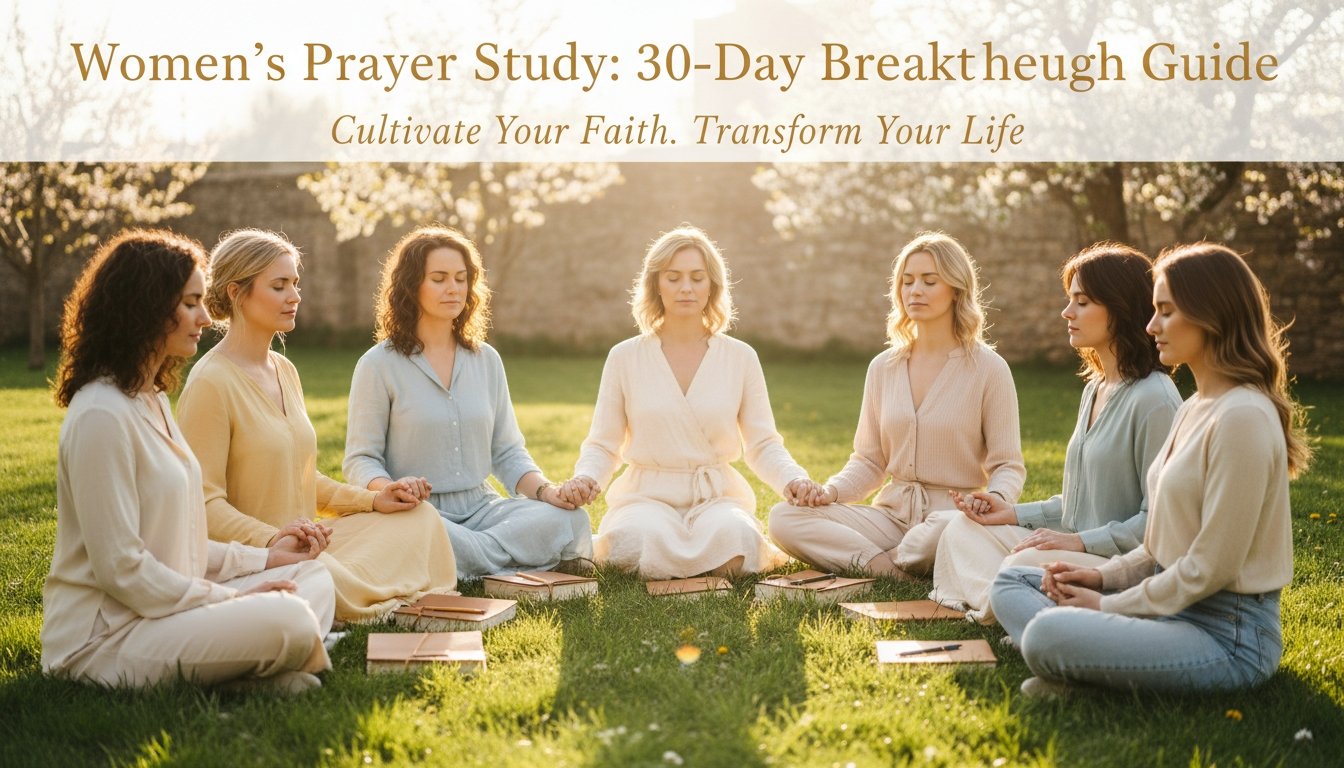
18 Feb Women’s Prayer Study: 30-Day Breakthrough Guide
Transform your prayer life in 30 days by following biblical women’s proven strategies. You’ll learn Hannah’s desperate surrender approach, Esther’s strategic three-day fasting method, and Mary’s contemplative discernment technique. Start with consistent daily prayer times, use journaling to deepen your connection with God, and practice the persistent widow’s unwavering faith for long-term requests. These time-tested models will anchor your identity in Christ and create breakthrough moments. Discover how these powerful strategies can revolutionize your spiritual journey.
Key Takeaways
- Establish daily prayer rhythms beginning and ending each day with God to combat distractions and build consistent spiritual discipline.
- Use Hannah’s three-fold approach: complete surrender, addressing God directly, and passionate unfiltered emotion in desperate seasons.
- Practice Mary’s discernment method by bringing honest questions to God before making commitments or major decisions.
- Implement prayer journaling 5-7 times weekly to transform scattered thoughts into focused conversations and track answered prayers.
- Apply the persistent widow technique for long-term requests, maintaining unwavering faith through delays without manipulating outcomes.
How to Start Your Biblical Women Prayer Study

When you sense God calling you to lead a women’s prayer study, the journey begins not with curriculum selection or scheduling logistics, but with surrendering your plans to His divine guidance. Prayer establishes your foundation—seek wisdom for the women He’ll bring, intercede for hearts ready to receive transformation, and anchor yourself in Christ’s identity as your primary offering.
Prayer establishes your foundation—seek wisdom for the women He’ll bring and anchor yourself in Christ’s identity.
Select study materials that emphasize biblical principles and practical application. Video-based studies provide excellent structure for beginners, while prayer guides with Scripture integration deepen engagement. Choose formats spanning 5-31 weeks based on your group’s availability and commitment level.
Determine your meeting logistics thoughtfully. Whether gathering in homes, churches, or workplaces, consistent scheduling communicates respect and builds community accountability. Design honest reflection opportunities through thought-provoking questions that accommodate various spiritual backgrounds.
Establish group dynamics prioritizing individual preparation and intentional worship. Create a safe, intentional environment where women can share vulnerably and grow together in their faith journey. This framework creates space for authentic sharing while strengthening discipleship outcomes beyond scheduled meetings.
Which Biblical Women Offer the Strongest Prayer Models?
Biblical women throughout Scripture demonstrate prayer models that transcend cultural barriers and speak directly to modern challenges you’ll face in your prayer study. Mary’s Magnificat exemplifies how worship becomes warfare, showing you that praise anchors purpose beyond circumstances. Her contemplative prayer amid action models modern worship that transforms daily surrender.
Esther demonstrates strategic prayer leadership, initiating courage through quiet reliance on God’s power before approaching impossible situations. Her three-day fast reveals how prayer precedes breakthrough in challenging gender roles and cultural expectations.
Anna’s persistent temple worship for 84 years teaches you faithful lingering in prayer until divine moves manifest. Her recognition of Jesus rewards devoted trust in God’s timing.
Deborah breaks conventional gender roles through bold spiritual leadership, crediting divine strength for forty years of peace. Her prophetic authority emerged from consistent prayer communication.
Elizabeth’s years of carrying infertility’s shame while maintaining faithful service alongside her husband demonstrate how sustained faithfulness through prolonged waiting seasons prepares hearts for miraculous breakthrough.
Abigail’s intercession mirrors prayerful intervention, demonstrating shrewd diplomacy aligned with God’s wisdom to restore peace and prevent disaster through timely appeals.
Hannah’s Prayer Strategy for Desperate Situations
Desperation drives Hannah’s prayer strategy into territories most believers never explore, revealing how God responds to raw, unfiltered anguish poured out before His throne. You’ll discover Hannah’s approach challenges wrong assumptions about “proper” prayer. While others recite mental prayers, she demonstrates soul-stirring intensity that appears drunk to observers.
Her cultural context amplifies the strategy’s power. Facing childlessness during Israel’s backslidden Judges era, Hannah experiences public disgrace and bitter taunts from Peninnah. Yet she doesn’t retreat—she advances toward God’s presence at the tabernacle doorpost.
Your desperate situations require Hannah’s three-fold approach: complete surrender through vowing, addressing God as “Lord of Hosts” amid attacks, and pouring out your soul with fervent intensity. When you’ve exhausted human options, turn to God with unfiltered emotion. Hannah’s countenance changed from grief to joy post-prayer, proving desperate prayers yield divine response and lasting peace.
Esther’s Prayer Approach When Facing Impossible Odds
When impossible odds threaten to crush your dreams and endanger those you love, Esther’s prayer strategy offers a powerful blueprint for breakthrough.
You’ll discover that her approach combined strategic fasting with bold, faith-filled action—she didn’t just pray and wait, but prepared spiritually before stepping into the king’s throne room uninvited.
Her three-day fast wasn’t merely spiritual discipline; it was radical preparation that transformed fear into unshakeable resolve and positioned her to receive God’s favor in the most dangerous moment of her life.
Fasting Before Action
How do you prepare for action when the odds seem insurmountably stacked against you? Esther’s three-day absolute fast offers profound fasting insights for facing impossible circumstances. She commanded complete abstinence from food and water, engaging all Jews in Susa alongside her attendants in unified intercession.
These ritual disciplines weren’t mere religious formality—they represented spiritual warfare preparation. Esther understood that approaching the king uninvited meant potential death, so she chose to “die to flesh” through fasting first. This corporate fast created space for divine communion, humbled hearts before God’s throne, and demonstrated the crisis’s severity.
After three days of total dependence on God, Esther rose in royal garments, declaring “if I perish, I perish.” Her fast-empowered boldness resulted in Israel’s deliverance and many Gentiles turning to God.
Bold Throne Room Approach
After three days of intense spiritual preparation, Esther faced her moment of truth. Haggard and pale from fasting, she made her bold throne room approach to the king without summons—a violation punishable by death.
You can imagine her trembling hands as she entered that sacred space, yet her fearless approach demonstrated faith transformed into action.
When the king extended his golden scepter, it wasn’t just royal mercy—it was God’s providence working through human courage. Esther’s strategy began subtly, inviting the king and Haman to a banquet rather than making direct accusations. She understood timing and wisdom matter in approaching authority.
Your breakthrough moments require similar boldness. Sometimes you must act despite uncertainty, trusting God’s faithfulness while exercising the wisdom He’s given you.
Mary’s Prayer Method for Accepting God’s Difficult Plans
The Annunciation reveals a prayer method that transforms how you can approach God’s most challenging callings. Mary’s response demonstrates that divine discernment begins with honest questions, not immediate compliance. When Gabriel appeared, she didn’t suppress her confusion but engaged thoughtfully with God’s unexpected plan.
Your prayer journey requires this same contemplative surrender—holding difficult truths without demanding instant clarity. Mary pondered deeply, allowing time for understanding to develop before committing. She positioned herself as God’s servant, transforming obedience from reluctant compliance into humble acceptance.
Practice Mary’s method by bringing your questions directly to God rather than hiding your uncertainty. Release personal expectations while asking, “What does God call me to do?” instead of defending your agenda. Trust develops through the gap between question and resolution. Like Mary, you’ll discover that saying yes to God’s requests—even when sacrifice is involved—produces deep abiding joy and spiritual breakthrough.
The Persistent Widow’s Prayer Technique for Long-Term Requests
When your prayers seem to hit a ceiling and months stretch into years without answers, Jesus offers you a powerful technique through His parable of the persistent widow. She faced an unjust judge who feared neither God nor people, yet her relentless pursuit for justice eventually wore him down.
You’re not dealing with a reluctant judge but a loving Father who delights in your prayers. The widow’s technique wasn’t manipulation—it was unwavering faith demonstrated through persistence. When effective doubt creeps in during delayed answers, remember that crying to God day and night marks His elect.
Combat modern distractions by establishing consistent prayer rhythms. Start and end each day seeking God, even in brief moments. When words fail, continue through gestures like knocking. Rephrase your requests, listen actively, and maintain holy tenacity. Your persistence builds faith, prevents discouragement, and deepens your relationship with God through long-term petitions for family salvation and life transformation.
Prayer Journaling Methods That Deepen Your Connection
Prayer journaling transforms scattered thoughts into focused conversations with God, creating sacred space where your heart meets His presence on paper. This practice slows your prayer pace, allowing silence for divine response and transforming monologues into interactive dialogues.
Begin with gratitude prompts that encourage reflection on God’s provisions, both big and small. Track answered prayers and spiritual victories, building a tangible reminder of His faithfulness. When chaos overwhelms, these entries enhance your perspective by fostering focus on blessings amid challenges.
Use reflection prompts to document your faith journey’s evolution. Record God’s responses to deepen your connection and tune your awareness to subtle divine communications. Writing 5-7 times weekly yields higher spiritual perspective scores and correlates with increased life satisfaction.
Create end-of-day reports capturing prayer frequency and types, minimizing recollection bias. This method provides lasting records for future reference, strengthening trust through reviewing past entries and revealing your spiritual growth over time.
How to Continue Your Prayer Growth After 30 Days
Sustaining your prayer breakthrough requires intentional strategies that transform temporary discipline into lifelong spiritual rhythm.
Research shows that daily prayer frequency predicts 1.5-1.7 times higher survival rates over six years, even after controlling for medical and lifestyle factors. You’ll want to maintain consistent daily prayer since only 44% of Americans pray regularly, yet those who do experience 31% better health outcomes.
Focus on personal prayer practices rather than expecting others to pray for you. While randomized control trials of intercessory prayer show mixed results, with some studies revealing no significant benefits, your own prayer life consistently strengthens mental health and reduces stress responses. Meta analysis research confirms that subjective spiritual outcomes improve most dramatically through personal prayer engagement.
Set realistic expectations—only 2% report high satisfaction with their prayer lives initially. Track your growth through continued journaling, maintain your established prayer times, and remember that authentic spiritual discipline develops gradually. Your nervous system benefits accumulate through faithful, long-term practice.
Frequently Asked Questions
Can I Start This Study at Any Time of Year?
You can absolutely begin this prayer study anytime with complete start time flexibility.
There’s no seasonal availability restrictions—God’s ready to meet you whether it’s January or July.
The 30-day structure adapts to your schedule, not calendar seasons.
Scripture reminds us that God’s mercies are “new every morning,” so your breakthrough journey can commence whenever you’re ready to seek Him wholeheartedly.
What if I Miss Several Days During the 30-Day Study?
Missed days don’t disqualify you from completing the study. Simply pick up where you left off rather than restarting entirely. Connect with accountability partners who’ll encourage your consistency and help identify time management obstacles. Share honestly in group discussions about what derailed your routine. God’s grace covers your imperfections while you’re developing this spiritual discipline. Focus forward, not backward.
Do I Need Prior Bible Knowledge to Understand These Women’s Stories?
You don’t need extensive biblical knowledge to understand these women’s stories.
God’s Word speaks clearly through narrative interpretation, and the Holy Spirit will guide your understanding as you read.
While doctrinal clarity develops over time, these stories reveal universal truths about faith, struggle, and God’s faithfulness that you’ll grasp immediately.
Start with prayer, read attentively, and let Scripture teach you through these powerful testimonies.
How Much Time Should I Set Aside Daily for This Study?
You’ll need 15-20 minutes daily for meaningful engagement with each woman’s story and prayer application. Start with just 5 minutes if you’re establishing new habits—consistency matters more than duration. The study offers flexible pace options: read the passage, reflect on the woman’s faith journey, and pray through her example. You can always extend your time as God draws you deeper into His Word and prayer.
Can This Study Be Done in a Group Setting?
Absolutely! This study thrives in group settings where you’ll experience powerful group dynamics and mutual encouragement.
As a facilitator, you’ll want to break into small prayer circles of 3-4 women, use anonymous prayer cards to reduce pressure, and implement popcorn prayer for spontaneous participation.
Keep sessions focused on Scripture study with structured prayer time.
Groups amplify breakthrough experiences through shared faith and accountability.
Conclusion
You’ve studied the prayer lives of biblical women who changed history through their faithful intercession. Their examples show you that God hears desperate pleas, honors persistent requests, and blesses surrendered hearts. Don’t let this 30-day journey end here—you’re equipped with proven prayer strategies that’ll sustain you through every season. Continue practicing what you’ve learned, knowing that the same God who answered Hannah, Esther, and Mary is ready to answer you.











No Comments