

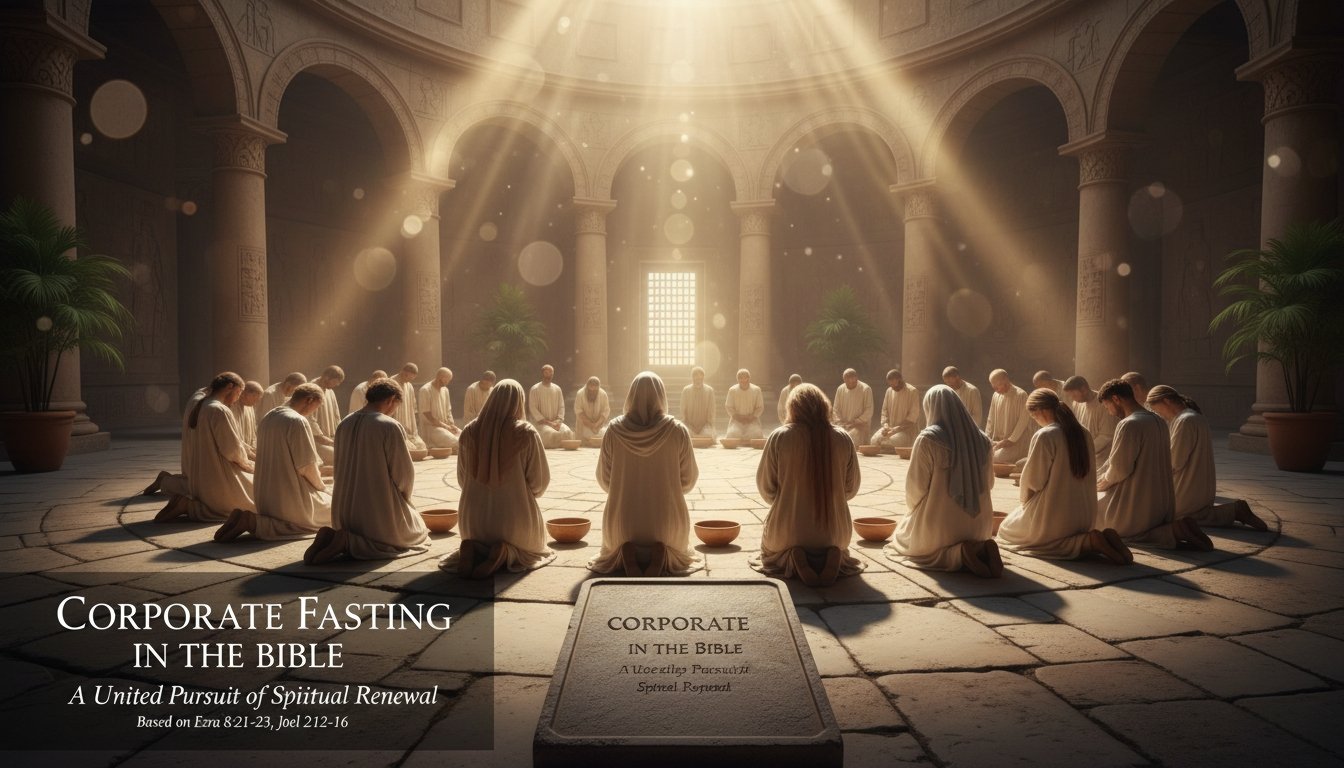
08 Feb Corporate Fasting in the Bible
Corporate fasting in Scripture demonstrates unified communities seeking God’s intervention during crisis and spiritual renewal. You’ll find precedents in Joel 2:15’s sacred assembly, Esther 4:16’s three-day national fast, and Judges 20:26’s collective seeking of divine guidance. These biblical models show entire congregations—across demographics—participating in coordinated abstinence for communal transformation rather than individual devotion. The practice creates collective dependency on divine guidance while fostering spiritual sensitivity and solidarity. Understanding these foundational principles will equip your church for effective implementation.
Key Takeaways
- Corporate fasting unites believers through collective abstinence for spiritual purposes and communal transformation.
- Joel 2:15 and Esther 4:16 provide scriptural precedent for calling entire communities to fast together.
- Biblical models include Joel’s congregational participation, Judges’ pre-battle fasting, and Ezra’s journey protection through humility.
- Corporate fasting heightens spiritual sensitivity, fosters solidarity, and serves as spiritual renewal for congregations.
- Implementation requires prayer for direction, biblical education, flexible participation options, and supportive prayer structures.
What Is Corporate Fasting and Why Churches Practice It?
Why does Scripture repeatedly emphasize collective fasting as a means of seeking God’s intervention? Corporate fasting represents believers uniting through abstinence for spiritual purposes, creating communal dependency on divine guidance. When you examine biblical precedents, you’ll discover this practice extends beyond individual discipline to collective transformation.
Corporate fasting transforms individual spiritual discipline into collective dependency on divine guidance, uniting believers through shared abstinence for God’s intervention.
Joel 2:15 demonstrates institutional call: “Blow the trumpet in Zion, consecrate a fast, call a sacred assembly.” This wasn’t merely personal devotion but community-wide consecration.
Esther’s three-day fast (Esther 4:16) mobilized an entire people group facing extinction, while Acts 13:2-3 shows the Antioch church fasting before commissioning missionaries.
Churches today utilize corporate fasting for strategies for outreach and volunteer mobilization, recognizing its power to heighten spiritual sensitivity. The practice fosters solidarity while demonstrating collective humility before God. When congregations fast together, they’re following biblical precedent that prioritizes prayer, seeks divine intervention during crises, and builds communal focus on pleasing God with authentic sincerity. Corporate fasting serves as spiritual renewal for entire congregations seeking deeper connection with God.
How to Organize and Lead a Corporate Fast
How do you shepherd a congregation through the sacred discipline of corporate fasting while maintaining biblical integrity and pastoral wisdom? Begin with earnest prayer for God’s direction regarding purpose, timing, and duration.
Educate your congregation through expository teaching on biblical fasting precedents, avoiding the extremes of ignoring safety protocols or succumbing to technophobia regarding modern communication tools.
Establish clear guidelines while offering flexible participation options—physical fasts like the Daniel fast, technological abstinence from social media, or financial disciplines.
Create supportive community structures through prayer meetings and accountability partnerships.
Assign daily thematic focuses such as “Pressing Forward” or “Praise Brings Breakthrough” to guide corporate intercession.
Demonstrate ethics in leadership by providing pastoral care for participants’ physical and emotional needs.
Integrate focused worship sessions while maintaining scriptural meditation.
Select calendar periods avoiding conflicts with holidays to maximize participation and spiritual effectiveness. Host a celebration service afterward to commemorate the fast and allow participants to share testimonies of transformed lives.
Choosing the Right Duration for Your Church Fast
When pastoral leadership contemplates the sacred parameters of congregational fasting, Scripture provides distinct temporal frameworks that correspond to varying spiritual objectives and community readiness levels. You’ll find biblical precedent for one-day fasts (Judges 20:26) suitable for beginners, three-day intensive seeking (Esther 4:16), and extended Daniel fasts spanning 10-21 days for sustained spiritual breakthrough.
Setting expectations becomes crucial as you navigate congregational diversity. New believers shouldn’t attempt what seasoned saints undertake. The Holy Spirit’s guidance supersedes rigid formulas—Jesus assumed His followers would fast varying durations based on circumstances and maturity.
Avoiding legalism requires emphasizing grace over performance. Some may fast one meal while others engage longer periods. Medical consultation becomes essential beyond three days. Your role involves creating space for authentic spiritual hunger rather than manufacturing religious obligation. Scripture’s examples demonstrate flexibility: Moses, Elijah, and Jesus fasted forty days through divine enablement, while others observed shorter periods for specific purposes.
Biblical Models of Corporate Fasting to Follow
Scripture reveals five distinct corporate fasting models that pastoral leadership can adapt for contemporary congregational application, each demonstrating unique theological emphases and practical methodologies.
Joel’s model establishes comprehensive congregational participation through solemn assembly, incorporating every demographic from nursing infants to newlyweds. This approach emphasizes priestly intercession and complete community sanctification during national crisis.
Judges’ model demonstrates strategic spiritual preparation before confronting overwhelming opposition. Israel’s fasting preceded battle, combining burnt offerings with peace offerings while seeking divine guidance through systematic inquiry.
Samuel’s model focuses on repentance-driven revival at Mizpah, utilizing water-pouring ceremonies alongside traditional fasting to address spiritual backsliding and restore covenant relationship.
Ezra’s model provides practical framework for journey protection, emphasizing humility while addressing specific financial and safety concerns through collective seeking of divine favor.
Esther’s model offers intensive three-day abstinence during existential threats, demonstrating unified response through synchronized community participation. Each model presents distinct applications for contemporary pastoral implementation based on congregational needs and circumstances.
Frequently Asked Questions
Can Children and Elderly Participate in Corporate Fasting?
Yes, you’ll find biblical precedent for inclusive participation in Joel 2:16’s multigenerational assembly call. However, children’s participation should focus on prayer rather than food abstinence, as Scripture lacks direct examples of young people fasting from food. Elderly participation remains voluntary, with Jewish tradition exempting seniors due to health concerns. You can encourage non-food abstentions for children while maintaining corporate unity through shared prayer and spiritual engagement.
What Should We Eat When Breaking a Corporate Fast?
You should break your corporate fast with small portions of easily digestible foods, progressing gradually from liquids to solids. Scripture doesn’t specify particular foods, but timing considerations matter significantly—longer fasts require slower reintroduction. What to eat depends on your fast’s duration: start with broths or fruit juices, then soft foods, avoiding large meals. This gentle approach honors your body’s spiritual discipline while preventing digestive distress.
How Do We Handle Members Who Cannot Fast for Health Reasons?
You’ll accommodate health constraints by following biblical precedent that prioritizes life over ritual observance. Encourage members with medical limitations to participate through prayer, Scripture meditation, or financial giving instead. Don’t pressure anyone to fast against medical advice—ethical considerations demand protecting their wellbeing. Consider Acts 13:2-3’s model where some fasted while others supported through different means, maintaining corporate unity without compromising individual health.
Should Corporate Fasting Replace Regular Church Services or Supplement Them?
Corporate fasting should supplement, not replace, regular church services. Acts 13:2 demonstrates fasting occurring “as they ministered to the Lord,” indicating it accompanies normal worship gatherings. You’ll notice Scripture presents corporate fasting for specific purposes—commissioning, crisis response, or seeking direction—rather than routine replacement of sabbath assemblies.
Matthew 6:16-18 warns against ritualistic displays, emphasizing fasting’s purposeful, temporary nature alongside established worship patterns.
What Are the Spiritual Dangers or Pitfalls of Corporate Fasting?
Corporate fasting carries significant hypocrisy risk when participants perform for human approval rather than genuine consecration to God. You’ll face groupthink pitfalls where collective pressure replaces individual spiritual conviction, potentially creating false unity. Matthew 6:16-18’s warning against ostentatious fasting intensifies corporately—you might mistake group participation for authentic devotion, develop spiritual pride through comparison, or substitute communal formalism for personal brokenness and repentance before God.
Conclusion
You’ll discover that corporate fasting isn’t merely organizational discipline—it’s covenantal participation in God’s redemptive work. When you’ve examined Scripture’s patterns, from Joel’s national repentance to the Antioch church’s commissioning fast, you’ll recognize that collective abstinence creates sacred space where heaven intersects earth. Don’t approach this as religious performance; embrace it as ecclesiological formation. Your congregation’s unified hunger becomes prophetic witness, demonstrating that Christ’s kingdom transcends physical appetites and worldly dependencies.












No Comments