

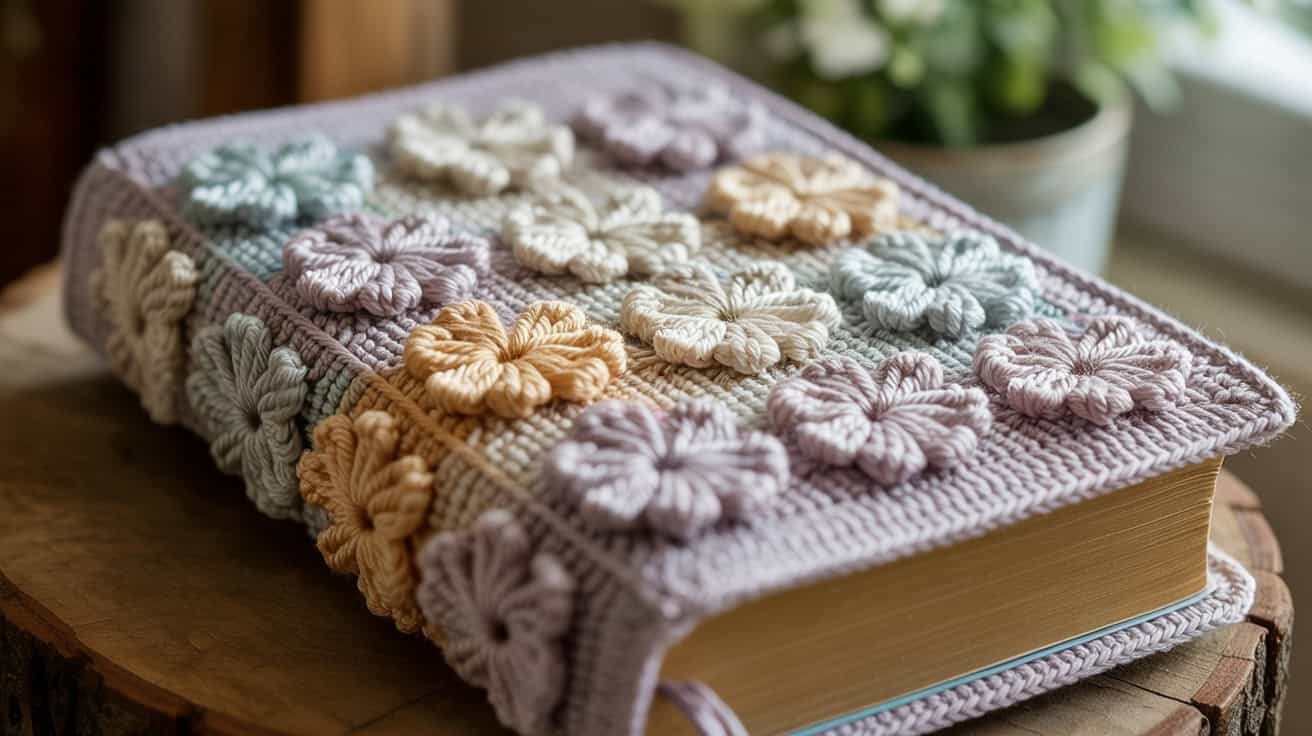
28 Aug Crochet Bible Cover Ideas and DIY Patterns
You’ll create a protective crochet bible cover using worsted-weight yarn and a G/6 hook. Measure your bible’s height, width, and thickness, adding half an inch to each dimension. Start with a foundation chain matching the height plus one inch, then work single crochet rows until you’ve reached the calculated width. Add a one-inch overlap for closure, finishing with buttons or ribbon ties. Master these basics and you’ll discover endless possibilities for personalization and advanced techniques.
Table of Contents
Key Takeaways
- Measure Bible dimensions adding half an inch to height, width, and thickness for proper fit
- Use worsted-weight yarn with G/6 to I/9 hooks for durable structure
- Create rectangular piece with 1-inch overlap using single or double crochet stitches
- Add closures like buttons, elastic bands, or ribbon ties for secure functionality
- Embellish with beads, cross stitch, or lace patterns for decorative personalization
Essential Materials and Tools for Your Bible Cover Project
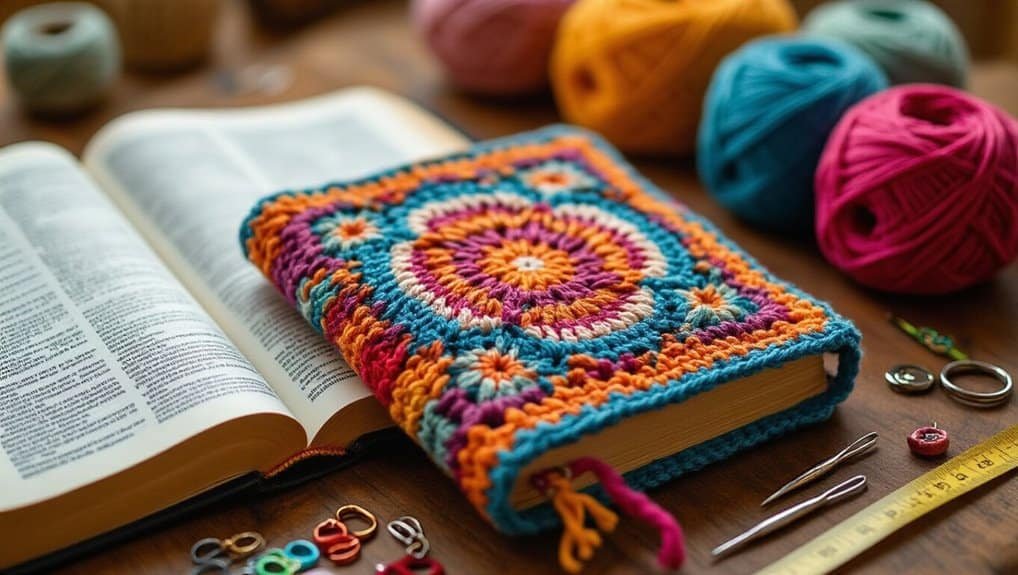
When you’re ready to create a crochet Bible cover, gathering the right materials and tools makes all the difference in achieving professional results. You’ll need worsted-weight yarn for durability, though lighter yarn types work beautifully for delicate, lacy crochet patterns. Choose cotton or acrylic blends that withstand frequent handling.
Your essential toolkit includes hooks sized G/6 (4mm) to I/9 (5.5mm), depending on your chosen yarn weight. You’ll also need sharp scissors, a tapestry needle for weaving ends, and stitch markers to track pattern repeats.
Don’t forget your measuring tape—accurate dimensions ensure a perfect fit. Consider purchasing a row counter to maintain pattern consistency, especially for complex designs. A blocking mat and pins help achieve crisp edges and professional finishing.

If you’re adding closures, stock up on buttons, ribbons, or magnetic snaps. Having these materials ready before starting prevents frustrating interruptions and keeps your creative momentum flowing.
Measuring Your Bible for the Perfect Fit
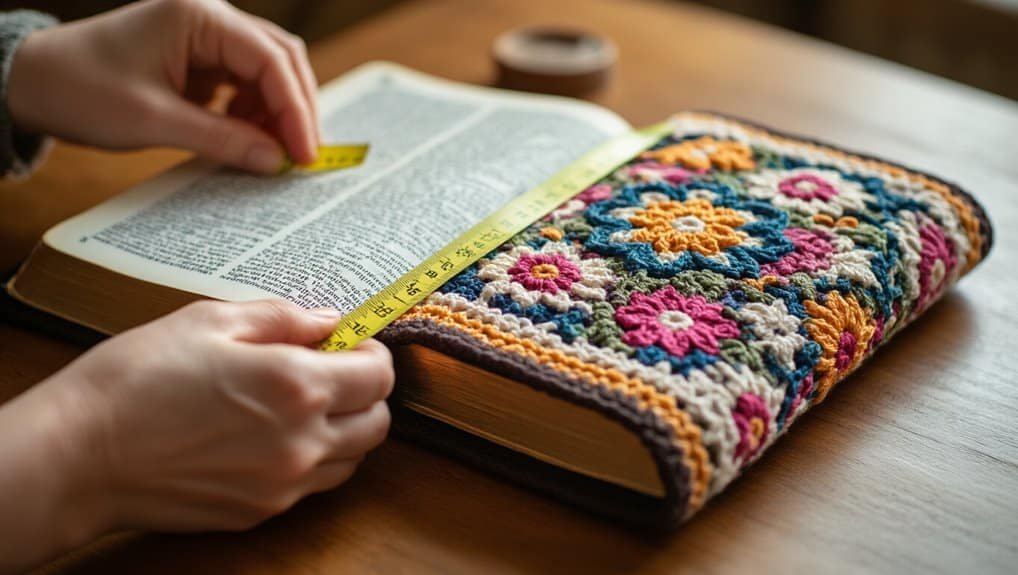
Accuracy in measuring forms the foundation of a well-fitted Bible cover. You’ll need to measure three bible dimensions: height, width, and thickness. Place your closed Bible on a flat surface and use a flexible measuring tape for precise results.
Precise measurements are the cornerstone of creating a Bible cover that fits perfectly every time.
First, measure the height from top to bottom along the spine. Next, measure the width from the spine to the outer edge of the front cover. For thickness, wrap the tape around the entire Bible horizontally, including both covers and all pages.
Add half an inch to each measurement for ease and stretch allowance. These measuring techniques ensure your cover won’t be too tight or loose. Write down all measurements immediately and double-check them before starting your project.
Remember that different Bible editions vary significantly in size, so don’t assume standard dimensions. Taking time to measure correctly now saves you from frogging hours of work later.

Basic Crochet Stitches for Bible Cover Patterns
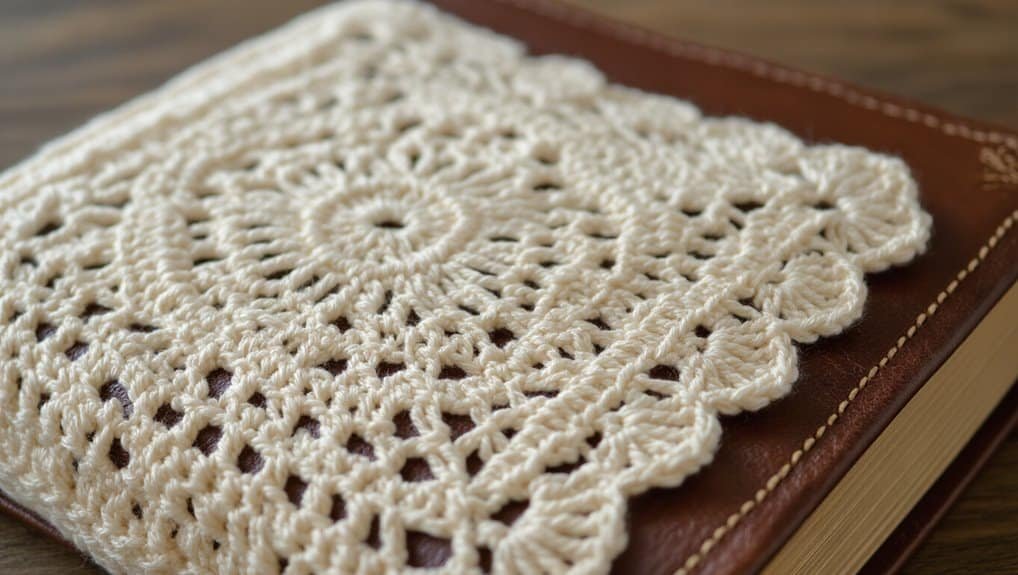
Master these fundamental stitches and you’ll create beautiful Bible covers with confidence. The single crochet forms your foundation—insert hook through stitch, yarn over, pull through, yarn over again, and pull through both loops. This creates dense, sturdy fabric perfect for protecting your Bible.
Double crochet adds height and flexibility. You’ll yarn over before inserting the hook, then work through three loops total. For decorative edges, try the shell stitch: work five double crochets into one stitch, creating a fan pattern.
Your essential crochet tools include the right hook size (typically H/8 or I/9 for worsted weight), stitch markers for tracking rounds, and a tapestry needle for weaving ends.
These basic crochet techniques build upon each other—practice consistency in tension and stitch height. Count stitches regularly to maintain even edges.
Once you’ve mastered these stitches, you’re ready to tackle any Bible cover pattern with precision.
Simple Bible Cover Pattern for Beginners
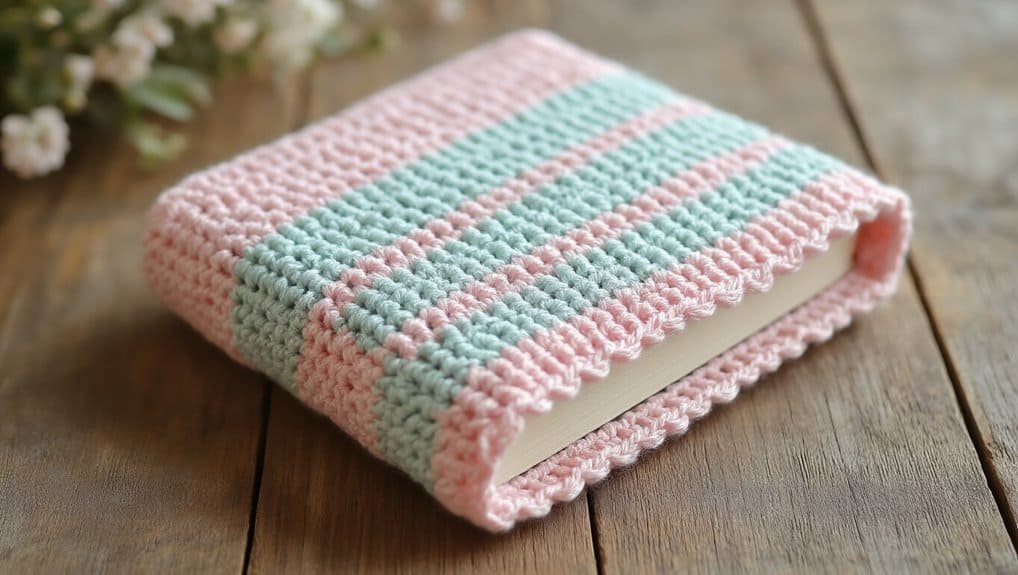
Three measurements determine your Bible cover’s perfect fit: height, width, and spine thickness. You’ll create a simple rectangular piece that wraps around your Bible with a 1-inch overlap. Measure carefully, then add 2 inches to the width for closure.
Proper measurements ensure your handmade Bible cover fits perfectly with room for secure closure.
For yarn selection, choose medium-weight acrylic or cotton that’s durable and washable. You’ll need approximately 200 yards for an average-sized Bible. Work with an H/8 (5mm) hook for consistent tension.
Start with a foundation chain matching your Bible’s height plus 1 inch. Work single crochet across, creating rows until you’ve reached the calculated width. This basic pattern creates a sturdy, flat fabric perfect for beginners.
Essential beginner tips: Count your stitches each row to maintain straight edges. Place stitch markers every 10 stitches to track progress. If you’re struggling with tension, practice on a small swatch first.
You’ll finish with a simple button closure or ribbon ties at the overlap.
Advanced Lace and Textured Bible Cover Designs
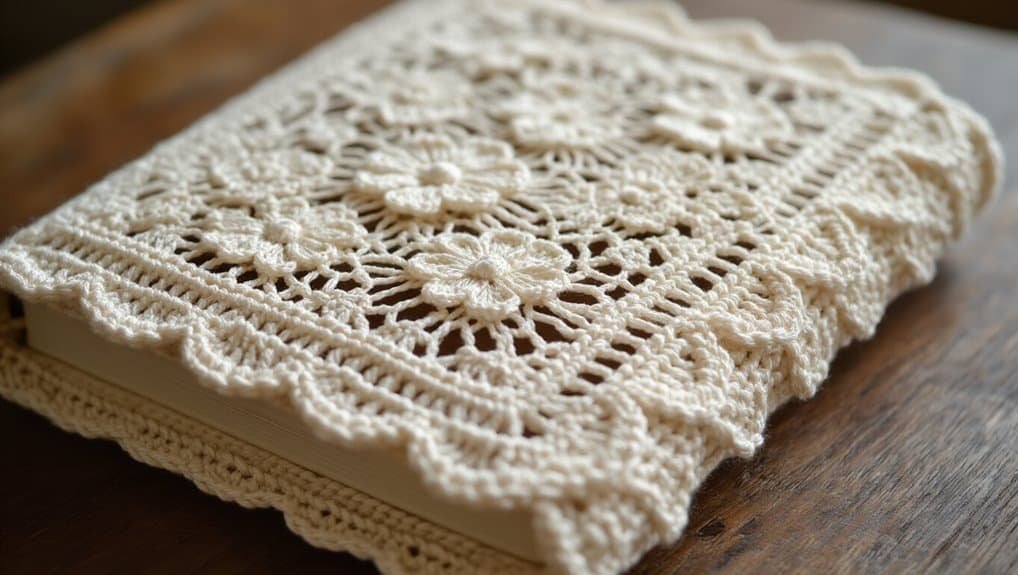
Now that you’ve mastered basic bible covers, you’re ready to create stunning advanced designs featuring intricate bobble stitch patterns and cathedral window lace panels.
These techniques will transform your bible cover into an heirloom piece, combining raised texture with delicate openwork that showcases your crochet expertise.
You’ll work with complex stitch combinations and precise tension control to achieve professional results that honor both your craft and faith.
Intricate Bobble Stitch Patterns
When you’re ready to elevate your bible cover designs beyond basic stitches, intricate bobble patterns offer stunning dimensional texture that transforms simple crochet into heirloom-quality pieces.
You’ll master various bobble stitch variations by adjusting yarn overs and pull-throughs to create different heights and densities. Try combining 3-dc bobbles with 5-dc clusters for dynamic contrast.
For striking visual impact, experiment with color combinations that highlight each raised element. You can work single-color bobbles against contrasting backgrounds or create multicolored patterns by changing yarns between bobbles.
Position your bobbles in diagonal lines, diamond formations, or scattered arrangements across the cover’s surface. Remember to maintain consistent tension throughout each bobble to ensure uniform sizing and professional results.
Cathedral Window Lace Panels
Cathedral window lace panels bring architectural elegance to your bible covers through delicate openwork that mimics stained glass designs.
You’ll create these stunning panels using advanced lace techniques that combine chain spaces and double crochet clusters.
Start your cathedral window pattern with a foundation chain in multiples of 12 plus 3. Work the first row with double crochets, then establish the window framework using chain-5 spaces and slip stitches.
You’ll form the characteristic diamond shapes by working treble crochet posts that intersect at precise points.
Master the tension control that’s crucial for consistent openwork. Your lace techniques should produce even spacing between motifs while maintaining structural integrity.
Block each panel carefully to enhance the cathedral window effect and ensure professional results.
Adding Pockets and Bookmarks to Your Cover
While your basic bible cover provides protection, you’ll find that adding functional elements like pockets and bookmarks transforms it into a truly practical accessory.
Consider pocket placement carefully—you’ll want to position them where they won’t interfere with the book’s spine or create bulk when closed.
For interior pockets, work a rectangular panel using single crochet, then attach it along three sides using slip stitches. Leave the top edge open for easy access. You can create divided compartments by adding vertical seams.
Bookmark styles range from simple chains to elaborate designs. Try a basic ribbon bookmark by crocheting a 12-inch chain, then working back with slip stitches for durability.
For something fancier, create a cross-shaped bookmark using double crochet or add beaded tassels to chain ends. Attach bookmarks securely to the spine’s interior using tight stitches that won’t pull loose with regular use.
Decorative Embellishments and Personalization Ideas
You’ll transform your bible cover into a unique keepsake by incorporating decorative elements like beads, buttons, and cross stitch accents.
These embellishments can be strategically placed along borders, corners, or spelled out as meaningful words across the cover’s surface.
Each technique requires specific attachment methods and materials, but they’re all achievable with basic crochet knowledge and careful planning.
Adding Beads and Buttons
Three simple embellishments can transform your crocheted Bible cover from plain to extraordinary. You’ll find that strategic bead selection enhances texture while maintaining functionality. Choose lightweight glass or wooden beads that won’t weigh down your cover.
Thread them onto yarn before crocheting, or sew them on afterward using a tapestry needle.
Button types matter for both aesthetics and closure options. Vintage buttons add character, while flat buttons ensure smooth surfaces when carrying. You can create button closures by crocheting loops on one edge and attaching corresponding buttons on the opposite side.
Alternatively, use decorative buttons purely for visual appeal, clustering them at corners or creating patterns across the cover’s surface. Remember to secure all embellishments tightly to withstand daily handling.
Cross Stitch Details
When incorporating cross stitch details into your crocheted Bible cover, you’re combining two beloved needlework techniques for stunning results.
You’ll create dimension by working cross stitch patterns directly onto single crochet fabric or aida cloth inserts. Choose waste canvas for precise placement on textured stitches.
Select appropriate floss colors that complement your yarn choice. Work decorative techniques like backstitch outlining or French knots to enhance religious motifs, monograms, or scripture verses.
You’ll find that 14-count aida provides optimal stability for detailed designs.
Plan your cross stitch placement before beginning—mark guidelines with water-soluble fabric markers. Work from the center outward to ensure symmetrical positioning.
These embellishments transform simple covers into cherished heirlooms that reflect your faith and creativity.
Choosing the Right Yarn for Durability and Beauty
Several key factors determine whether your Bible cover will withstand daily use while maintaining its visual appeal. You’ll need to evaluate fiber content first—cotton provides excellent durability and washability, while acrylic offers affordability and color retention. Wool blends add softness but require gentler care.
Yarn weight significantly impacts your cover’s structure. Choose worsted weight (4) for sturdy construction that works up quickly, or DK weight (3) for finer detail work. Bulky yarns create thick covers that won’t fit in bags easily.
Color selection affects both aesthetics and practicality. Darker shades hide wear better, while variegated yarns add visual interest without complex stitch patterns. Consider your Bible’s binding color for coordination.
Texture options enhance grip and appearance. Smooth yarns showcase stitch definition clearly, making pattern reading easier. Textured yarns like boucle create interesting surfaces but can obscure intricate stitchwork.
Test your chosen yarn’s drape and feel before committing to the full project.
Step-by-Step Assembly and Finishing Techniques
Now that you’ve selected your yarn, it’s time to transform your crocheted pieces into a functional Bible cover.
You’ll master the essential techniques for joining your front and back panels seamlessly while maintaining the cover’s structural integrity.
Whether you prefer magnetic snaps, button closures, or traditional ties, you’ll discover the perfect finishing method to keep your Bible secure and protected.
Joining Cover Pieces
After completing your Bible cover pieces, you’ll join them together using specific techniques that ensure durability and a professional finish.
Start by aligning the edges precisely, matching your stitch patterns at each seam. You’ll whipstitch or slip stitch the pieces together, maintaining consistent tension throughout.
For seamless joins, work through the back loops only, creating an invisible seam that won’t disrupt your color combinations. If you’re joining contrasting pieces, use a neutral yarn that complements both sections.
Pin pieces together before stitching to prevent shifting.
Work methodically around each edge, securing corners with extra stitches for reinforcement.
You’ve mastered the individual components—now you’re creating a cohesive cover that showcases your craftsmanship while protecting your Bible beautifully.
Adding Closure Options
Three popular closure methods will keep your Bible cover secure while maintaining its handcrafted elegance.
You’ll find button closures offer the most traditional option—simply attach a decorative button to the back cover and create a corresponding loop on the front flap. For closure types requiring less precision, consider elastic bands sewn into the spine that wrap around the cover’s width.
Decorative ties provide both function and beauty. Create braided cords using matching yarn, then attach them at the cover’s center edges. You can also crochet simple chains or use ribbon for a delicate touch.
Position ties approximately one-third and two-thirds down the cover’s height for balanced support. Each method ensures your Bible stays protected while adding personalized charm to your finished project.
Caring for and Maintaining Your Crochet Bible Cover
When you’ve completed your crochet Bible cover, proper care will ensure it remains beautiful and functional for years.
Hand wash your cover in lukewarm water using mild detergent specifically designed for delicate fabric care. Gently squeeze out excess water without wringing, which can distort the stitches and damage the fibers.
For spot cleaning methods, dab stains immediately with a damp cloth and gentle soap. Avoid harsh chemicals that’ll weaken yarn fibers or fade colors.
Lay your cover flat on a clean towel to dry, reshaping it to maintain proper dimensions. Never hang it while wet, as this causes stretching.
Store your Bible cover in a cool, dry place away from direct sunlight. If you notice loose threads, weave them back in promptly using a tapestry needle.
With regular maintenance, your handcrafted cover will protect your Bible while showcasing your crochet skills for generations.
Frequently Asked Questions
Can I Sell Crochet Bible Covers I Make From Free Patterns?
You can typically sell handmade items made from free patterns, but check the pattern’s terms first.
Most designers allow selling finished products while prohibiting pattern redistribution. Copyright considerations protect the written instructions, not your physical creations.
Look for commercial use permissions in the pattern notes. When selling, credit the designer if required.
You’re transforming materials through your skill and labor, which generally grants you selling rights.
How Long Does It Typically Take to Complete a Bible Cover?
You’ll find project time varies based on your skill level and chosen crochet techniques.
A simple single crochet cover might take 6-8 hours, while intricate stitch patterns or colorwork can extend completion to 15-20 hours.
Working continuously, you’d finish in 2-3 days, but most crocheters complete covers over a week.
Your speed improves with practice, and using bulkier yarn with larger hooks significantly reduces crafting time.
Is It Appropriate to Gift a Crochet Bible Cover?
You’ll find handmade gifts are often deeply appreciated, especially for religious occasions.
Consider the recipient’s personal preferences – some people treasure handcrafted items while others prefer simpler accessories. Gift occasions like baptisms, confirmations, or Christmas make perfect timing.
You’re creating something meaningful that protects a cherished book. If you’re unsure about their style preferences, you can always ask about favorite colors or patterns before starting your project.
What’s the Average Cost to Make One Bible Cover?
You’ll find cost factors vary significantly based on material choices for your project.
Basic acrylic yarn runs $3-8 per skein, while premium cotton or wool costs $10-20.
You’ll typically need 200-400 yards depending on bible size and stitch pattern.
Add $2-5 for notions like buttons or zippers.
Your total investment ranges from $5-25, making this an affordable gift that showcases your skills and thoughtfulness.
Can I Machine Wash My Crochet Bible Cover?
You’ll need to check your yarn’s care instructions before machine washing.
Most acrylic yarns handle gentle cycles well, but cotton and wool require special attention. If it’s machine washable, use cold water, mild detergent, and a mesh laundry bag.
Select the delicate cycle and lay flat to dry. Hand washing‘s always safer – it’ll preserve your stitches and extend your cover’s life significantly.
Conclusion
You’ve now mastered the essential skills to create beautiful crochet bible covers that’ll protect and personalize your sacred text. Whether you’ve chosen a simple single crochet design or tackled intricate lace patterns, your handmade cover reflects dedication and creativity. Remember to measure carefully, select quality yarn, and maintain consistent tension throughout your project. With proper care, your crochet bible cover will provide years of protection while showcasing your craftsmanship during worship and study.









No Comments