

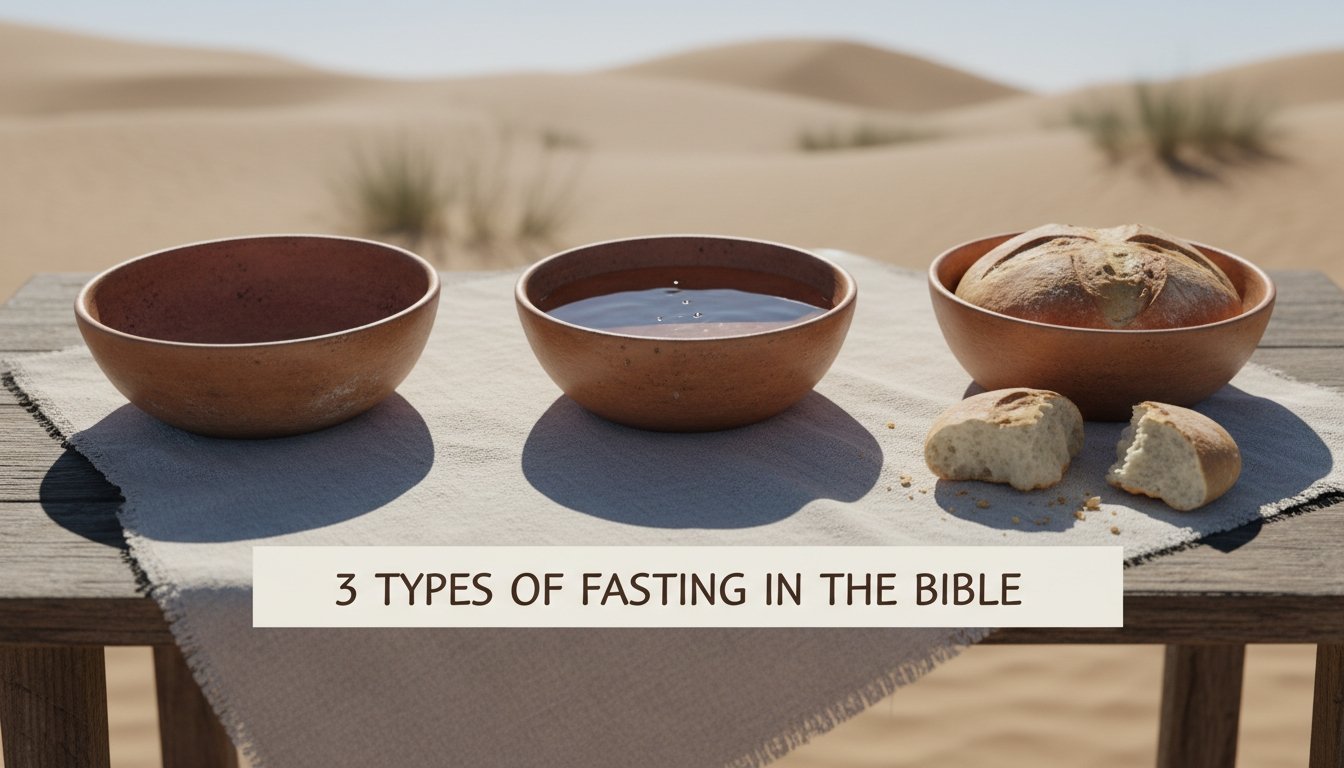
07 Feb 3 Types of Fasting in the Bible
The Bible reveals three distinct fasting types you can practice for spiritual discipline. Water-only fasting requires complete food abstinence while allowing water intake, demonstrated by Jesus’ forty-day wilderness fast. Absolute fasting eliminates both food and water, reserved for desperate circumstances like Esther’s three-day fast before approaching the king. Partial fasting involves restricting specific foods rather than eliminating all sustenance, exemplified by Daniel’s vegetables-and-water diet. Each type serves unique purposes in seeking God’s guidance and intervention.
Table of Contents
Key Takeaways
- Water-only fasting involves complete abstinence from food while allowing water intake, demonstrated by Jesus’ forty-day fast.
- Absolute fasting prohibits both food and water, reserved for desperate circumstances like Esther’s three-day fast.
- Partial fasting restricts specific foods rather than eliminating all sustenance, exemplified by Daniel’s vegetable-only diet.
- Each fasting type serves different spiritual purposes: seeking divine guidance, intervention, or sustained spiritual discipline.
- Durations vary from one-day fasts to extended forty-day periods, with longer absolute fasts requiring supernatural enablement.
Water-Only Fasting: Complete Food Restriction

What distinguishes water-only fasting from other biblical fasting practices? You’ll find it requires complete abstinence from all food while permitting water intake, setting it apart from absolute fasts where even water’s forbidden. This practice demonstrates humility before God while seeking guidance through spiritual discipline.
Biblical examples show its prominence throughout Scripture. Jesus fasted forty days in the wilderness, eating nothing yet showing no mention of thirst. The Day of Atonement required Israelites to fast from food, though water remained permitted. Nehemiah, David, and Mordecai all practiced water-only fasting for confession, protection, and intervention. Moses also fasted forty days and forty nights before receiving the commandments during his communion with the Lord.
You can observe various durations: one-day fasts from sunup to sundown remain most common, while three-day fasts often follow significant spiritual events. Extended fasts reaching forty days require supernatural enablement. Unlike partial fasts that restrict specific foods, water-only fasting demands complete food restriction while maintaining essential hydration for health and spiritual focus.

Absolute Fasting: No Food Or Water Intake
The most extreme form of biblical fasting eliminates both food and water intake, creating what Scripture calls an absolute fast. You’ll find this practice reserved for desperate circumstances requiring divine intervention, as the human body can’t survive beyond three days without water under normal conditions.
Moses exemplifies this supernatural fast when he spent forty days on Mount Sinai receiving the Ten Commandments, sustaining himself through divine sustenance rather than physical nourishment (Exodus 34:28). Similarly, Elijah endured forty days in the wilderness after fleeing Jezebel, demonstrating complete dependence on God’s miraculous provision.
Esther called for a three-day absolute fast among Susa’s Jews before approaching the king uninvited—a decision that could mean death (Esther 4:16). Paul’s three-day fast following his Damascus road encounter represents another example where absent nourishment accompanied spiritual transformation (Acts 9:9).
This type of fasting requires prudence and preparation due to its physical demands and potential health risks. These absolute fasts demonstrate extraordinary reliance on divine power during critical spiritual moments.
Partial Fasting: Modified Diet Approach
When circumstances don’t require total abstinence from food and water, you’ll discover that Scripture presents partial fasting as a spiritually significant alternative. Daniel’s examples demonstrate this modified approach effectively. In chapter 1, Daniel refused the king’s delicacies, choosing vegetables and water for ten days, proving superior health while maintaining spiritual conviction. Chapter 10 reveals Daniel’s three-week fast, abstaining from meat, sweets, and wine while mourning Israel’s condition.

This approach restricts specific foods rather than eliminating all sustenance. You’ll exclude rich foods, delicacies, and indulgences while consuming basic nutrients. Modern adaptations emphasize toxin free meals featuring fruits, vegetables, and nuts, combined with mindful portions that honor both physical needs and spiritual disciplines.
Partial fasting serves multiple biblical purposes: seeking revelation, gaining wisdom, and preparing for divine encounters. Common durations include ten or twenty-one days, making this practice accessible for those beginning their fasting journey while maintaining spiritual effectiveness.
Frequently Asked Questions
How Long Should Married Couples Abstain From Intimacy During Spiritual Fasting?
You should limit marital abstinence to short, specified periods during spiritual fasting, ideally one day or skipping one to two meals together. How long you abstain requires mutual consent from both spouses, avoiding extended periods that risk temptation. Consider weekly one-day fasts for ongoing spiritual discipline, or follow biblical patterns like forty-day periods for significant breakthroughs, always maintaining agreement and focusing your time on prayer and Scripture study.
What Are the Biblical Guidelines for Organizing a Church-Wide Corporate Fast?
You’ll organize a church-wide corporate fast by first seeking God’s guidance as leadership, then proclaiming it with clear purpose—whether responding to judgment, seeking blessing, or pursuing renewal. Include all members from elders to children, combining fasting with prayer and Scripture meditation. Choose appropriate duration types like full, partial, or Daniel fasts. Provide devotional guides and maintain humble attitudes without displaying gloomy appearances during the corporate fasting period.
Can Children and Elderly People Safely Participate in Absolute Fasting Practices?
No, you shouldn’t include children or frail elderly in absolute fasting practices due to serious health risks.
Children face dangerous nutritional deficiencies and developmental harm, while elderly caution is essential as prolonged fasting increases cardiovascular mortality and hypoglycemia risks.
Instead, encourage modified participation through prayer, simple meals, or shorter fasting periods.
Always require medical consultation for elderly participants and exclude children entirely from absolute fasts.
How Do You Determine Which Specific Foods to Eliminate During Partial Fasting?
You’ll determine food exclusions by following Daniel’s model of restricting meat, wine, and choice foods while maintaining vegetables, fruits, and water. When identifying partial fast parameters, you’re establishing spiritual discipline through self-denial rather than dietary preference. Consider your health conditions, medication interactions, and spiritual goals. The biblical pattern emphasizes eliminating indulgences—animal products, sweeteners, processed foods, and caffeine—while preserving nutritionally complete plant-based options for sustained commitment.
What Are the Proper Steps for Breaking an Extended Biblical Fast Safely?
You must follow safe fasting guidelines when breaking extended biblical fasts to avoid extended fast risks.
Start with fresh fruit or vegetable juices, then introduce light foods like watermelon or steamed vegetables.
Add raw salads on day one, baked potatoes on day two, and steamed vegetables on day three.
Extend your break-in period one day for every four days fasted.
Avoid bread, dairy, meat, and processed foods completely during reintroduction.
Conclusion
You’ll find these three biblical fasting patterns provide distinct spiritual disciplines for your journey. Water-only fasting offers sustained physical denial while maintaining hydration. Absolute fasting creates intense periods of complete abstinence, typically limited to three days maximum. Partial fasting allows selective restriction while maintaining nutritional balance. Each method serves different spiritual purposes in Scripture—choose the approach that aligns with your physical capacity, spiritual goals, and biblical understanding of sacrificial worship.










No Comments