

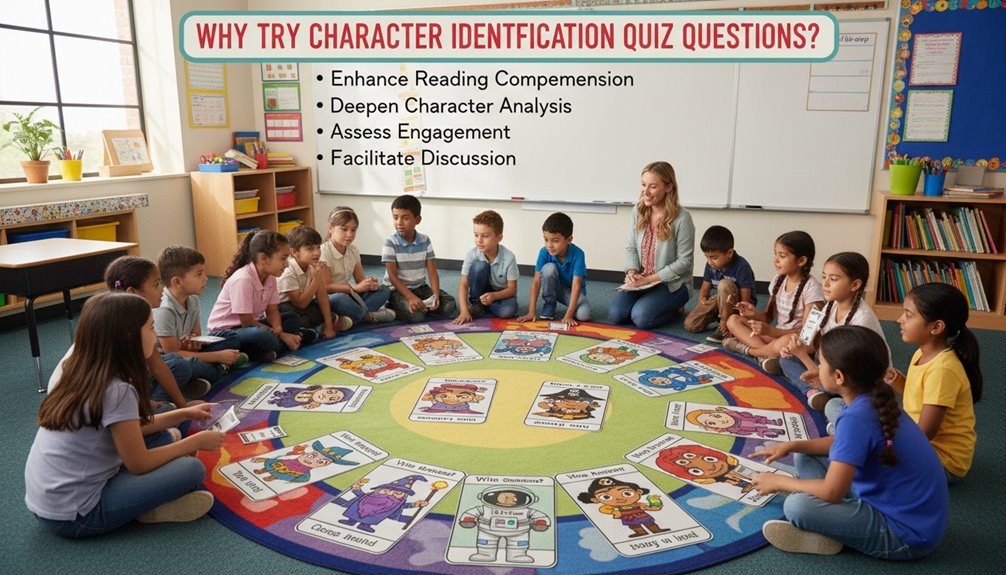
06 Apr Why Try Biblical Character Identification Quiz Questions?
You’ll find that character‑identification quizzes boost your scriptural recall, make Bible stories feel personal, and turn learning into a fun, interactive challenge. They help you spot key traits, connect themes, and retain details better than plain reading. By testing yourself, you reinforce memory, deepen your connection to the narrative, and discover fresh insights. Keep going and you’ll see how to build even more engaging quizzes.
How to Build a Bible Character Quiz
How do you craft a Bible character quiz that engages and educates? First, pick a clear learning goal—whether you want players to recognize traits, recall events, or connect themes. Then, gather concise source material: verses, narratives, and character summaries. Write each question in a single sentence, avoiding double negatives and jargon. Use a mix of multiple‑choice, true/false, and fill‑in‑the‑blank formats to keep pacing lively. Provide four answer options, placing the correct one in a random position each time. Include a brief explanation after each answer so learners see why it’s right. Keep the quiz length manageable—ten to fifteen questions sustain focus without fatigue. Test the draft with a small group, noting any confusing wording or ambiguous answers. Revise accordingly, then publish on a platform that tracks scores and offers instant feedback. This structured approach ensures your quiz is both fun and educational.
Five Techniques for Engaging Bible‑Character Quiz Questions
Ever wondered why some Bible‑character quizzes feel unforgettable while others flop? You can make yours stand out by using five proven techniques. First, pose vivid scenario prompts that place the character in a dramatic moment, forcing the quiz‑taker to imagine their actions. Second, embed a single, unexpected clue—like a rare proverb or a hidden name—that rewards careful reading. Third, alternate between multiple‑choice and open‑ended formats to keep the rhythm fresh and test both recall and reasoning. Fourth, tie each question to a thematic thread, such as redemption or leadership, so participants see a larger story emerge. Fifth, sprinkle timed “lightning rounds” where you ask rapid‑fire facts, creating excitement and a sense of competition. Applying these tactics transforms a simple identification test into an engaging, memorable experience that deepens biblical knowledge and keeps players coming back for more.
Test and Refine Your Bible Character Quiz Before Launch
Before you launch your Bible‑character quiz, run a quick pilot with a small, diverse group of testers so you can spot unclear wording, pacing issues, and any factual slip‑ups. Invite participants who vary in age, biblical knowledge, and cultural background; their perspectives will reveal hidden biases and ambiguous clues. Record how long each round takes, noting where players hesitate or rush. Use a simple feedback form that asks for specific suggestions on question phrasing, answer options, and visual layout. After gathering data, compare responses against your answer key; any mismatches signal a need for clarification or correction. Adjust wording to be concise yet precise, and reorder questions to maintain a smooth flow. Re‑test the revised version with another mini‑group to confirm improvements. Once consistency, accuracy, and engagement scores rise, you’ll feel confident rolling out the quiz to a broader audience.
How to Use Bible Character Quiz Results for Personal Study?
After polishing the quiz through pilot testing, you can turn the results into a personal study tool. First, review the character you matched with and note the key traits, decisions, and scriptural passages highlighted. Then, create a short journal entry linking those traits to your own life—ask yourself where you’ve shown similar strengths or faced comparable challenges. Use the quiz’s feedback to locate the original biblical narrative, read it in context, and mark verses that resonate. Next, set a weekly focus: spend 10‑15 minutes meditating on the character’s motivations, comparing them with your goals, and praying for insight. Finally, track progress by revisiting the quiz after a month; a different outcome may signal growth or new perspectives. This cycle transforms a simple quiz into an ongoing, reflective study habit that deepens both biblical knowledge and personal development.
Frequently Asked Questions
What Software Platforms Support Creating Interactive Bible Quizzes?
You can build interactive Bible quizzes on platforms like Kahoot!, Quizizz, Google Forms, Typeform, and Microsoft Forms. These tools let you add images, audio clips, and timed questions, plus you can embed them on your website or share via links.
For richer media, try Articulate Rise or Adobe Captivate, which support branching scenarios and score tracking. All these options are user‑friendly and work on desktop and mobile.
Can I Embed a Bible Character Quiz on My Website?
Yes, you can embed a Bible character quiz on your website. Choose a quiz‑builder that offers an embed code—many platforms generate an iframe or JavaScript snippet you paste into your page’s HTML.
Adjust the dimensions to fit your layout, and test it on desktop and mobile.
If you host the quiz yourself, upload the files to your server and link them from your site.
Remember to enable HTTPS for secure loading.
How Many Questions Should a Typical Bible Character Quiz Contain?
You should aim for about 12‑15 questions in a typical Bible character quiz. That range keeps it engaging without overwhelming participants, lets you cover key traits and stories, and fits comfortably into a 5‑10‑minute session. If you focus on one character, 12 questions give enough depth; if you mix several, stick to the lower end to maintain attention and ensure each answer feels meaningful.
Do I Need Copyright Permission for Biblical Text in Quizzes?
You don’t need permission for most biblical text because it’s in the public domain, especially translations published before 1923. Modern versions like the NIV or ESV are copyrighted, so you must check their licensing or use excerpts under fair use—typically short passages for educational quizzes. If you stick to older translations or keep excerpts brief, you can safely include them without seeking permission.
What Analytics Can Track Quiz Taker Performance?
You can track quiz taker performance with analytics that log completion rates, time‑on‑question, score distributions, and answer patterns. Use heatmaps to see which items users linger on, and segment data by demographics or device type.
Set up funnel reports to pinpoint drop‑off points, and enable A/B testing to compare question formats. Export raw logs for deeper statistical analysis, and trigger alerts when scores fall below predefined thresholds.
Conclusion
You’ve now got a solid framework for creating a Bible character quiz that’s fun, insightful, and easy to refine. By using engaging question techniques and testing before launch, you’ll keep participants hooked and gather meaningful data. Leverage those results to deepen personal study, uncover new perspectives, and grow spiritually. Keep iterating, stay curious, and let each quiz become a stepping stone toward richer biblical understanding.












No Comments