

04 Apr What Faith Quotes Strengthen During Life’s Trials?
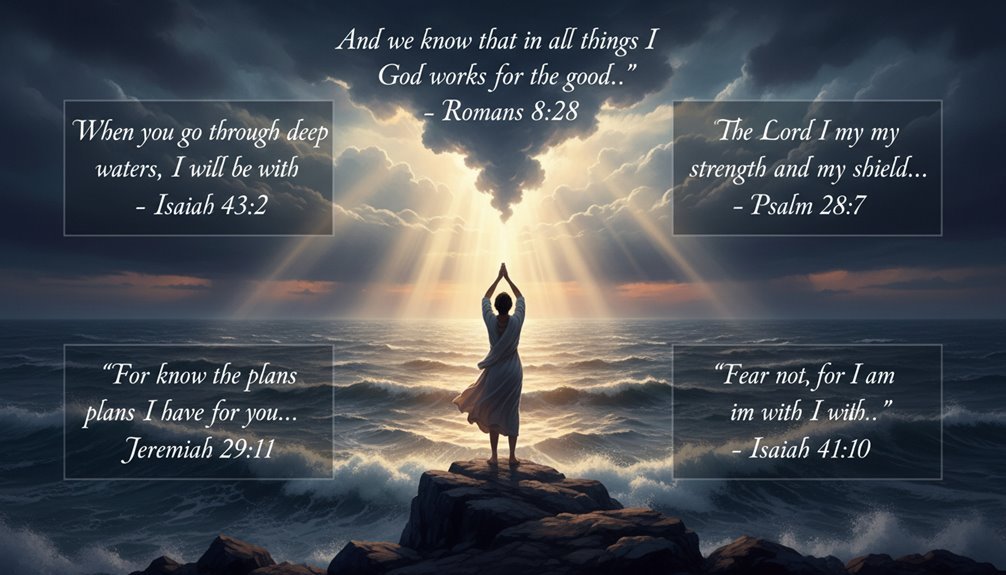
When life feels like a storm, let faith quotes be your steady hand. Recite “God is my refuge and strength” to feel you’re not alone, and whisper “Even the darkest night will end, and the sun will rise” to shift focus toward hope. Use “Be still, and know that I’m God” for calming pauses, and keep a few verses on sticky notes for quick reassurance. Keep exploring for deeper tools that turn fear into confidence.
Faith Quotes That Offer Comfort in Times of Trouble
Ever felt the weight of a storm cloud pressing on your heart? When anxiety swells, you can turn to faith‑based quotes that act like a gentle hand on your shoulder. A simple line such as “God is my refuge and strength” reminds you that you’re not alone in the turmoil.
You’ll notice how “Even the darkest night will end, and the sun will rise” shifts your focus from present pain to future hope. When fear whispers, “Be still, and know that I’m God,” you pause, breathe, and let calm settle. These verses don’t erase hardship, but they reframe it, offering a sturdy anchor. By memorizing a few, you create a mental toolbox you can pull from during crises. Each time you repeat the words, they reinforce resilience, steadiness, and a sense that purpose persists beyond the storm.
How Faith Quotes Build Resilience During Personal Crises
How do faith‑based quotes turn personal crises into stepping stones toward resilience? You read a line that reminds you of inner strength, and suddenly the panic fades. The words act as a mental anchor, pulling you back from the edge of despair. When you repeat a verse about perseverance, your brain rewires its stress response, replacing fear with calm focus. You start seeing setbacks as opportunities to grow, not as dead ends. Each quote becomes a mantra that reshapes your narrative, turning “I can’t” into “I will try.”
5 Faith‑Based Biblical Verses for Strength When Facing Loss
When you’re grieving, biblical verses can become a steady hand that steadies your heart. Psalm 34:18 reminds you that the Lord is close to the brokenhearted, offering comfort that feels tangible. In Matthew 5:4, Jesus promises blessedness to those who mourn, assuring you that your sorrow is seen and honored. Isaiah 41:10 tells you not to fear, because God strengthens and upholds you with His righteous right hand.
2 Corinthians 1:3‑4 encourages you to find hope in the God of all comfort, who equips you to console others even while you’re hurting. Revelation 21:4 paints a future where death and pain vanish, giving you a vision of lasting peace. These verses don’t erase loss, but they anchor you in divine presence, grant courage to endure, and remind you that you’re never alone in your grief.
Why God’s Promises in Faith Quotes Outweigh Our Circumstances
Grief may leave you feeling powerless, yet the promises woven through Scripture cut through that helplessness with a firm, unshakable truth. When you cling to God’s promises, you tap into a reality that transcends present pain. These divine assurances aren’t vague feelings; they’re concrete declarations—“I will never leave you” (Hebrews 13:5) and “My plans are for your good” (Jeremiah 29:11).
Turning Fear Into Faith: Practical Steps With Faith Quotes
Ever wonder how a single line of Scripture can dissolve the knot of anxiety tightening your chest? You can turn fear into faith by anchoring each nervous thought to a specific quote. First, identify the panic trigger, then pause and recite a verse like “I can do all things through Christ who strengthens me.” Speak it aloud, letting the words replace the dread. Next, write the quote on a sticky note and place it where the fear surfaces—desk, bathroom mirror, phone lock screen. When the anxiety spikes, read the note, breathe deeply, and visualize the promise taking root. Finally, journal the moment: note the fear, the quote you used, and the shift you felt. Over time, this habit rewires your brain, swapping alarm signals for confidence, and the scripture becomes a practical tool that steadies you whenever fear tries to take hold.
Prayer, Meditation, and Faith Quotes for Emotional Healing
Shifting from confronting fear to nurturing emotional health, prayer, meditation, and faith quotes become a three‑fold balm for a wounded heart.
You can start by setting a quiet space, breathing slowly, and inviting a trusted verse—perhaps Psalm 23’s “The Lord is my shepherd” —to anchor your thoughts. As you repeat the line, let its rhythm settle your nervous system, turning anxiety into calm.
Meditation amplifies this effect: focus on a single phrase like “I am loved” and let it echo without judgment. When doubts surface, return to the quote, allowing its truth to replace fear with reassurance. You’ll notice emotions softening, clarity emerging, and resilience building.
Consistent practice weaves these practices into daily life, creating an inner sanctuary where hope thrives. By pairing prayer’s surrender, meditation’s stillness, and empowering faith quotes, you nurture emotional healing that sustains you through any trial.
Sharing Strength: Using Faith Quotes to Encourage Others in Their Trials
You can lift a friend’s spirits by sharing a verse that mirrors their struggle, showing empathy through shared scripture. When you pair that quote with a personal testimony, you turn abstract hope into a tangible example of resilience. Offer the quote in a handwritten note, a text, or a quick conversation—simple actions that make your support feel real and immediate.
Empathy Through Shared Scripture
How can a single verse turn a lonely struggle into a shared hope? When you quote Psalm 34:18, you’re not just reciting words—you’re extending a hand. You let another feel the same divine compassion that steadies you.
By pairing a personal hardship with a familiar scripture, you create a bridge of empathy. The listener recognizes the pattern: pain, prayer, promise. That recognition reduces isolation and invites mutual encouragement.
You can also reference Romans 8:28, reminding them that “all things work together for good.” The verse becomes a shared language, a quiet agreement that both of you trust a higher purpose.
In this exchange, faith transforms from a private refuge into a collective strength.
Personal Testimonies Inspire Hope
Ever wonder how a single story can lift a weary heart? When you share a personal testimony, you turn abstract faith into lived reality. Your honest recount of doubt, struggle, and eventual triumph becomes a beacon for anyone wrestling with darkness. By weaving in a resonant quote—perhaps “The Lord is my strength and my shield”—you anchor your experience in timeless truth, letting listeners sense that they’re not alone.
You don’t need grand language; a simple, vivid moment—like the night you prayed and felt peace—creates a relatable bridge. As others hear your journey, they recognize their own capacity for hope, and the quote reinforces that divine support is ever‑present, guiding them through trials.
Practical Ways to Offer Support
When a friend is wrestling with hardship, a well‑chosen faith quote can become a lifeline, instantly reminding them that God’s strength is within reach. Start by listening without judgment; then, weave the quote into the conversation, matching its tone to their mood. Send a handwritten note or text that pairs the verse with a brief, sincere encouragement. Offer to pray together, letting the quote guide the prayer’s focus. Share a relevant sermon clip or devotional that expands on the message. Invite them to a small fellowship gathering where the quote can be reflected upon collectively. Keep your support consistent, gentle, and rooted in the same hope the quote conveys, reinforcing that they’re not alone.
Frequently Asked Questions
Can Faith Quotes Replace Professional Counseling?
You can’t rely on faith quotes alone to replace professional counseling. Quotes can inspire, lift spirits, and remind you of hope, but they don’t address underlying mental‑health issues, diagnose disorders, or provide tailored therapeutic strategies. A counselor offers evidence‑based techniques, a safe space to explore feelings, and accountability you quotes can’t match. Use quotes as complementary encouragement, but seek qualified help for lasting, effective healing.
How Do Cultural Differences Affect Interpretation of Faith Quotes?
You’ll find that cultural background shapes the words you latch onto, the metaphors you understand, and the values you prioritize.
A quote about “walking by faith” may feel empowering in a community that values individual perseverance, yet in collectivist societies it might be read as a call to communal support.
Symbolic references—like “light,” “mountain,” or “river”—carry different connotations, so the same line can inspire hope in one culture while sounding abstract or even contradictory in another.
Adjusting the wording to local idioms and religious traditions ensures the message resonates authentically.
Are There Secular Equivalents to Faith‑Based Strength Quotes?
You can find secular equivalents that echo faith‑based strength quotes by focusing on human resilience, purpose, and growth. Think of lines like “Courage isn’t the absence of fear, but the triumph over it,” or “Your limits are only the ones you accept.”
These statements draw on psychology, philosophy, and personal experience, offering motivation without invoking the divine, yet they still empower you to face adversity head‑on.
What Role Does Personal Experience Play in Quoting Faith Sayings?
You find that personal experience shapes how you interpret and apply faith sayings. When you’ve lived through hardship, the words become more than abstract ideas—they turn into lived proof. Your memories filter the quote’s meaning, highlighting the parts that resonated with your struggle. This makes the saying feel authentic and actionable, reinforcing belief and guiding you through future challenges.
How Can I Verify the Authenticity of a Quoted Scripture?
You verify a scripture’s authenticity by cross‑checking it with reliable sources. First, locate the passage in a reputable translation—like the NIV, ESV, or KJV—using a trusted Bible website or printed edition. Then compare the wording to the original language via an interlinear or scholarly commentary. Check the citation’s book, chapter, and verse numbers for consistency. Finally, confirm the source’s credibility by consulting academic databases or recognized theological institutions.
Conclusion
You’ve seen how faith‑filled words can lift you when life feels overwhelming. By leaning on these verses and turning fear into trust, you’ll discover inner strength you never knew you had. Keep these quotes close, let them guide your prayers and reflections, and share them with others who need hope. In every trial, let faith be the steady anchor that steadies your heart and propels you forward.











No Comments