

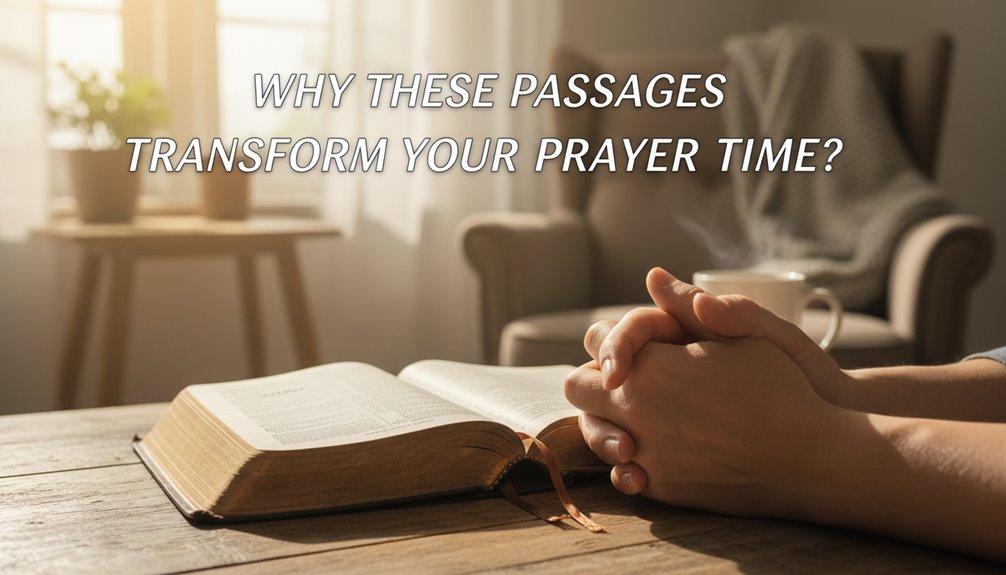
05 Apr Why These Passages Transform Your Prayer Time?
You’ll find that meditating on Psalm 23’s green pastures, still waters, and shepherd imagery anchors your mind, turning abstract yearning into concrete calm. John’s “I am” statements invite a personal dialogue, letting you feel Christ’s presence through vivid symbols like light and the vine. Isaiah’s urgent prophetic visions stir your heart, aligning your destiny with divine promises. Together they shift prayer from routine recitation to a living conversation, and if you keep exploring you’ll discover deeper practices.
How Specific Psalms Enhance Biblical Meditation and Deepen Your Connection
How can a single Psalm reshape your prayer? When you linger on Psalm 23, you feel God’s shepherding presence guiding each step. You breathe in its rhythm, letting the “green pastures” settle in your heart, and the promise of “still waters” steadies your thoughts. By repeating verses, you anchor meditation in concrete imagery, turning abstract yearning into tangible experience. The psalm’s structure—five verses, each a complete thought—offers a natural pause for reflection, letting you ask, “What does this mean for me now?”
As you internalize the words, you notice a shift: anxiety loosens, gratitude deepens, and your dialogue with the Divine becomes a two‑way exchange. This focused engagement transforms a routine recitation into a living conversation, sharpening your spiritual awareness and drawing you closer to the source of comfort and hope.
How John’s Gospel Boosts Biblical Meditation for Authentic Prayer
Ever wondered why John’s Gospel feels like a personal invitation to encounter Christ? You’ll notice its intimate tone—“I am the way, the truth, and the life”—draws you into a dialogue, not a monologue. When you read John, you’re not merely scanning facts; you’re stepping into a narrative that mirrors your own spiritual journey.
The “I am” statements act as meditative anchors, letting you pause, reflect, and internalize divine identity. By focusing on verses like John 13:34 (“Love one another”), you transform abstract doctrine into lived experience, fostering authentic prayer that flows from love, not obligation.
John’s vivid imagery—light, water, the vine—offers concrete symbols for contemplation, making it easier to visualize God’s presence. As you meditate on these scenes, you cultivate a deeper awareness of Christ’s nearness, turning every prayer into a heartfelt encounter rather than a routine recitation.
How Isaiah Fuels Transformational Biblical Meditation
Why does Isaiah’s prophetic voice ignite a deeper, transformational meditation? You feel the urgency in his warnings and the hope in his promises, and that tension pulls you into a tighter dialogue with God. Isaiah’s vivid imagery—“the mountains trembling” and “the heavens weeping”—creates a mental landscape that your mind can inhabit, making abstract truths concrete. When you meditate on his vision of a new heaven and earth, you’re not just reciting verses; you’re entering a future God already foresees, aligning your heart with that destiny. His messianic foreshadowing, especially in chapter 9, invites you to see Christ as the fulfillment of divine redemption, sharpening your focus on Christ‑centered prayer. By pairing Isaiah’s stark realism with his radiant hope, you cultivate a meditation that reshapes attitudes, deepens trust, and fuels lasting spiritual growth. This prophetic blend transforms ordinary reflection into a powerful, life‑changing encounter.
Frequently Asked Questions
What Biblical Passages Complement Psalms for Deeper Meditation?
You’ll find deeper meditation by pairing Psalms with Isaiah 40‑31, Psalm 23’s echo in John 10:11‑18, the reflective Psalms 42‑43, and the comforting promises of Romans 8:38‑39. Add the wisdom of Proverbs 3:5‑6, the intimate prayer of Philippians 4:6‑7, and the hopeful visions in Revelation 21:1‑4. These passages reinforce God’s presence, peace, and future hope, enriching your contemplative practice.
Can John’s Gospel Be Combined With Other New Testament Books?
Yes, you can weave John’s Gospel with other New Testament books to deepen your study. Pair John’s high‑Christology with the narrative flow of Luke, or contrast its theological depth with Paul’s epistles like Romans. Use the Acts of the Apostles to see how early believers applied John’s themes. By juxtaposing these texts, you’ll notice recurring motifs, enrich your interpretation, and create a cohesive theological picture.
How Does Isaiah Compare to Prophetic Books Like Jeremiah?
You’ll find Isaiah’s tone more poetic and visionary, while Jeremiah’s is gritty and lamenting. Isaiah uses grand, hopeful imagery to foretell a restored kingdom, often speaking in majestic, prophetic oracles.
Jeremiah, by contrast, delivers raw, personal lamentations and warnings, emphasizing broken covenant and impending judgment. Both address Israel’s fate, but Isaiah leans toward future triumph, whereas Jeremiah dwells on present sorrow and urgent repentance.
This contrast shapes their distinct theological emphases.
Are There Specific Prayer Techniques Linked to These Passages?
You can use several techniques that tie directly to those passages. First, try meditative repetition: read a verse, pause, and silently echo its key phrase while breathing slowly. Second, employ visual anchoring—picture the scene the passage describes, letting the imagery guide your petitions. Third, practice “scriptural framing,” where you start each prayer by quoting the passage, then expand its theme into your own requests. These methods keep the text’s spirit alive throughout your prayer.
Do These Passages Suit Both Individual and Corporate Prayer Settings?
Yes, these passages work for both personal and corporate prayer. You’ll find they’re concise enough for solo reflection yet rich enough to inspire group unity.
When you read them alone, you can meditate deeply, and when you share them in a gathering, they spark shared focus and collective worship.
Their themes bridge individual devotion and corporate expression, making them versatile tools for any prayer setting.
Conclusion
You’ve seen how those passages can reshape your prayer life, turning routine recitation into a vibrant dialogue with God. By meditating on specific Psalms, you tap into centuries‑old cries of the heart, while John’s Gospel invites you into the living story of Christ. Isaiah’s prophetic voice then propels you beyond the surface, urging transformation. Embrace these texts, and watch your prayer time become a powerful, intimate encounter with the divine.









No Comments