

09 Mar How to Observe Good Friday Customs in the Philippines
To observe Good Friday customs in the Philippines, you can attend solemn masses and processions featuring life-size statues, participate in the penitential ‘Alay Lakad’ walk, savor traditional Lenten foods, and witness powerful reenactments of Christ’s crucifixion. These immersive experiences connect you to the country’s deep Catholic heritage and provide a meaningful opportunity to reflect on faith and the Savior’s sacrifice. To learn more about these observances, you can continue exploring.
Table of Contents
Key Takeaways
- Attend Good Friday masses and processions to commemorate Christ’s passion and death through solemn services and life-size statue processions.
- Participate in the ‘Alay Lakad’ penitential walk, where devotees flagellate themselves or carry heavy crosses while walking barefoot to represent Christ’s suffering.
- Savor traditional Lenten foods like pansit and suman, which symbolize long life and are shared among families to foster community and connection.
- Witness reenactments of Christ’s crucifixion performed by community members, emphasizing solemnity and reverence through a powerful portrayal of the Savior’s suffering.
- Engage in the Philippines’ deep Catholic heritage by observing Good Friday customs that shape the experience through neighborhood involvement, prayers, and chants.
Attending Good Friday Masses and Processions
Why not start your Good Friday observance by attending the masses and processions held throughout the Philippines? You’ll find that churches nationwide host solemn services commemorating Christ’s passion and death. Many also organize elaborate processions featuring life-size statues of Jesus and the Blessed Virgin Mary. Join devout Filipinos as they mourn the Savior’s suffering, praying and reflecting along the route. You can even see reenactments of the Crucifixion, with a man portraying Jesus carrying a heavy cross. Immerse yourself in the somberness of the day, and you’ll gain a deeper appreciation for this sacred tradition. Witnessing the devotion of the Filipino people is a moving experience not to be missed.
Participating in the ‘Alay Lakad’ Penitential Walk
Another Good Friday tradition in the Philippines is the ‘Alay Lakad’ Penitential Walk. You’ll see devotees flagellate themselves or carry heavy crosses as they walk barefoot. Some even don crowns of thorns or drag chains. This solemn procession represents Christ’s suffering on the way to Calvary. Participants often do it to atone for their sins or to ask for special intentions. The walk can last for hours and cover long distances. It’s a powerful display of faith and penance. Onlookers may join in or watch solemnly. The atmosphere is somber, with chants, prayers, and the sound of whips. This tradition reflects the Philippines’ deep Catholic roots and the importance of Good Friday observances.
Savoring Traditional Lenten Foods
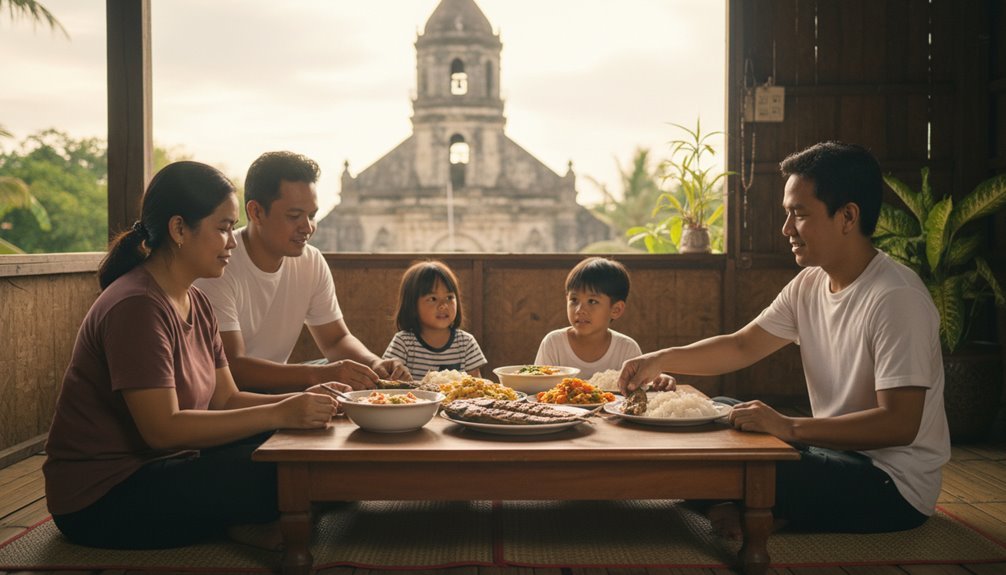
On Good Friday, Filipinos often savor traditional Lenten foods that reflect the solemnity of the day. Among the most popular are the simple yet meaningful dishes like the pansit, a noodle dish that symbolizes long life, and the suman, a sticky rice cake wrapped in banana leaves. These foods are usually paired with brewed coffee or hot chocolate, creating a comforting and reflective atmosphere. Families gather to share these meals, fostering a sense of community and connection. The flavors and textures of these dishes evoke a deep-rooted cultural heritage, reminding everyone of the importance of honoring traditions during this sacred time of year.
Witnessing Reenactments of Christ’s Crucifixion
Beyond the savoring of traditional Lenten foods, many Filipinos also find profound meaning in witnessing the reenactments of Christ’s crucifixion. You’ll see vast crowds gather to watch intricate performances depicting the passion and death of Jesus. The actors, often community members, powerfully convey the sorrows and sacrifices of the biblical story. You’ll be struck by the solemnity and reverence of the occasion, as the faithful pause to reflect on their faith and the suffering endured by their Savior. These reenactments have become a integral part of the Philippines’ Lenten observances, allowing people to connect with their religious heritage in a deeply moving way.
Frequently Asked Questions
Can I Observe Friday Customs Without Attending Religious Services?
Yes, you can observe Friday customs without attending religious services. You can still practice other traditions like abstaining from meat, performing good deeds, and spending time with family. These customs aren’t solely tied to religious services, and you can honor them through your own personal observance and lifestyle choices.
Are There Any Secular Traditions Associated With Friday Customs?
Yes, there are some secular traditions associated with Friday customs in the Philippines. You can observe practices like eating fish-based dishes, avoiding meat and poultry, and performing household chores and errands. These customs don’t require attending religious services, and they’re rooted in cultural and superstitious beliefs rather than strictly religious ones.
How Do Friday Customs Differ Across Regions in the Philippines?
Friday customs in the Philippines vary across regions. In some areas, people avoid eating meat on Fridays and instead have seafood.
Others attend special church services or engage in community activities.
Some regions have traditional dances or music performances on Fridays.
The specific practices often reflect local cultural and religious influences.
Are There Any Age Restrictions or Requirements for Participating?
There aren’t any age restrictions or requirements for participating in Friday customs in the Philippines. Anyone can join in, regardless of their age or background. The customs are open to all members of the community, and they’re often seen as a way to bring people together and celebrate their shared cultural heritage.
Can I Observe Friday Customs if I’m Not Catholic or Christian?
Absolutely! You don’t have to be Catholic or Christian to observe Friday customs in the Philippines. These traditions are open to people of all faiths and backgrounds. You can participate in the cultural aspects, like fasting or abstaining from certain foods, without needing to adhere to the religious beliefs. The Friday customs are deeply rooted in the country’s history and are widely celebrated across the Philippines.
Conclusion
You’ll want to immerse yourself in the rich traditions of Good Friday in the Philippines. Attend powerful Masses and processions, join the penitential ‘Alay Lakad’ walk, savor delicious Lenten dishes, and witness the awe-inspiring reenactments of Christ’s Crucifixion. These poignant customs will offer you a deeper connection to the spiritual significance of this holy day.










No Comments