

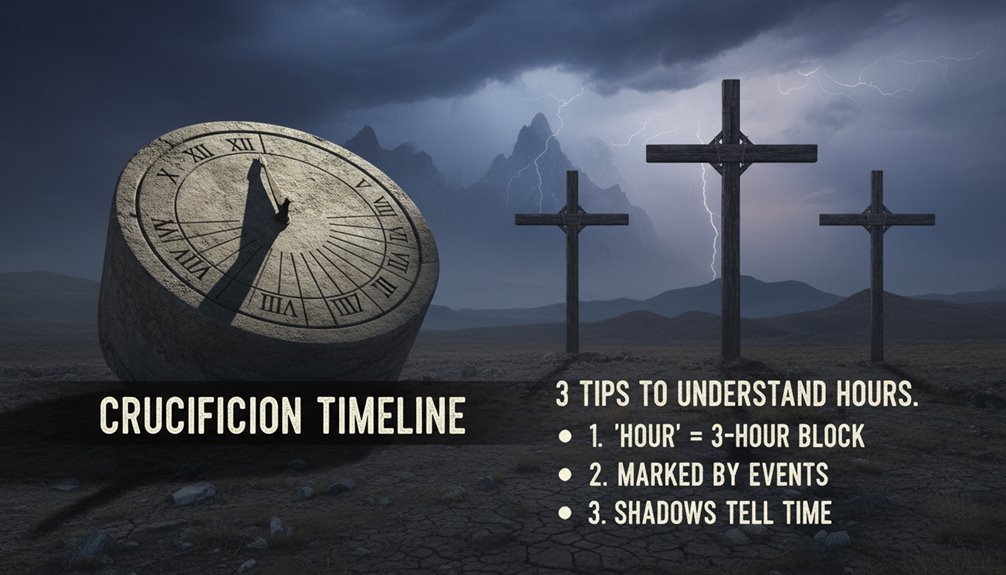
10 Mar Crucifixion Timeline: 3 Tips to Understand Hours
To understand the crucifixion timeline, focus on three key hours. The third hour marks the start of Jesus’ suffering, the ninth hour his death, and the three hours of darkness in between signify the spiritual gravity. Aligning these hours with the Passover context provides essential context. If you want to delve deeper into the significance of these timelines, you’ll find a more detailed breakdown in the following sections.
Key Takeaways
- The third hour (around 9 AM) marks the start of Jesus’ crucifixion, while the ninth hour (around 3 PM) indicates the time of his death.
- Understanding the Passover festival context provides a frame for the crucifixion timeline and the significance of the timing.
- Aligning Jesus’ final words with the timeline aids in comprehending the sequence of events surrounding his death.
- The duration from the third hour to the ninth hour suggests the crucifixion lasted around 6 hours.
- The three hours of darkness, from the sixth hour to the ninth hour, signify the cosmic and spiritual importance of Christ’s sacrifice.
The Significance of the 3 Hours of Darkness

Why were the three hours of darkness during Jesus’ crucifixion so significant? This supernatural phenomenon signified the deep cosmic and spiritual significance of Christ’s sacrifice. The darkness represented God’s judgment and the weight of sin being placed upon Jesus. It was a harrowing time when the light of the world was extinguished, as the Son of God bore the darkness of human iniquity. This dramatic event underscored the gravity of the crucifixion, highlighting the immense spiritual battle and Jesus’ ultimate triumph over sin and death. The three hours of darkness were a somber yet powerful reminder of the profound price paid for humanity’s redemption.
Jesus’ Final Statements and Death on the Cross
What final words did Jesus utter from the cross, and what was their significance? Jesus’ final statements from the cross hold profound meaning. He first asked God to forgive those crucifying him, showing his compassion. Next, he assured a repentant criminal that he’d be with him in paradise, demonstrating his power to grant eternal life. Later, he entrusted his mother Mary to the disciple John, highlighting familial care. Ultimately, Jesus cried, “My God, my God, why have you forsaken me?” revealing the depth of his suffering and separation from the Father. Finally, he declared, “It is finished,” signifying the completion of his mission to redeem humanity. Jesus’ poignant final words on the cross express his divinity, sacrifice, and the culmination of God’s plan of salvation.
When Did the Crucifixion Occur?
When did the crucifixion of Jesus Christ occur? According to the Gospels, it took place during the Passover festival in Jerusalem. The exact timing, though, can be a bit tricky to pinpoint. Most scholars believe Jesus was crucified on a Friday, either in 30 AD or 33 AD.
The Gospels provide details that the crucifixion happened during the “third hour” and Jesus died around the “ninth hour.” This means the event likely lasted from around 9 AM to 3 PM. Knowing the timeline helps you better understand the significance of Jesus’ final words and the events surrounding his death on the cross.
With these tips, you can piece together a clearer picture of when this pivotal moment in Christian history occurred.
Frequently Asked Questions
What Happened to the Disciples During the Crucifixion?
The disciples were terrified and fled during Jesus’ crucifixion. They’d abandoned Him, despite promising to stay by His side.
Some watched from a distance, while others hid in fear.
They were overwhelmed by the intensity of the moment and the reality that their teacher and friend was being executed.
It was a traumatic experience that shook their faith and loyalty to the core.
How Was the Body of Jesus Removed From the Cross?
After Jesus’ death, Joseph of Arimathea and Nicodemus removed his body from the cross. They carefully took him down, wrapped him in linen cloths, and placed him in a nearby tomb. The Roman soldiers verified that Jesus had indeed died before allowing the body to be taken down and buried.
What Were the Specific Charges Against Jesus Before Pontius Pilate?
The specific charges against Jesus before Pontius Pilate were that he claimed to be the King of the Jews, which was seen as a threat to Roman authority.
Pilate found no fault in Jesus, but the crowd demanded his crucifixion, so Pilate handed him over to be executed.
How Did the Roman Soldiers Cast Lots for Jesus’ Garments?
The Roman soldiers cast lots for Jesus’ garments after they’d crucified Him. They divided His clothes among themselves, fulfilling the Scripture that said, “They divided My garments among them, and for My clothing they cast lots.” This was a common practice when executing criminals, allowing the soldiers to claim the condemned person’s possessions.
What Was the Significance of the Veil in the Temple Being Torn?
The tearing of the veil in the temple was significant because it symbolized the end of the separation between God and mankind. It demonstrated that Jesus’ sacrifice had opened the way for direct access to God, breaking down the barrier that had previously existed.
This event foreshadowed the new covenant that would be established through Christ’s death on the cross.
Conclusion
You now have a better understanding of the crucifixion timeline. Remember the significance of the 3 hours of darkness, Jesus’ final statements, and when the crucifixion occurred. This knowledge provides deeper insight into this pivotal event in Christian history. Use these tips to deepen your appreciation of the crucifixion and its lasting impact.











No Comments