

15 Mar Why Timeline Good Friday Events in Bible?
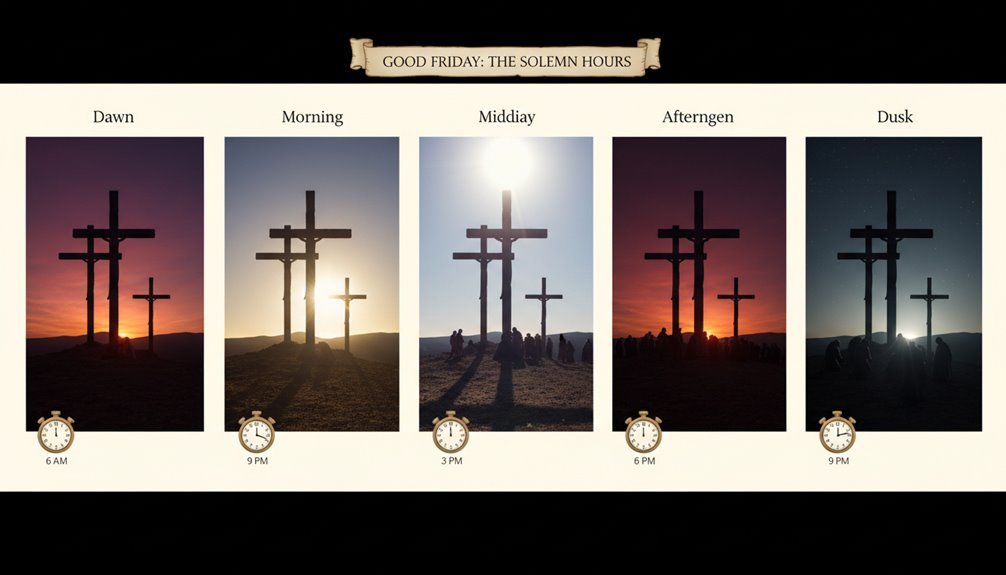
The timeline of Good Friday events in the Bible gives you a vivid account of Jesus’ final hours – from His arrest in Gethsemane to His crucifixion and burial. It’s a powerful narrative that illuminates Christ’s immense sacrifice and the profound supernatural occurrences that accompanied His death, hinting at the deeper meaning and significance behind these pivotal events.
Table of Contents
Key Takeaways
- Understanding the sequence of events leading to Jesus’ crucifixion on Good Friday provides insight into the fulfillment of biblical prophecies and the significance of Christ’s sacrificial death.
- Tracing Pilate’s and Herod’s involvement in the trial and sentencing of Jesus showcases the political complexities and power dynamics at play during this pivotal moment in history.
- Analyzing the details of Jesus’ crucifixion, including his physical suffering and final words, deepens appreciation for the magnitude of his sacrificial love and redemptive work.
- Examining the supernatural signs that accompanied Jesus’ death, such as the temple curtain tearing and the earthquake, reinforces the divine nature of these events.
- Studying the burial details, including the involvement of Joseph of Arimathea and the women followers, highlights the reverence and care with which Jesus’ body was treated.
The Arrest and Trial of Jesus

Though the events of Good Friday are well-known, understanding the timeline of Jesus’ arrest and trial can provide valuable insights. Jesus was arrested in the Garden of Gethsemane, then brought before the Jewish authorities for interrogation and false charges. After being condemned by the Sanhedrin, He was sent to Pontius Pilate, the Roman governor, who questioned Him and ultimately washed his hands of the matter. Pilate then passed Jesus to Herod Antipas, who returned Him to Pilate. Faced with the crowd’s demand for crucifixion, Pilate reluctantly sentenced Jesus to death. This rapid succession of events, from arrest to sentencing, underscores the intensity and injustice of the proceedings against Jesus on that fateful day.
Jesus’ Crucifixion
After the unjust proceedings against Jesus, the events of His crucifixion unfolded. He was beaten, mocked, and forced to carry His own cross. At Golgotha, they nailed Him to the cross, where He hung in agony. As the crowd jeered, Jesus uttered, “Father, forgive them, for they know not what they do.” The sky darkened, and Jesus cried out, “My God, my God, why have you forsaken me?” Finally, He declared, “It is finished,” and breathed His last. His body was taken down and laid in a tomb. Though it seemed Jesus had been defeated, His death would soon bring salvation to all who believe.
The Supernatural Events Surrounding the Crucifixion
What supernatural events surrounded the crucifixion of Jesus? The Bible recounts several extraordinary occurrences during this pivotal moment. Darkness covered the land for three hours as Jesus hung on the cross.

The curtain of the temple was torn in two, from top to bottom. Earthquakes shook the ground, and rocks split apart.
Tombs were opened, and many holy people who’d died were raised to life. These supernatural signs point to the immense significance of Christ’s sacrifice. They demonstrate God’s power and the cataclysmic impact of Jesus’ death. These events underscore the profound spiritual realities unfolding, beyond the physical crucifixion. They reveal the cosmic implications of Christ’s atoning work, which reconciles humanity to God through His death on the cross.
The Burial of Jesus
After Jesus‘ crucifixion, His body was taken down from the cross and laid to rest.
After Jesus’ crucifixion, His body was taken down from the cross and laid to rest.
According to the Gospels, Joseph of Arimathea, a wealthy and respected member of the Jewish council, received permission from Pontius Pilate to bury Jesus.
Joseph wrapped Jesus’ body in a clean linen cloth and placed it in his own new tomb, which had been cut out of the rock.

The women who’d followed Jesus from Galilee watched as His body was laid in the tomb.
They then returned home and prepared spices and perfumes to anoint the body later.
The tomb was sealed with a large stone, and guards were posted to prevent anyone from stealing the body.
Frequently Asked Questions
What Were the Charges Against Jesus During His Trial?
The charges against Jesus during his trial were blasphemy and claiming to be the King of the Jews. The religious leaders accused Jesus of blasphemy for claiming to be the Messiah and the Son of God.
Pontius Pilate, the Roman governor, charged Jesus with treason for claiming to be a king, which was seen as a threat to the Roman empire.
How Long Did Jesus Suffer on the Cross Before He Died?
According to the Bible, Jesus suffered on the cross for around 6 hours before he died.
The Gospels record that he was crucified around 9 am and died around 3 pm.
During this time, he endured intense physical and emotional anguish, including beatings, mocking, and the burden of taking on the sins of humanity.
What Happened to the Temple Curtain During the Crucifixion?
According to the Bible, when Jesus died on the cross, the temple curtain was torn in two from top to bottom. This symbolized that the barrier between God and humanity had been removed, and that the way to God was now open to all through Jesus’ sacrifice.
Where Was Jesus Buried and Who Buried Him?
Jesus was buried in a tomb owned by Joseph of Arimathea. After his crucifixion, Joseph asked Pontius Pilate for Jesus’ body, wrapped it in linen, and placed it in his own new tomb, which was hewn out of the rock. The women who’d followed Jesus also saw where he was laid.
Did Jesus Rise From the Dead After His Burial?
Yes, Jesus did rise from the dead after his burial. The Gospels describe how Jesus’ tomb was found empty on the third day, and he appeared to his disciples, proving his resurrection.
This fulfilled his own prophecies and established the core of Christian belief – that Jesus overcame death and offers eternal life to those who believe in him.
Conclusion
You should study the timeline of Good Friday events in the Bible to understand the significance of Jesus’ arrest, trial, crucifixion, and burial. These events represent the culmination of Jesus’ ministry and His willingness to sacrifice Himself for the sins of humanity. Examining the details of this timeline provides insight into the supernatural occurrences that accompanied Christ’s death and the profound impact of His ultimate act of love.











No Comments