

28 Feb Understanding Orthodox Iconography for Entry Sunday
Orthodox iconography reveals the profound spiritual symbolism of Palm Sunday, inviting you to contemplate Christ’s triumphant yet humble entry into Jerusalem. The visual language of icons uses elements like palm branches, crowds, and a donkey-riding Christ to convey deeper theological truths. Exploring the rich symbolism in Palm Sunday iconography can deepen your understanding and prepare your heart to celebrate this pivotal event. If you’d like to explore the visual theology of this feast further, the following sections provide a closer look.
Key Takeaways
- Orthodox iconography uses symbolic visual language to depict the spiritual significance of Christ’s triumphal entry into Jerusalem on Palm Sunday.
- Palm branches and cloaks on the ground represent the joyful acclamation and honoring of Christ as a victorious king.
- The donkey-riding Christ symbolizes his humility, servanthood, and the spiritual nature of his kingdom.
- Contemplation of Palm Sunday icons invites participation in the liturgical commemoration of Christ’s Passion and Resurrection.
- Traditional Palm Sunday icons often include elements like Jerusalem gates, linking the imagery to the biblical event and Eastern Orthodox tradition.
What Is Orthodox Iconography?
Orthodox iconography is a distinct form of religious art that has been an integral part of Eastern Orthodox Christian tradition for centuries. It’s a unique visual language that conveys profound spiritual truths through the depiction of sacred figures, scenes, and symbols. Icons, as they’re called, aren’t merely decorative; they’re windows into the divine, inviting the faithful to engage in contemplative prayer and deepen their connection with the sacred.
From the intricate brushstrokes to the vibrant colors, every element of an Orthodox icon holds symbolic meaning, guiding the viewer towards a transcendent understanding of the divine. It’s a rich and captivating art form that continues to inspire and enlighten the faithful.
The Symbolic Meaning of Palm Sunday Iconography
The palm branches and triumphal entry imagery found in Orthodox iconography represent Christ’s victorious entrance into Jerusalem.
This symbolic depiction highlights the liturgical significance of the day, foreshadowing His Passion and Resurrection.
Unpack the layers of meaning within these iconic images to deepen your understanding of this pivotal moment in the life of Christ.
Palm Branches and Triumphal Entry
Why do the palm branches carried by the faithful hold such significance in Orthodox iconography of the Triumphal Entry? The palm branches symbolize victory, joy, and the arrival of a triumphant king.
In the Gospels, the people placed their cloaks and palm branches on the road, hailing Jesus as the Messiah. This imagery is captured in icons, which depict the faithful enthusiastically greeting Christ as He enters Jerusalem. The palms represent the people’s recognition of Jesus’ divine kingship and their willingness to submit to His rule. This powerful symbol reminds us of the church’s eternal celebration of Christ’s triumph over sin and death.
Iconographic Representation of Christ
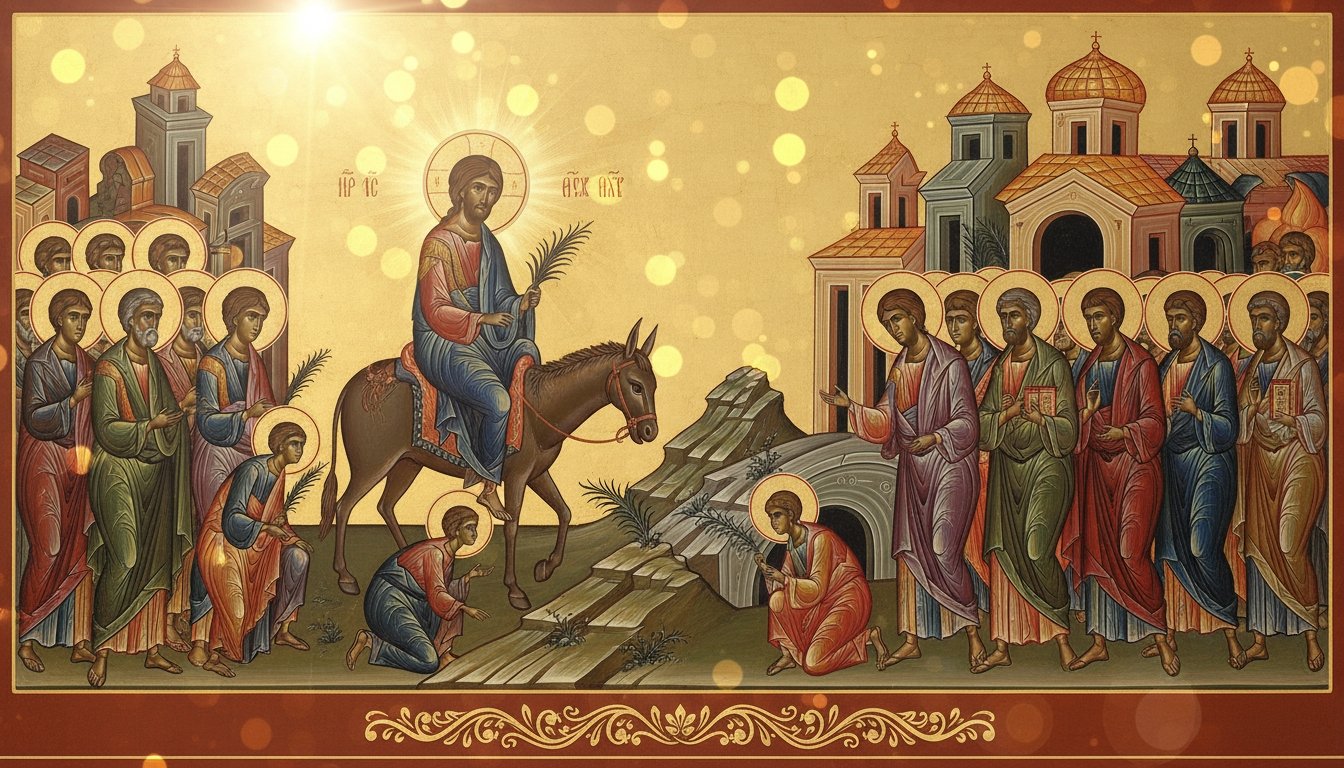
How does Orthodox iconography represent Christ during the Triumphal Entry on Palm Sunday? Icons often depict Christ riding a donkey, symbolizing his humility and servanthood. His raised hand is in a gesture of blessing, while the other holds the scroll of the law, signifying his authority as a teacher. Around him, the crowds wave palm branches, a symbol of victory and triumph. The icon’s composition conveys Christ’s dual nature – fully divine, yet fully human. This iconographic tradition invites the viewer to encounter the paradox of the King who humbly rides to his death, yet reigns victorious over sin and death.
Liturgical Significance of Imagery
The imagery within Orthodox Palm Sunday iconography carries deep symbolic meaning, inviting you to participate in the liturgical commemoration of Christ’s triumphant entry into Jerusalem. The palms and branches represent the joyful acclamation of the people, while the cloaks spread on the ground signify honoring Christ as king. The icon’s composition often depicts Christ riding a donkey, a humble animal that symbolizes his meekness and the spiritual nature of his kingdom. As you contemplate this imagery, you’re drawn into the historical event and its profound spiritual significance, preparing your heart to celebrate Christ’s saving work.
The History and Tradition of Palm Sunday Icons
The palm branches and leaves depicted in Palm Sunday icons represent the triumphant welcome Jesus received as he entered Jerusalem.
These symbolic plant elements evoke the celebratory atmosphere of the biblical event and the people’s joyful recognition of Christ as the Messiah.
Explore how the imagery of palms and branches has become a central part of the Eastern Orthodox tradition for commemorating this significant day in the life of Jesus.
Palm Sunday Imagery
Amid the triumphant celebration of Christ’s entry into Jerusalem, Palm Sunday icons have long captivated the faithful with their vivid depictions. These sacred artworks masterfully capture the joyous procession, with Christ seated on a humble donkey and the crowds enthusiastically waving palm branches. The composition often features the city gates of Jerusalem in the background, symbolizing the Lord’s arrival. The rich symbolism extends to the palm leaves, representing victory and eternal life. These icons invite believers to experience the momentous occasion, fostering a deeper connection to the narrative and its profound spiritual significance.
Symbolic Palms and Branches
Why do the palm leaves and branches hold such profound symbolic meaning in Palm Sunday icons? The palms and olive branches represent victory, peace, and Christ’s kingship. In ancient Israel, these were used to welcome kings and honored guests. When Jesus entered Jerusalem, the crowds welcomed Him as the Messiah by waving palms and spreading cloaks on the road. The branches symbolize Christ’s triumph over sin and death, while the leaves evoke the renewal of life. These natural materials connect the earthly and heavenly realms, reflecting Jesus’ dual nature as both human and divine. Their verdant greenness also suggests the eternal life He offers to all who follow Him.
Themes Depicted in Palm Sunday Icons
Palm Sunday icons capture the triumphant arrival of Christ in Jerusalem, where crowds welcomed him with palm branches and accolades. These icons often depict Christ riding a donkey, symbolizing his humility and status as the Messianic king. The crowds are shown spreading their cloaks and palm branches before him, honoring him as a hero. The apostles and disciples are present, reflecting the joyous reception. Some icons may include the gates of Jerusalem in the background, emphasizing Christ’s entry into the holy city. Overall, Palm Sunday icons vividly convey the momentous occasion of Christ’s arrival and the people’s reverence for him as their long-awaited Savior.
Interpreting the Symbolism of Palm Sunday Iconographic Elements
Though Palm Sunday icons depict a joyous scene, the symbolism behind the iconographic elements carries profound theological significance. Christ’s humility is conveyed through his seated posture on a young donkey, a beast of burden symbolizing his willingness to bear the sins of the world. The palm branches waved by the crowds signify victory and the coming of the Messiah’s kingdom. Meanwhile, the lush greenery and blossoms evoke creation’s rejoicing at the Creator’s arrival. Each detail points to Christ’s dual nature – fully human and fully divine – and the paradox of his triumphal entry preceding his crucifixion. Discerning these rich meanings enriches one’s understanding and experience of this pivotal event in salvation history.
Appreciating and Understanding Palm Sunday Iconography
How can one fully appreciate the depth of meaning in Palm Sunday iconography? By closely examining the symbolic elements, one can uncover the profound theological truths they convey. The donkey represents Christ’s humility and the people’s joyful welcome. The palms symbolize victory and eternal life. The children signify the pure faith required to recognize the Messiah. The city of Jerusalem in the background denotes the impending Passion. Exploring these layers of meaning enriches one’s understanding of this pivotal event in salvation history. Truly engaging with Palm Sunday iconography deepens one’s spiritual experience of this holy feast.
Frequently Asked Questions
How Do Orthodox Icons Differ From Western Religious Art?
Orthodox icons differ from Western religious art in their symbolic, stylized, and contemplative nature. They’re not meant to be realistic depictions but rather windows into the divine.
You’ll notice flattened perspectives, lack of chiaroscuro, and intentional distortions to direct the viewer’s focus towards spiritual truths rather than physical realism.
The icons aim to evoke a sense of the sacred, not merely to please the eye.
What Are the Recommended Ways to Display and Care for Icons?
When displaying icons, place them on a wall or table at eye level.
Don’t hang them in direct sunlight or near heat sources.
Clean them gently with a soft cloth, and avoid using water or cleaning products.
Store unused icons in a clean, dry place.
Maintain a reverent atmosphere around the icons, treating them with respect as sacred images.
Can Orthodox Icons Be Used in Non-Orthodox Christian Worship?
Orthodox icons can be used in non-Orthodox Christian worship, but it’s essential to understand their purpose and significance.
While icons aren’t mandatory, they can enhance your spiritual experience by serving as visual aids for meditation and prayer.
However, you should always consult with your church leaders to ensure proper use and respect for the traditional Orthodox practices.
What Is the Significance of the Halos Depicted in Orthodox Icons?
The halos depicted in Orthodox icons signify the divine light or grace that emanates from the holy figures represented. They’re a visual cue to the sacred nature of the subject, indicating their closeness to God and their spiritual enlightenment.
The halo’s circular shape symbolizes eternity, wholeness, and the perfection of the divine.
How Can One Determine the Authenticity of an Orthodox Icon?
Determining the authenticity of an Orthodox icon requires close inspection. Look for signs of traditional technique – vibrant natural pigments, precise symmetry, and distinctive iconographic styles. Check the reverse for the artist’s signature and approval marks. Verify the icon’s provenance and consult with experts if you’re unsure. Authenticity ensures the spiritual significance and power of these sacred artworks.
Conclusion
You can deepen your understanding of Orthodox iconography and the significance of Palm Sunday imagery by exploring the symbolic meaning, historical tradition, and themes depicted in these sacred works of art. Immersing yourself in the rich symbolism can enhance your appreciation and interpretation of the iconographic elements, allowing you to more fully engage with the spiritual depth of this sacred celebration.











No Comments