

20 Dec The 10 Commandments List, Meaning, and How They Apply Today
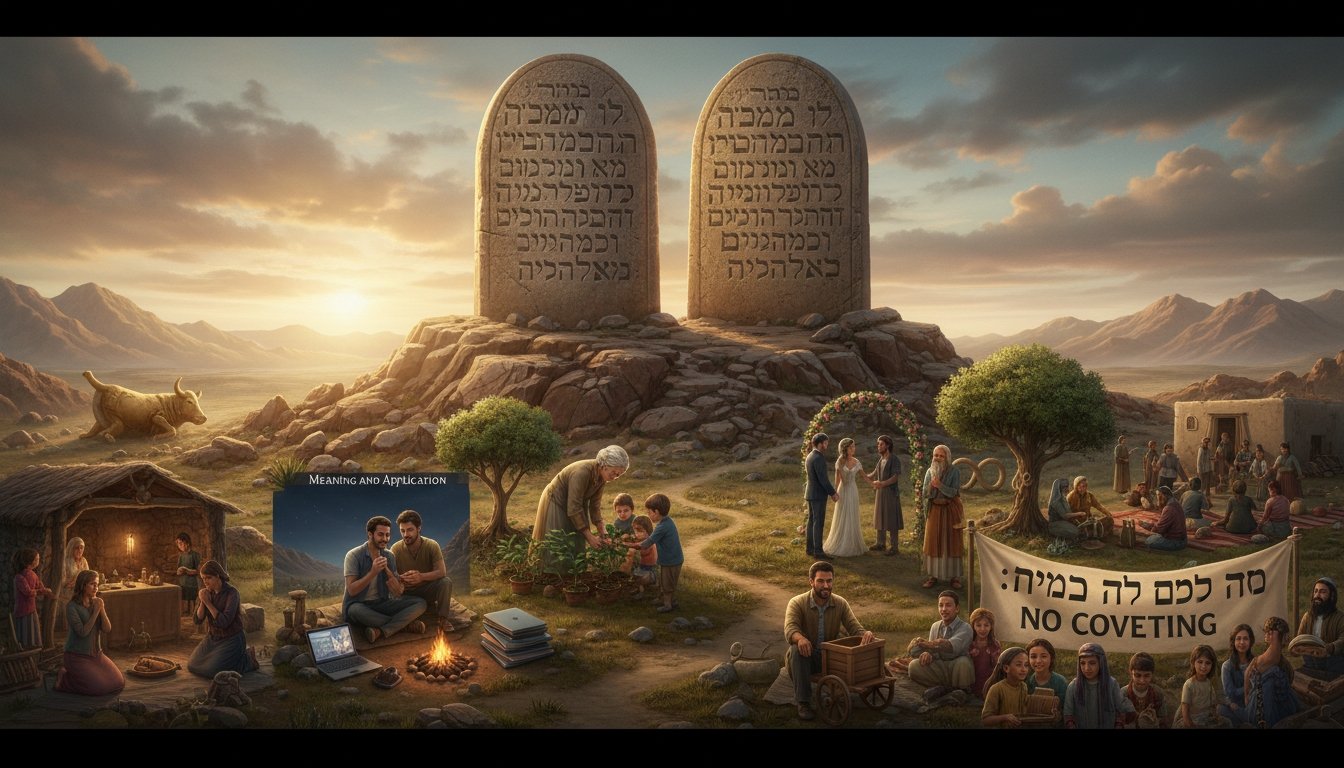
The Ten Commandments establish foundational principles for human relationship with God and others. You’ll encounter commands for exclusive worship of Yahweh, rejection of idolatry, reverent use of God’s name, Sabbath observance, parental honor, prohibition of murder, adultery, theft, false witness, and covetousness. Today, these principles address modern idols like materialism and technology, guide digital relationships, inform business ethics, and challenge social media-fueled envy. Understanding their ancient context reveals deeper applications for contemporary moral challenges.
Key Takeaways
- The Ten Commandments establish monotheistic worship, demanding exclusive allegiance to Yahweh and rejecting all forms of idolatry.
- Modern applications extend beyond carved idols to include materialism, technology, and career ambitions as contemporary forms of idolatry.
- Reverence for God’s name prohibits blasphemy and empty promises, while Sabbath observance reflects dependence on divine provision.
- Commands against murder, adultery, and theft protect human life, marriage sanctity, and property rights within community relationships.
- Prohibitions against false witness and covetousness address both public testimony and private heart attitudes that destroy social harmony.
You Shall Have No Other Gods Before Me

When God declares “You shall have no other gods before Me” in Exodus 20:3, He establishes the foundational principle of monotheistic worship that defines Israel’s covenant relationship. This commandment demands monotheistic exclusivity, rejecting the polytheistic practices surrounding ancient Israel. The Hebrew phrase “al-panay” literally means “before My face,” indicating God won’t tolerate rival deities in His presence.
You’re called to recognize God’s divine sovereignty over all creation. This isn’t merely about rejecting literal idols—it encompasses anything that usurps God’s rightful place in your heart. In ancient Near Eastern contexts, people commonly worshipped multiple deities for different needs. However, Yahweh demands undivided allegiance.
Today, you face subtler idolatries: materialism, career ambition, relationships, or technology that become ultimate concerns. The commandment challenges you to examine what truly governs your decisions and devotion. God’s claim to exclusive worship flows from His unique nature as Creator, Sustainer, and Redeemer—roles no substitute can fulfill.
You Shall Not Make Idols or Worship False Images
You’ll discover that modern idols extend far beyond carved statues to encompass anything you prioritize above God—whether material possessions, career success, or even relationships.
The Hebrew term *pesel* in Exodus 20:4 encompasses both physical representations and the broader concept of substituting created things for the Creator, leading to spiritual bondage and distorted priorities. Understanding this commandment requires you to examine how contemporary culture shapes your devotion and to identify practical steps for maintaining proper worship that honors God alone.
What Constitutes Modern Idols
How might ancient prohibitions against carved images translate into contemporary spiritual challenges? You’ll find modern idolatry manifests through subtle yet pervasive forms that demand your ultimate allegiance. Social media obsession creates digital shrines where you worship curated personas and seek validation through likes and followers. Your smartphone becomes a contemporary golden calf, commanding constant attention and devotion.
Materialism and consumerism represent perhaps the most insidious modern idols. You’re encouraged to find identity through possessions, brands, and economic status. Career advancement, political ideologies, and even relationships can become idolatrous when they replace God as your primary source of meaning and security. These contemporary forms of idol worship share the same fundamental error as ancient carved images: they promise fulfillment while ultimately delivering emptiness and spiritual bondage.
Consequences of Idol Worship
Idolatry extracts a devastating toll that extends far beyond individual spiritual harm, creating cascading effects across generations and communities. When you elevate created things above the Creator, you corrupt your moral compass and distort your understanding of truth.
The idolatry of money breeds greed, exploitation, and systemic injustice that perpetuates poverty cycles. The idolatry of power creates oppressive structures that crush human dignity and freedom. Scripture demonstrates how idol worship led Israel into moral decay, broken relationships, and divine judgment.
You’ll find that modern idolatries produce similar fruits: fractured families, degraded environments, and societies built on deception. These consequences aren’t merely punitive but represent the natural outcome when you abandon God’s design for human flourishing.
Practical Application Today
While ancient Israel fashioned golden calves and wooden Asherah poles, modern idolatry manifests through subtler yet equally destructive forms that demand your careful discernment. Contemporary idols include materialism, technology addiction, career obsession, and social media validation-seeking. These competing allegiances gradually displace God’s rightful position in your heart.
Implementing practical lifestyle changes requires honest self-examination of what truly governs your thoughts, time, and resources. You must identify where you seek ultimate security, meaning, and identity beyond Christ. Daily spiritual habits like morning prayer, Scripture meditation, and regular fasting help maintain proper spiritual priorities. Deliberately limiting screen time, practicing gratitude, and choosing contentment over consumerism actively resist idolatrous temptations. Remember that anything demanding absolute devotion apart from God constitutes idolatry, regardless of its apparent legitimacy or cultural acceptance.
You Shall Not Take the Lord’s Name in Vain

When God commands “You shan’t take the name of the LORD your God in vain” in Exodus 20:7, He’s establishing a fundamental principle about the sacred nature of His identity and character. The Hebrew word “shav” means emptiness, worthlessness, or falsehood, indicating this prohibition extends beyond casual profanity.
This commandment encompasses multiple violations: using God’s name in false oaths, making empty promises while invoking His authority, and engaging in blasphemy that dishonors His character. Irreverent behavior that treats God’s name as commonplace violates this sacred boundary.
You’re called to recognize that God’s name represents His entire being—His holiness, power, and covenant relationship with humanity. When you use His name carelessly in exclamations, false promises, or casual conversation, you’re diminishing His majesty.
Today, this applies to how you speak about God in prayer, conversation, and public discourse, ensuring your words reflect genuine reverence rather than empty religiosity.
Remember the Sabbath Day and Keep It Holy
The fourth commandment in Exodus 20:8-11 establishes God’s design for rhythmic rest as both a creation ordinance and covenant sign for His people. You’ll find this commandment uniquely grounds itself in God’s creative work, where He rested on the seventh day and sanctified it. The Hebrew word “zakhor” (remember) indicates you’re called to active commemoration, not passive acknowledgment.
This spiritual observance extends beyond mere cessation of work. You’re commanded to “keep it holy” (qadash), meaning you set apart this day for God’s purposes. The Sabbath serves as a covenant sign between God and Israel, distinguishing them from surrounding nations.
Weekly rest reflects God’s character and priorities. You’re reminded that productivity doesn’t define your worth—God does. This commandment teaches you dependence on divine provision rather than human effort. Modern application requires wisdom in discerning how weekly rest honors God while serving others’ genuine needs.
Honor Your Father and Mother
Following God’s design for sacred time, the fifth commandment in Exodus 20:12 establishes His blueprint for sacred relationships within the family structure. Honor your father and mother, so that you may live long in the land the Lord your God is giving you” extends beyond mere obedience to encompass reverence, care, and respect throughout life’s stages.
The Hebrew word “kabbed” (honor) implies giving weight or significance to your parents’ position. This commandment doesn’t require blind submission to ungodly demands but emphasizes respecting elders and acknowledging their God-ordained authority. You’re called to honor even imperfect parents, recognizing their role in God’s providential plan.
Honoring family creates societal stability, as healthy families form civilization’s foundation. This principle extends to caring for aging parents, seeking their counsel, and protecting their reputation. The promised blessing—longevity in the land—connects family honor to national prosperity and divine favor.
You Shall Not Murder
You’ll find the sixth commandment’s Hebrew term “ratsach” carries specific nuances that distinguish it from other forms of killing, establishing a foundation for understanding intentional, unlawful homicide.
Modern legal systems have adapted this ancient principle into complex frameworks that differentiate between murder, manslaughter, and justifiable homicide based on intent and circumstances. You must also consider how biblical and contemporary interpretations address scenarios involving self-defense, warfare, and capital punishment as potential exceptions to this fundamental prohibition.
Biblical Context and Origins
Ancient Hebrew manuscripts reveal that the sixth commandment employs the specific term “ratsach” (רָצַח), which carries profound theological and legal implications distinct from other words for killing in biblical Hebrew. You’ll find that “ratsach” specifically denotes unlawful, premeditated murder rather than justified killing in warfare or capital punishment.
Within Mosaic covenant origins, this distinction proves crucial for understanding Israel’s legal framework. The historical context shows that ancient Near Eastern law codes similarly differentiated between murder and legitimate killing.
You can trace this commandment’s placement within the broader Decalogue structure, where it follows worship-focused commands and precedes property-related prohibitions. The term’s semantic range excludes accidental death (Hebrew: “shogeg”) and divinely sanctioned warfare, establishing clear boundaries for Israel’s emerging jurisprudential system.
Modern Legal Interpretations
Contemporary legal systems across numerous jurisdictions have grappled with translating the Hebrew “ratsach” into workable statutory frameworks that distinguish between degrees of culpability in homicide cases. You’ll find that modern courts recognize distinctions between premeditated murder, manslaughter, and justifiable homicide—categories that echo the original Hebrew understanding of unlawful killing versus sanctioned violence.
Legal reforms throughout Western democracies have consistently excluded state-sanctioned executions, warfare, and self-defense from murder statutes, mirroring ancient Israelite exceptions. Secular interpretations maintain this fundamental prohibition while adapting to contemporary circumstances like medical ethics and end-of-life decisions.
You can observe how judicial precedents continue refining these distinctions, balancing moral imperatives against practical enforcement. This commandment’s influence permeates constitutional protections of life, demonstrating its enduring relevance in shaping criminal jurisprudence.
Self-Defense and Exceptions
Biblical scholarship consistently demonstrates that the sixth commandment’s prohibition against murder includes inherent exceptions for legitimate acts of violence. You’ll find that ancient Hebrew law distinguished between premeditated murder (ratsach) and justifiable killing in warfare or capital punishment. These self defense exceptions weren’t contradictions but reflected divine justice principles.
When you examine Mosaic law, legal justifications emerge clearly. God commanded Israel’s military campaigns while simultaneously prohibiting murder, indicating contextual boundaries. You’re seeing a framework where protecting innocent life sometimes requires taking guilty life.
Modern applications maintain these distinctions. You can defend yourself, your family, or others from imminent deadly threats without violating the commandment’s intent. The prohibition targets unlawful killing, not all taking of human life under extreme circumstances requiring immediate protective action.
You Shall Not Commit Adultery
The seventh commandment confronts you with one of Scripture’s most direct prohibitions against sexual unfaithfulness within marriage. This commandment establishes the sacred boundary protecting marital covenant relationships from violation through sexual infidelity.
The Hebrew term “na’aph” specifically addresses sexual relations between a married person and someone other than their spouse. In ancient Israel’s context, this commandment protected the fundamental social unit—the family—from dissolution and chaos. You’ll find that biblical marriage represents God’s covenant relationship with His people, making adultery not merely a social transgression but a spiritual one.
Modern applications extend beyond physical acts to include emotional adultery. Jesus expanded this understanding in Matthew 5:28, addressing lustful thoughts and desires. Today, you must consider how fidelity in marriage encompasses both physical and emotional intimacy exclusively within the marital bond. Digital relationships, pornography, and emotional affairs all violate this commandment’s intent to preserve marital sanctity and trust.
You Shall Not Steal
Something fundamental about human dignity emerges when you examine the eighth commandment‘s prohibition against stealing. This directive protects personal property rights and establishes trust within communities. In Hebrew, “ganav” encompasses various forms of theft, from outright robbery to deceptive business practices.
You’ll find this commandment addresses more than material possessions. It includes stealing someone’s reputation through slander, withholding wages from workers, or misrepresenting products. The underlying principle protects human labor and its fruits, recognizing that property often represents invested time and effort.
Modern applications extend to intellectual property, tax evasion, and corporate fraud. Effective theft prevention strategies include robust security systems, community vigilance, and ethical education. Legal consequences of stealing vary by jurisdiction but typically involve restitution and punishment proportional to the offense.
Today’s digital age presents new challenges—cybercrime, identity theft, and data breaches test traditional boundaries. You’re called to respect others’ possessions and labor, fostering societal trust and justice.
You Shall Not Bear False Witness Against Your Neighbor
When ancient Hebrew communities heard “lo ta’aneh b’rei’akha ed shaqer,” they understood this ninth commandment as establishing truth’s sacred role in judicial proceedings and community relationships. The Hebrew term “ed shaqer” specifically denotes false testimony given under oath, emphasizing legal contexts where truthfulness determines justice’s outcome.
Bearing false witness extends beyond courtroom perjury to encompass gossip, slander, and deliberate deception that damages another’s reputation. You’re called to recognize how words shape reality within your community. Ancient Israelite society depended on reliable witness testimony since they lacked modern forensic tools.
Today, this commandment challenges you to examine your relationship with truth across all spheres. Social media amplifies false information‘s reach, creating unprecedented opportunities for character assassination. The impacts on relationships multiply exponentially when trust erodes through dishonesty. You must consider whether your words build up or tear down, whether they reflect careful observation or careless assumption about others’ actions and motivations.
You Shall Not Covet Your Neighbor’s Possessions

Ancient Hebrew listeners hearing “lo takhmod” recognized this final commandment as addressing humanity’s internal disposition rather than external actions. Unlike previous commandments governing behavior, this prohibition targets the heart’s desires that precede wrongdoing. The Hebrew term encompasses intense longing that leads to scheming and acquisition.
This commandment penetrates beyond outward compliance to address the heart’s hidden yearnings that birth all transgression.
You’re commanded to examine your motivations when observing others’ success. Covetousness of status drives social comparison, creating resentment toward those with higher positions, recognition, or influence. This internal poison corrodes relationships and community harmony.
Covetousness of opportunities manifests when you begrudge others’ advantages, educational prospects, or career advancement rather than celebrating their achievements.
Today’s application extends beyond material possessions to include social media-fueled envy of curated lifestyles. You’re called to cultivate contentment with your circumstances while pursuing legitimate goals. This commandment doesn’t prohibit ambition but warns against destructive desires that view others’ blessings as personal deprivation, fostering gratitude over grievance.
Frequently Asked Questions
What Is the Historical Origin and Dating of the Ten Commandments?
You’ll find the Ten Commandments’ Ancient Hebrew origins trace to Moses at Mount Sinai, though scholars engage in biblical dating debate regarding precise chronology.
You’re examining texts likely compiled between 1300-600 BCE, with traditional dating placing Moses around 1300 BCE. You must consider archaeological evidence, literary criticism, and comparative ancient Near Eastern law codes when analyzing their historical development and textual transmission.
Are There Different Versions of the Ten Commandments in Various Religions?
Yes, you’ll find different interpretations across varied religious traditions. Judaism, Catholicism, and Protestantism number and divide the commandments differently.
You’ll notice Catholics combine the first two commandments while splitting the tenth into two separate prohibitions. Orthodox traditions maintain distinct textual variants, and you’ll discover that Protestant denominations often follow Reformed numbering systems, creating theological distinctions in emphasis and application.
What Archaeological Evidence Exists for Moses Receiving the Stone Tablets?
You’ll find no direct archaeological evidence for Moses receiving stone tablets at Mount Sinai. Biblical scholarship acknowledges this absence while noting that archaeological evidence doesn’t disprove the event either.
You’re dealing with ancient religious traditions that predate extensive material records. Most scholars approach this through literary analysis and comparative ancient Near Eastern studies rather than expecting physical artifacts from this specific narrative moment.
How Do the Ten Commandments Relate to Other Ancient Legal Codes?
You’ll find striking parallels between the Ten Commandments and earlier legal precedents from ancient codes like Hammurabi’s Code and Egyptian moral instructions. These similarities demonstrate how religious influences on legal development shaped ancient Near Eastern jurisprudence.
However, the Decalogue’s distinctive covenantal framework and monotheistic foundation differentiate it from purely civil law collections, establishing both ceremonial worship requirements and fundamental ethical principles that transcend mere legislative statutes.
What Role Do the Ten Commandments Play in Modern Legal Systems?
You’ll find the Ten Commandments‘ influence on modern legal systems primarily through foundational ethical principles in law rather than direct codification. They’ve shaped Western jurisprudence’s moral framework, particularly prohibitions against murder, theft, and perjury.
However, you can’t assume direct legal adoption—constitutional separation of church and state limits explicit religious integration. Instead, they’ve provided underlying moral philosophy that informs legislative reasoning and judicial interpretation across democratic societies.
Conclusion
You’ve encountered God’s fundamental covenant framework that transcends temporal boundaries. These commandments aren’t merely ancient prohibitions—they’re divine imperatives establishing your relationship with God and humanity. You’ll find they address worship, reverence, rest, family honor, marital fidelity, property rights, truthfulness, and contentment. When you examine their theological structure, you’ll discover they form the bedrock of covenant relationship, demanding both vertical devotion to God and horizontal responsibility toward your neighbor in contemporary application.











No Comments